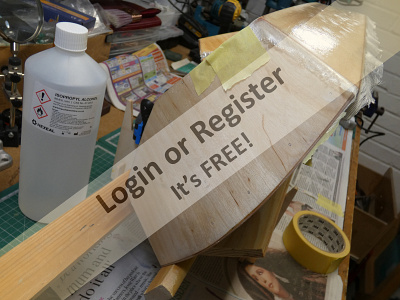
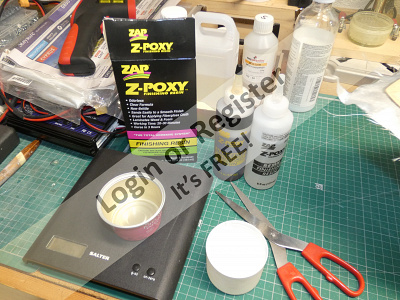
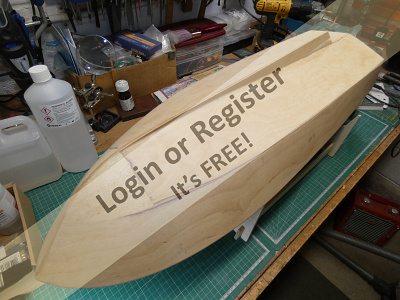
Follow

SLEC Harbour Pilots Boat by Robbob

Started by robbob

54 updates 724 likes
robbob
Opening post · 6 years ago

SLEC Harbour Pilots Boat by Robbob

It’s been a while since I built my last model boat, a Thames River Police Launch and prior to that my RAF Crash Rescue Tender and I thought I’d better get something on the go pretty soon or I’ll have nothing new to show at the club exhibition in September.

While I was visiting the Warwick International Model Boat Show in November last year I spotted a new model by SLEC of a Harbour Pilots Boat, due for release in Spring 2020.
A quick ‘phone call to them confirmed that it was now available and so I decided to buy the kit and start building it to keep me occupied during the enforced isolation we all find ourselves in at the present.

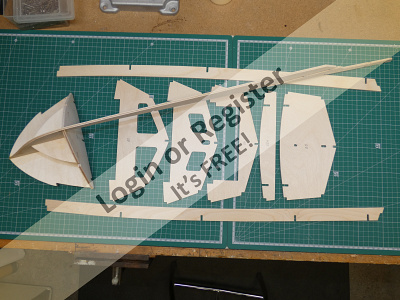
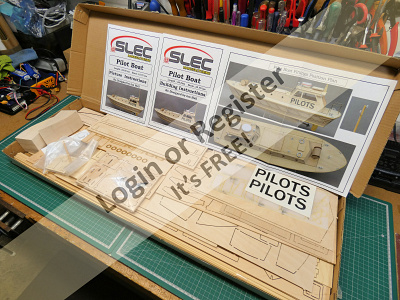
The kit arrived the following day, very safely packaged in a strong carton, and after opening the box and quickly checking the contents I took out the supplied Building Instruction and Picture Instruction manuals and studied them both at length to familiarise myself with the construction sequence.

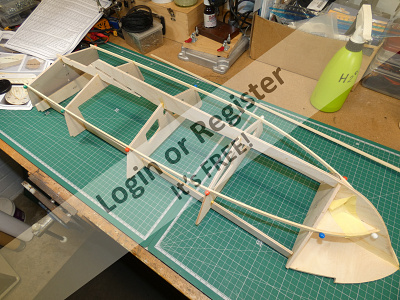
Anyone that is familiar with the old Aerokits/Keil Kraft model boats will recognise their characteristic ‘egg crate’ method of construction and this model is a re-working of one such design by Ian Hull for SLEC.

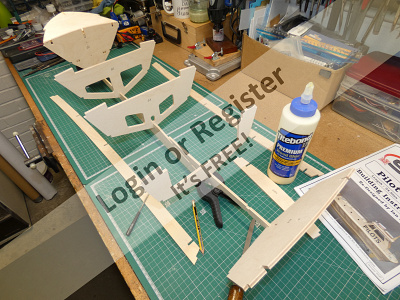
Fortunately I have all the required tools, adhesives and other materials in the workshop including a 10” propshaft and 40mm 2 blade prop that I bought in error for a previous model and so I can make an immediate start. I’ll still need to buy in a receiver, servo, rudder, brushless motor and speed controller and a couple of LiPo batteries at some point but I certainly have all I need to make a start on the build.

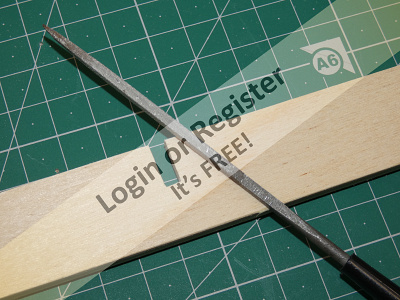
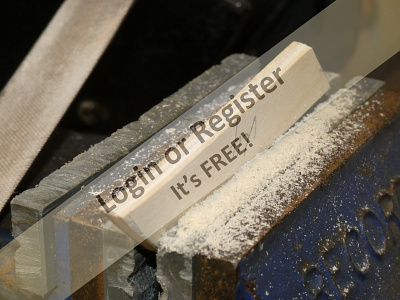
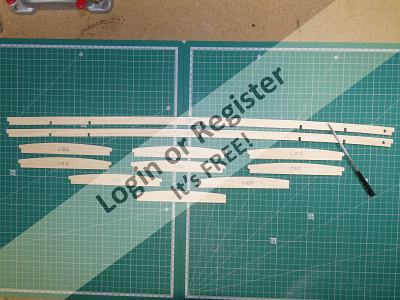
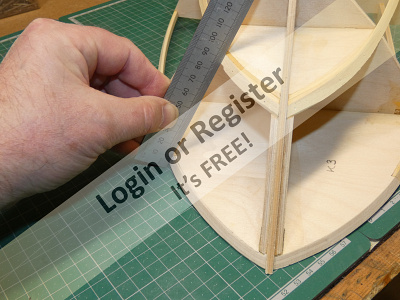
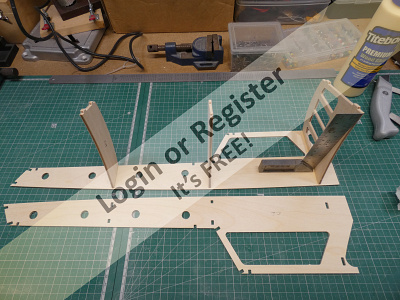
All of the plywood parts are CNC router or laser cut and many of the parts lock firmly together with tabs and slots that are already quite a good fit, but however fine the router bit is it can’t produce a sharp 90 degree cut so the first thing the instructions tell you is that you should use a small square file or a sharp knife to square all the internal corner cuts to ensure a proper snug fit.

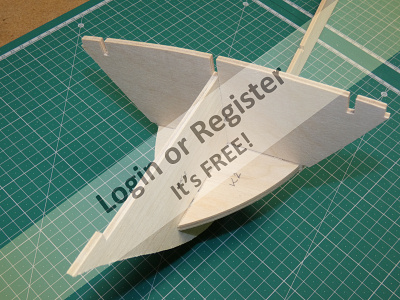
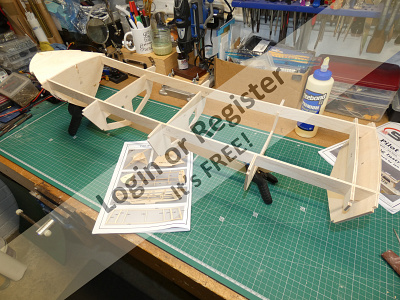
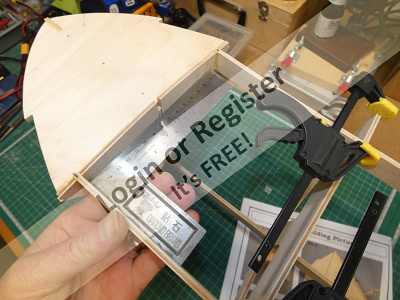
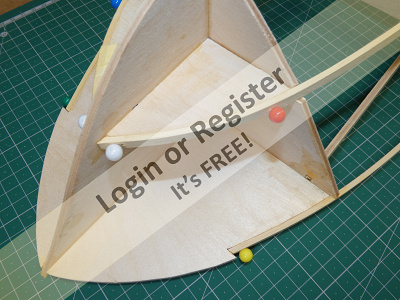
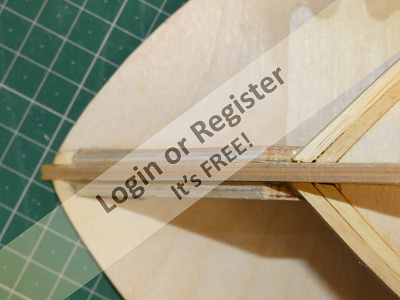
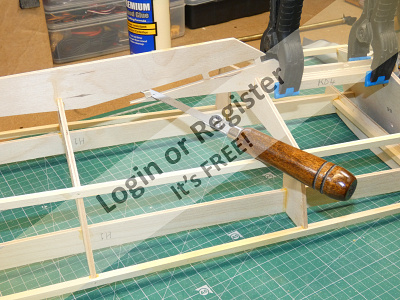
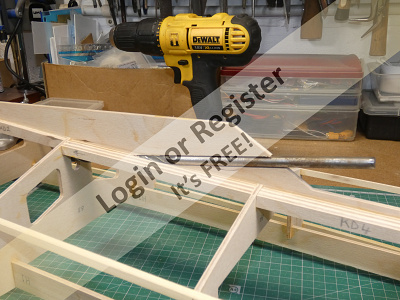
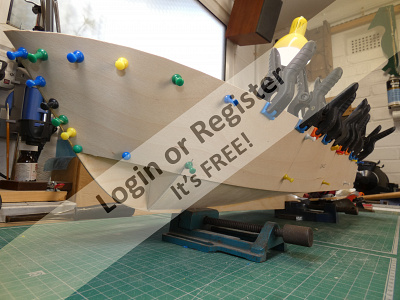
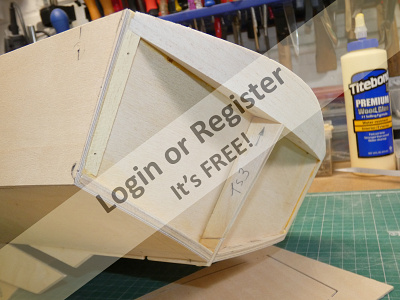
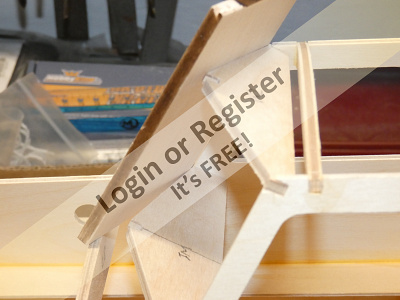
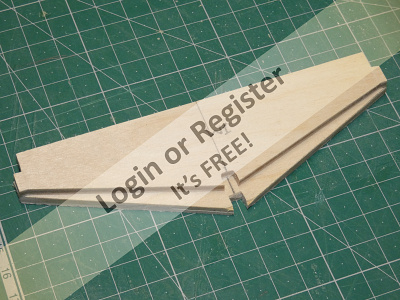
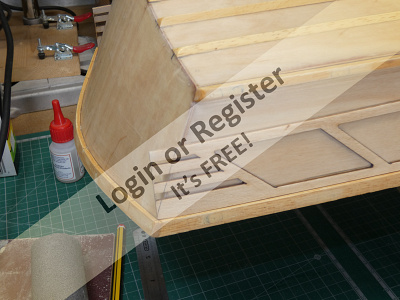
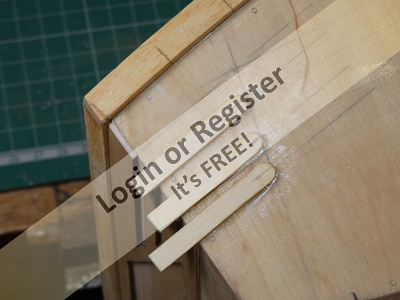
Construction starts with the assembly of the main keel, first bulkhead and the two small parts K2 that lock it together. At this point I’m dry-fitting the parts to ensure that it all slots together correctly. It’s here that a small improvement could be made by re-designing the two smaller parts so that the tabs that slot into the main keel K1 are staggered rather than meet at the same point as the existing slot is long enough. Easily fixed by amending the CNC files but for now it can be fixed by filing each tab to half its length, but I’ll pass on the suggestion to SLEC.

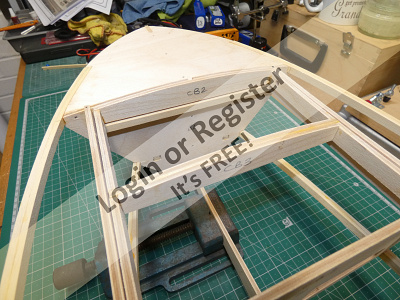
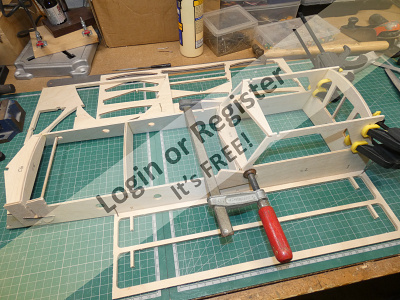
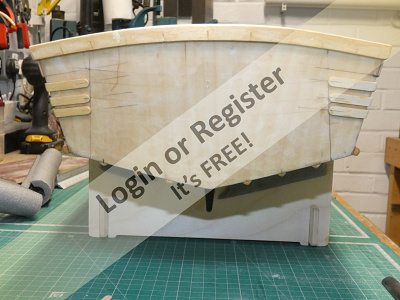
The remaining bulkheads are slotted onto the keel and the two long beams are slotted in at deck level to lock it all together.

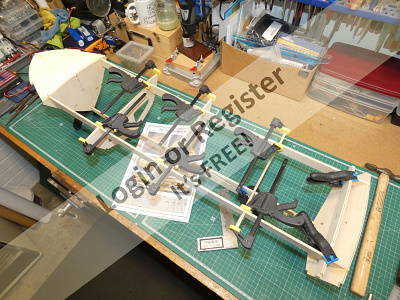
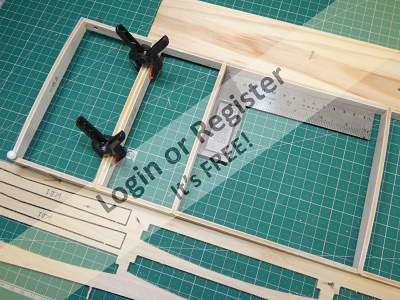
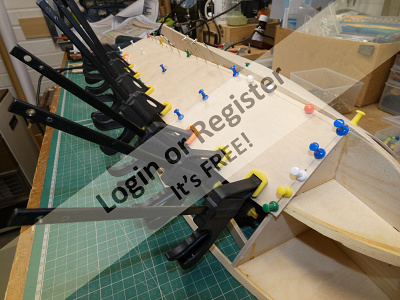
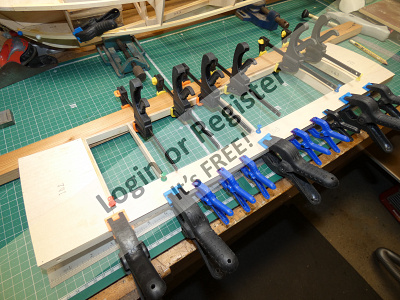
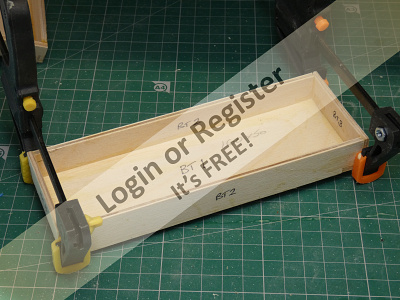
When I was happy that all was well I took it apart and re-assembled it all using a waterproof aliphatic PVA glue and a few clamps to hold it all together while the glue sets. A try square was used to check the assembly for square.

In the next part I’ll be fitting the strakes and additional keel parts and constructing the base of the superstructure.
Liked by Jay and hmsnostalgia and
6 comments

Sign in to comment on this update.

robbob
Update · 6 years ago

Fitting the Chines & Rubbing Strakes

With the main framework of the keel and bulkheads assembled the next stage was to fit the stringers that run the length of the framework on each side.
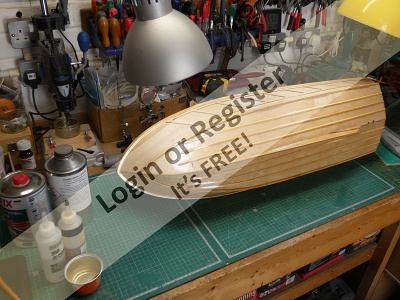
The hull design is a ‘Hard Chine Deep V’ type that gives the real boat its speed and stability characteristics. The lower one is the Hard Chine and the upper one is the Rubbing Strake and these are formed by laminated strips of Obeche hardwood which are shaped to the contours of the hull by planning and sanding at a later stage.

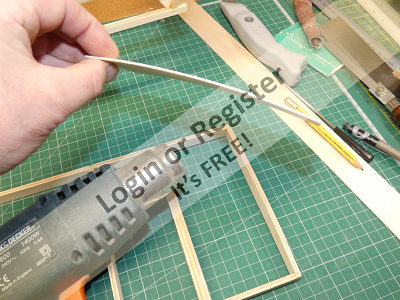
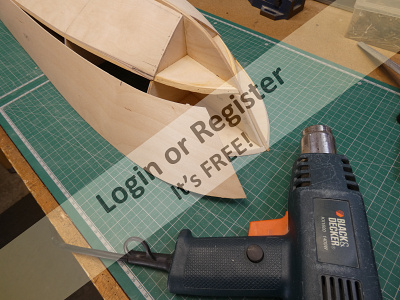
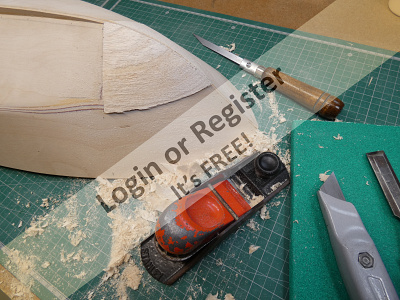
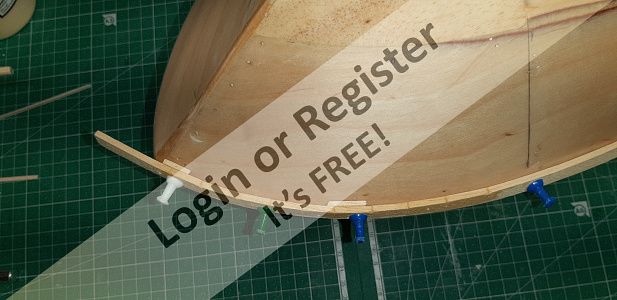
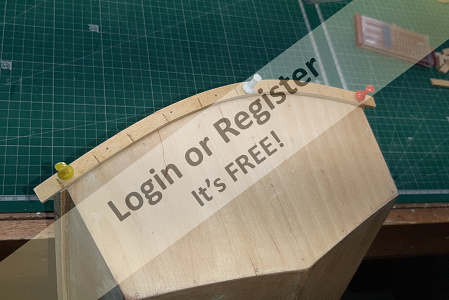
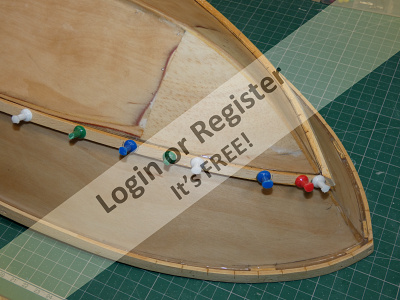
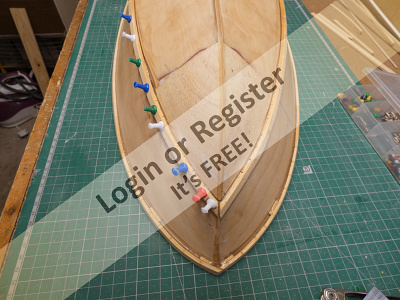
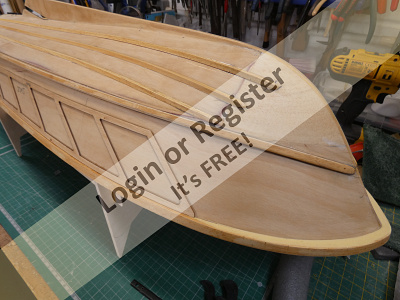
Starting with the lower stringers that form the Hard Chine the notches in all of the bulkheads were filed to the correct angle to ensure that the strips fit properly and the first strip was glued in place and secured with modelling pins. Fortunately the Obeche strip is pliable enough to accommodate the bend at the bow after a little wetting and heating with a heat gun (electric paint stripper). This was repeated for the lower chine on the other side, all the while still checking that the framework was still square.

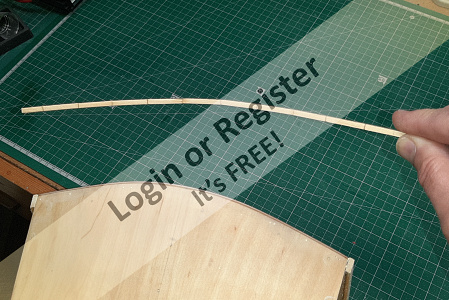
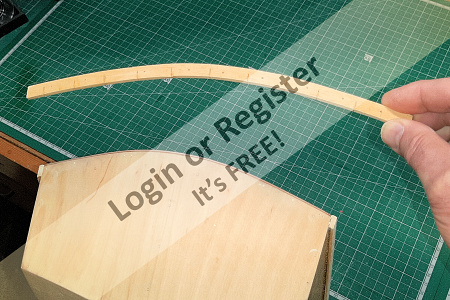
Fitting the upper Rubbing Strake is a similar operation with the bow ends requiring a bit more bending, but assisted by some cuts made with a razor saw, all the while checking the assembly for true and square.

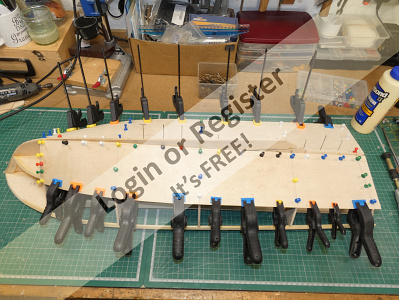
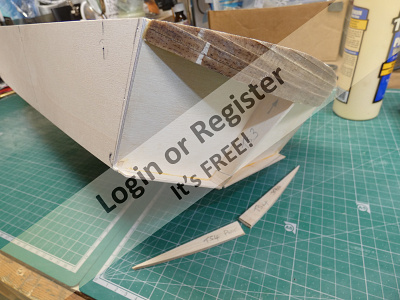
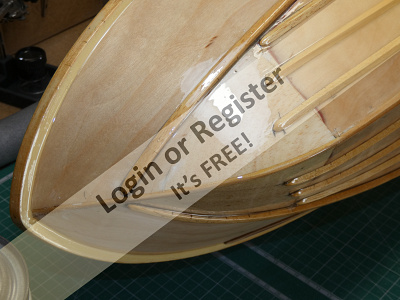
The second laminations were then added to both chines on each side, pinned and clamped all along their lengths and while they were setting the two small keel parts K4 were roughly chamfered to an angle and fitted about 3mm back from the main keel at the bow.

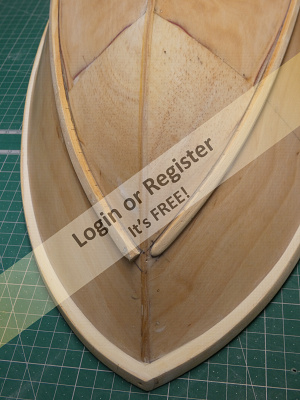
At this point it became evident that there’s another small design error, in that the keel parts K2 need to be re-designed to extend further out to the bow so that the hull skins fit properly where they meet the main keel K1 and the two K4 parts. We saw previously that this part was already in need of modification in the first part of this build blog. So that’s another thing to let SLEC know about but again easily rectified by adding a short third lamination over the Hard Chine back as far as bulkhead B1 that can be sanded back to the correct size and shape.

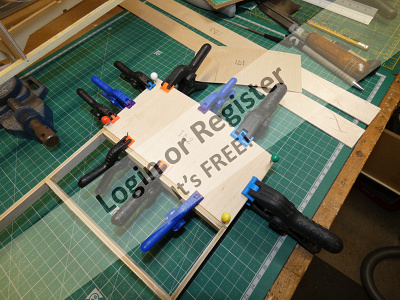
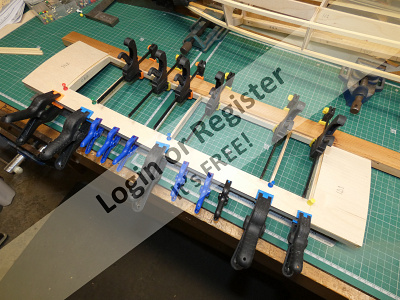
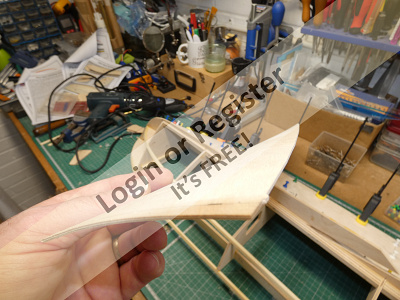
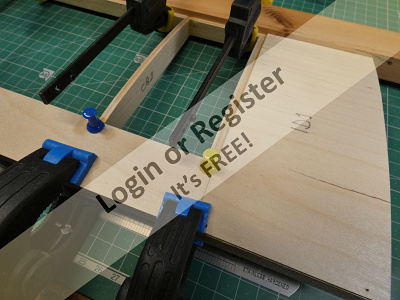
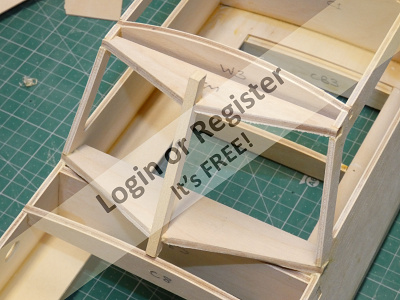
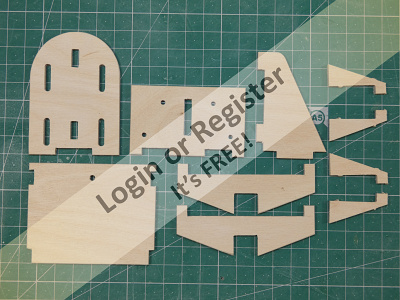
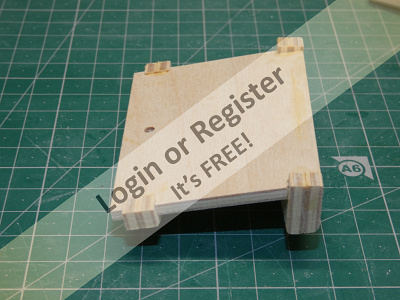
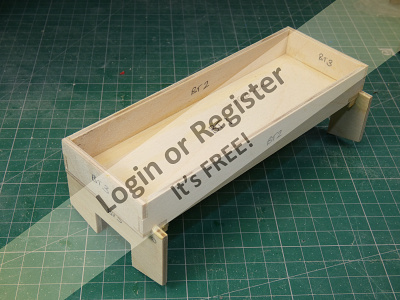
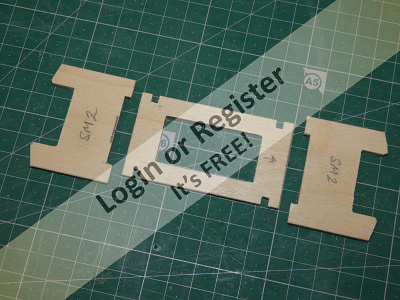
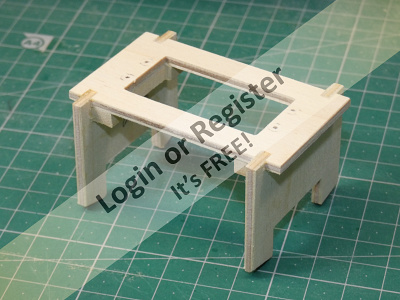
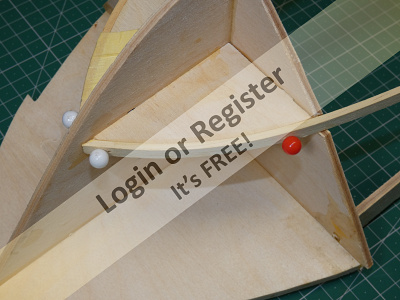
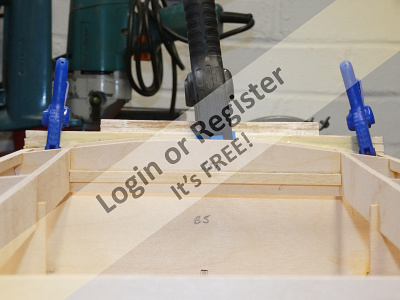
This assembly was then set aside and work was started on the Superstructure Base which has an upward curve along its length that follows the contour of the deck. All the parts for this are laid out in. This ladder type framework needs to be assembled absolutely square and to assist this I fixed down some battens and ply off-cuts and the bench to form a jig to hold all the parts in place during assembly. The upward curve of the Superstructure Base makes this a bit tricky but with all the parts glued, pinned and clamped the piece was carefully checked for true and square and left to set.

When dry the piece was removed from the jig and, as per instructions, placed in the main hull assembly so that the ends were flush with the bulkheads B1 and B5A so that two strips of Obeche can be added, these locate and support the Superstructure Base at the front and back.
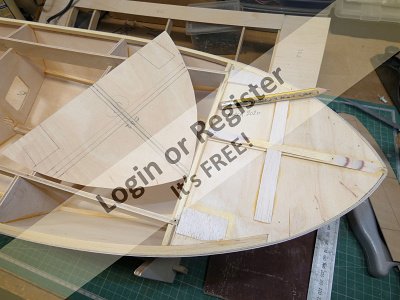
Some 1.5mm ply parts form the inner decking of the Superstructure Base and these are glued, pinned and clamped in place on the framework. At this point it’s vital to check that the assembly is still absolutely square or the base will not fit properly into the main structure.
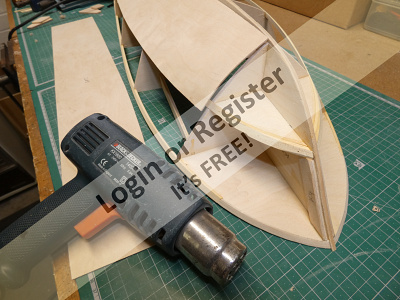
I used my heat gun to set a slight curvature in the ply panels so that they sit on the frame correctly. The application of heat on the thin 1.5mm ply has the effect of temporarily softening the glue between the plies and relaxing the bond, and allowing the panel to cool while bent will set the bend into the ply. I’ve used this technique to shape the plywood skins on all of my model boats and it’s a much quicker and cleaner method than using steam.

The next part will cover the fitting of some additional keel parts, drilling the keel to take the propshaft and trimming the chines and strakes in preparation for fitting the hull skins.
Liked by Jay and hmsnostalgia and
7 comments
  1. mturpin013Bronze
    Admiral
    Without question, attention to detail, not only the parts that show but also the parts that will never be seen, but will have no doubt given you immense satisfaction to know it was done correctly.
    Liked by hmsnostalgia and Missouri and
  2. robbobSilver
    Fleet Admiral
    Hi Mike.
    You're quite right about attention to detail.
    I seldom,if ever, 'bodge' something to cover up an error of mine as it means I haven't given sufficient forethought to the process, and knowing where the 'bodies are buried' would haunt me (for a while) 🙄.
    The satisfaction that I know I've done the best that I can is worth the forward planning involved 😇.
    That's probably why I'm such a relatively slow builder, that's not to say that the fast builders don't do the same planning, it's all a matter of confidence in what you do that enables you to work faster.
    Self psychoanalysis over.....😉
    Rob.
    Liked by Jay and hmsnostalgia and

Sign in to comment on this update.

robbob
Update · 6 years ago

Keel Doublers & Bottom Skins

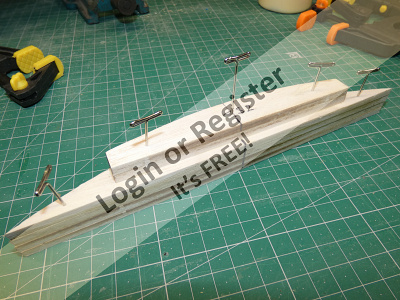
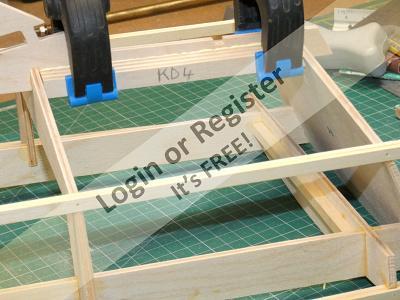
Now that the chine and rubbing strakes are fitted to the bow and bulkheads I have a fairly rigid skeleton on which the skins will be supported. However before the skins go on there are some extra keel parts to fit and these are in the form of laminations that are fitted on either side of the keel. In two places there are two laminations on either side of the main keel piece that thicken and strengthen it to take the propshaft and rudder tubes, and these parts were laminated on the bench and given a slight chamfer with a plane so that the bottom skins fit flush and this is much easier to do before fitting.
There are three spacing tabs in the main keel where the propshaft tube goes, one of which needs to be cut out before the keel laminations are applied and the remaining two are cut away after the doubled-up keel parts are fitted. The rest of the keel laminations are single pieces per side and were also chamfered before fitting.

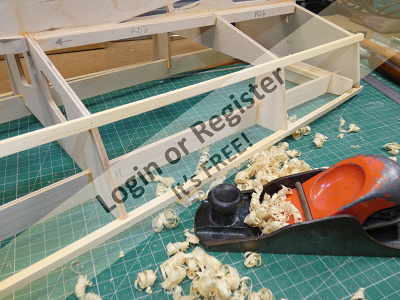
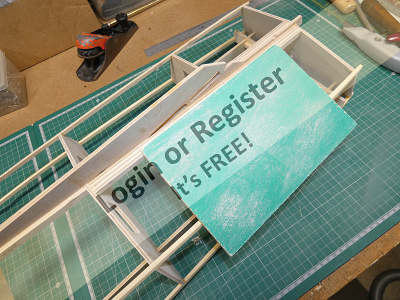
The strakes and bulkheads now need to be shaped to be as flat as possible and this is easily achieved with my trusty block plane on the stringers and then a final finishing with a ‘sanding plate’ over the stringers and bulkheads. The sanding plate is no more than a piece of MDF about 9” x 6” with an 80 grit abrasive glued on one side and 60 grit on the other and because it is large enough to bridge at least two points on the framework will always remove wood while maintaining a flat ‘plane’ which is essential for the skins to fit properly. At the bow the use of the sanding plate quickly blends the deck part K3 and the chine stringers, including the extra lamination that was fitted to correct a design error. Throughout the planing and sanding process the entire framework was checked flatness using a straight edge to check for any high spots, and because of the use of the sanding plate it’s difficult to introduce any low spots with the plate supported over two or three places.

The keel was then drilled to take the 8mm propshaft tube, fortunately I have a suitably long 8mm bit for this. A final finishing with a long round file was needed to neaten it up and provide a loose friction fit for the tube. I won’t epoxy the tube in place until I have all the parts of the drive train to hand to ensure that the alignment is as accurate as possible. The rudder position is pre-marked on the keel by a notch in the main keel but I’ll be leaving the drilling of the rudder fixing hole until the all the skins are fitted.

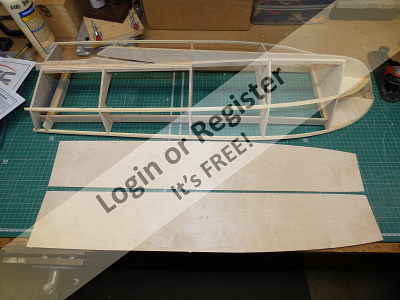
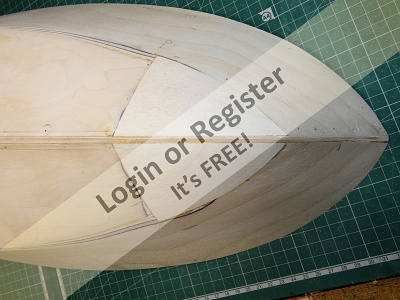
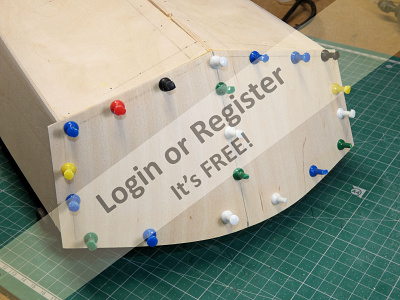
The bottom skins are fitted first and are quite accurately CNC cut and only require minimal trimming and chamfering where the skin meets the keel. I used my ‘heat Gun’ technique to put a permanent bend in the 1.5mm skins so that they conform quite closely to the curvatures at the bow and but some modelling pins and a few clamps are still needed to hold them in place when glued. The skins are fitted from bulkhead B1 to the stern with the bow section being formed from carved balsa blocks. When fitted correctly the bottom skins extend beyond the stern bulkhead B5 by a couple of centimetres and the instructions tell you to trim them back to B5 and then fit some extra parts to form the curved transom but I’m going to re-work this by taking advantage of the surplus bottom skin overlaps which I think is a much better solution.

It the time of writing (mid April) I’m still waiting for the rudder and motor coupling I have ordered from the UK supplier, and most frustratingly the motor, speed controller, battery and RC receiver are all out of stock with my usual supplier for these bits (HobbyKing’s UK warehouse is temporarily closed under the Covid-19 restrictions) with the hold-up most likely as a result of the shutdown of the Chinese factories that produce the majority of these items these days.

In the next part I’ll be fitting the side skins, shaping and fixing the balsa bow blocks and building the curved transom.
Liked by Jay and hmsnostalgia and
5 comments
  1. robbobSilver
    Fleet Admiral
    Martin.
    Not much chance of me writing anything for Model Boats Magazine from what I understand from their dormant state at the moment☹️.
    I really do hope they pull through 🤞
    Interestingly they had a 'Fire Sale' on back issues a few days ago at 99p each so I picked up a few that had content that took my interest including a November 2012 edition with an article on a Harbour Pilots Boat kit review.
    Robbob.

    Liked by Jay and Missouri and
  2. mturpin013Bronze
    Admiral
    Nice work as usual, I like the use of the flat board with grades of abrasive on each side I have used this method for all sorts of woodwork projects not just models, Its value is immeasurable for creating that flat surface.
    Liked by Missouri and RNinMunich and

Sign in to comment on this update.

robbob
Update · 6 years ago

Side Skins, Bow Blocks & Transom

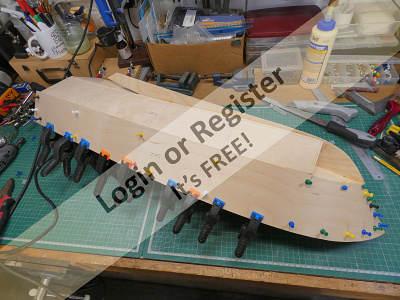
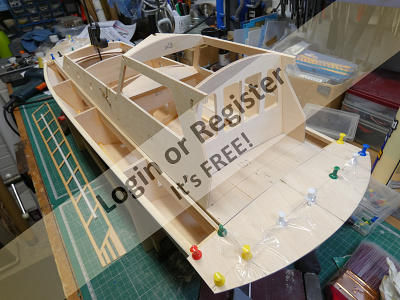
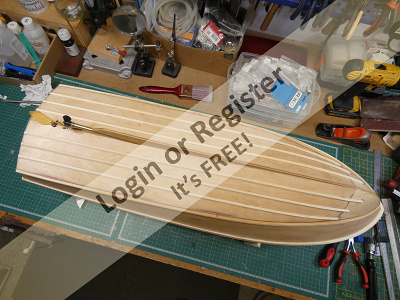
With the bottom skins firmly fixed in place and the glue set, all of the clamps and pins were removed and I was then able to trim them back to the lower chine using my small block plane and sanding plate paying particular attention to the area where the side skins overlap the bottom skins at bulkhead B1.

The application of the side skins is also quite straightforward and again I used my heat gun to pre-form the skins to the shape of the hull at the bow. It’s quite remarkable how well the heating a bending of the skins works and the process only takes a few minutes to achieve the correct curvatures. All of this means that the skins sit almost perfectly on the hull framework first time and really don’t need to be forced in place. Despite this advantage I still prefer to fix the skins down with pins and clamps as the aliphatic glue sets.

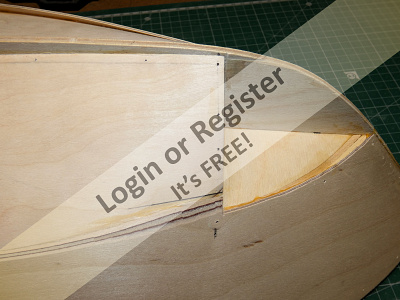
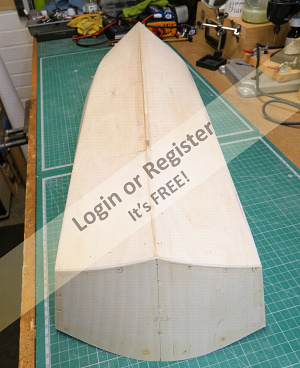
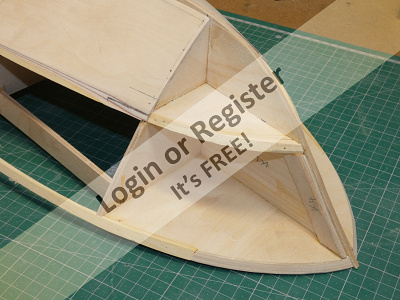
The side skins need to be trimmed back at the deck level and the chine and it’s very satisfying to see the hull taking shape. The side skins were blended into the bottom skins at bulkhead B1 and the excess overlaps of all skins carefully removed at B1 and K3 to allow for the fitting of the balsa blocks that form the lower part of the bow.

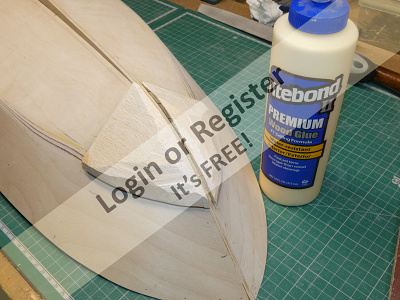
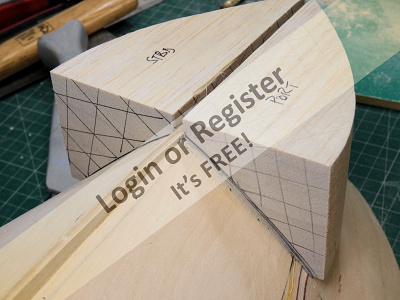
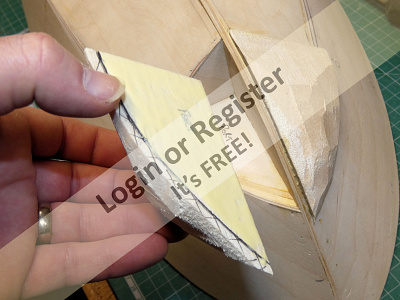
The supplied balsa blocks needed to be sanded back slightly on one face to fit properly into the recess formed by the main keel K1, bulkhead B1 and the formers K3 because those parts don’t form a true internal square but it’s easy to sand back one face of the blocks on my rotary sander. Before glueing in place the waste areas of the blocks were marked and removed with a razor saw. When set the medium hardness balsa blocks are very quickly and easily shaped with a block plane and sanding plate, and the whole of the bow area was then blended together into the bottom and side skins and the keel.

Moving to the other end of the hull, constructing the stern is the next stage described in the supplied instructions. This starts with the lamination of three balsa parts that form the upper part of the stern which are glued in place and then sanded back to the curvature of the rear deck. The transom former TS3 was then fitted between the keel and the balsa lamination.
Because I have sufficient overlap of the bottom skins I decided to fit the lower transom formers TS4 inside the skins, this involved just re-shaping them slightly to fit against the bottom skins and the bulkhead part B5. After the addition of two outer strips of obeche the whole area was then sanded back to the correct curved profile of the stern. This deviation from the supplied instructions means that the bottom skins are continuous to the stern and I think make for a stronger and neater finish. This is another thing that I may suggest to SLEC as a possible modification.

The inside faces of the stern cavity and the internal exposed areas of the stern skin were given a couple of coats of sanding sealer (but not over the glueing areas) as a precaution against any ingress of water affecting the wood as later on I will be piercing the stern to fit the ESC water cooling outlet tube.

Finally the stern skin ST5 was glued and pinned in place, as before this skin was heated and pre-formed with a heat gun and when the glues had set the skin was trimmed and sanded back flush to the side and bottom skins.

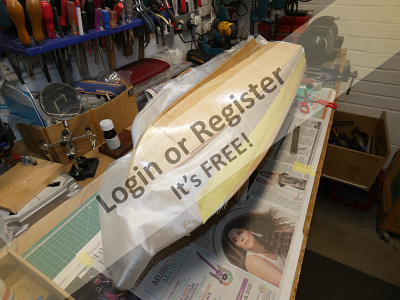
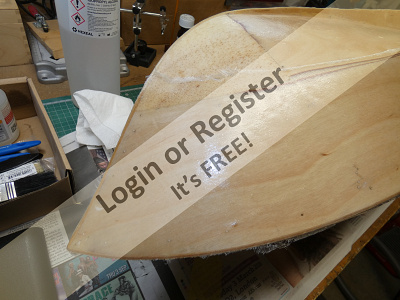
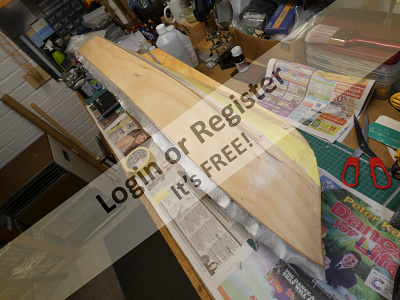
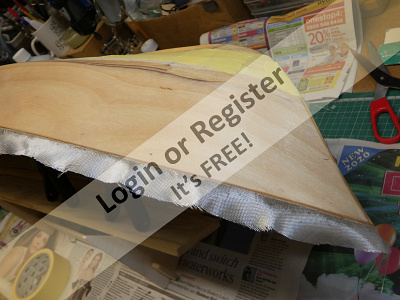
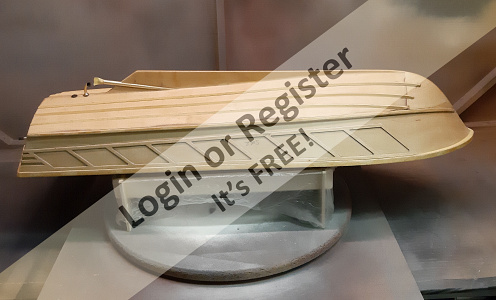
As with my other models I will be using glassfibre cloth and epoxy resin over the whole hull to add strength and to provide a good surface for the paint finishes. The hull still needs the addition of some bottom and side rubbing strakes once the fibre and epoxy stage is done.
Liked by Jay and Colin H and
7 comments

Sign in to comment on this update.

robbob
Update · 6 years ago

Fitting the deck skins and building the superstructure.

At this stage I can set the hull aside and continue work on the superstructure base which fits inside the deck aperture. If the base has been constructed properly it should fit inside the deck with a couple of millimetres clearance all round and be should be flush with the deck framework all around.
Two pieces of obeche strip were previously added to the insides of the deck aperture to support the framework at the front and rear making sure that the framework is still flush all round, if it’s not there might be a twist that needs to be corrected.
Fortunately my base was OK and so I just used my sanding plate on the base of the frame to take off any high spots.
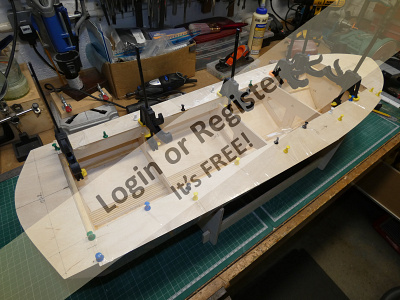
The whole deck area was also sanded to remove any high spots too. Knowing that all was as it should be I glued and pinned the obeche strips in place. The 1.5mm ply inner deck skins were then glued and pinned to the framework all the while checking that the frame was still square. When the glue had set I trimmed the skins back to the frame leaving a very small overlap to allow for finer adjustment later after the deck skins have been added.

The deck skins were added next starting with the piece that covers the bow, but before fitting it I added some additional strips of obeche and balsa to add extra support to the bow skin, this is so that when I add deck fitting at a later stage they will be supported properly. Those extra bits were sanded to the correct curved profile of the deck using the sanding plate and the upper part of bulkhead B1 as a guide.

I fitted the skin at the bow first, followed by the rear deck. The deck side skins need some additional support strips of scrap obeche fitted in a couple of places before the skins were glued and pinned in place. After the glue had set I then trimmed all of the deck skins flush with the hull sides all round.

A small amount of trimming of all of the skins was required for the superstructure base to fit into the deck aperture and if all is well the skins should all be reasonably flush.

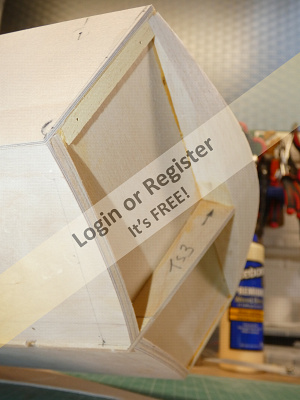
The cabin is assembled as a separate part that is fixed on top of the superstructure base. One of the cabin sides is laid flat and three cabin formers are fixed into it using the tabs and slots in all the parts and then the other side of the cabin former is attached.

This assembly was then glued and clamped together making sure that it was square and without any twist. Various additional formers were then added that form the engine room front face and other parts that form the cabin windscreen and rear door panel.

There appears to be another slight error in one of the windscreen formers that would prevent the windscreen panels sitting properly in the same plane so I re-made this part in new ply to make it to the correct angle, another item to bring SLEC’s attention to.
Liked by Jay and Colin H and
9 comments
  1. MouldBuilder
    Admiral
    Very nice work. Some of the blogs on this site are really good reference works for those, like me, who have a lot to learn. Yours are up there with the very best. It is a very useful feature of this site where you can print a full build booklet. Much better than the supplied instructions. Thanks for taking the trouble to do detailed logs and great pictures.👍👍👍
    Liked by hmsnostalgia and Missouri and

Sign in to comment on this update.

robbob
Update · 6 years ago

Re-thinking the cabin and fibre-glassing the hull.

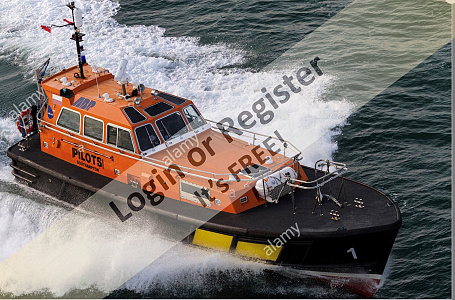
I have decided to hold off from completing the superstructure for a while I consider constructing an alternative design of cabin. There is a particularly good example of a more authentic cabin structure on a Harbour Pilots Boat that operates in Southampton Water and Skydive130 is making the same SLEC kit as me and is altering the cabin design on his to mimic the Southampton boat and making a very decent job of it👍, so much so that I think I will be altering mine in the same way. So although my cabin was actually completed weeks ago I'll be scrapping it and starting again.😮

Meanwhile I can continue with my build by applying the glassfibre cloth and epoxy resin to the hull.😁
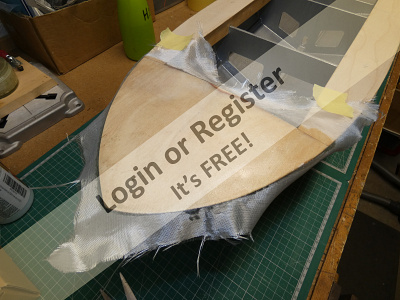
On all the boats I have built before I have done this to reinforce the hull and to provide a good surface for the paint finishes. The first stage is to give the entire hull a good sanding with a 180 grit paper and then brushing off all the dust followed by a thorough clean with some panel wipe to remove any residue of oil, grease or silicones that would react with the epoxy resin.
I used a 100gsm (grams per sq metre) woven twill cloth with a fast setting epoxy resin mix that has a 30 minute ‘pot life’ before the resin starts to become unworkable.

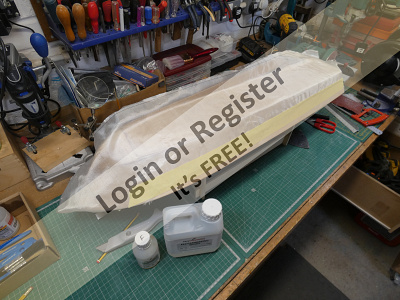
My preferred method is to apply a coat of resin over the hull and then gently lay the cloth into the resin and then lightly brushing from the centre of the cloth outwards without applying any additional resin, this ensures that the cloth settles into the resin and any creases or bumps are easily brushed out.

I applied the glassfibre cloth in five stages starting with one side of the bottom of the hull and when set continuing with the other four faces of the hull the last being the transom. This process usually takes a few days but the resulting cloth and resin surface is free from ripples and bubbles and I can then give the whole hull a light sanding to flatten the surfaces.

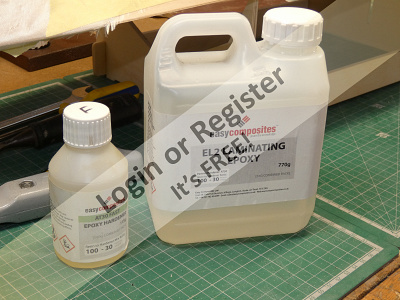
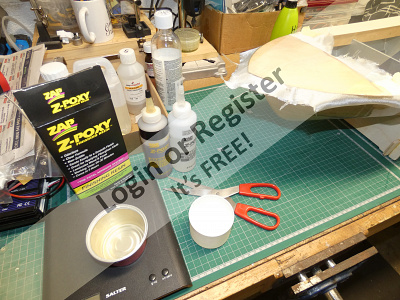
Previously I have used additional coats of the EasyComposites resin but on this occasion I used Z-Poxy Finishing Resin because the cure time is about four hours which means that I was able to apply a second coat of resin over the entire hull, again in five stages over the course of a single day. I have found the Z-Poxy finishing resin far less susceptible to producing streaks and ‘fish eye’ blemishes in the surface, but I still clean over the entire area with fast evaporating ‘panel wipe’ to remove any last traces of silicones or oils from my hands and fingers.

After leaving the resin to cure completely overnight I was able to sand the entire hull with a 480 grit ‘wet & dry’ abrasive paper used wet to flatten the epoxy to a fine finish.
The next stage will be to fit all of the rubbing, chine and lift strakes.
Liked by Jay and Ronald and
5 comments
  1. Joe727
    Commander
    Rob,
    Nice write-up and photos, good information on your fiberglassing method. Always good to have more information on techniques.
    Joe
    Liked by Missouri and Martin555
  2. hmsnostalgia
    Petty Officer 1st Class
    Hi Robbob, have you considered repurposing the original superstructure or offering it to other builders ??; good looking job so far, by the way!!. 👍👌
    Liked by Martin555

Sign in to comment on this update.

robbob
Update · 6 years ago

Fitting the Strakes and Chines.

The final bit of the glassfibre and resin stage was to apply some 50 gsm cloth to the deck, again with the Z-Poxy Finishing Resin. The whole deck surface was covered and then rubbed down to receive a second coat of resin. This deck area will later be finished with a textured coating to simulate the anti-slip surface that is usually found on service boats such as this so it’s not essential for me to finish the epoxy to a fine surface.

The rubbing strakes around the hull at deck level were tackled next and I chose to fit a 10mm wide strake rather than the one supplied in the kit. This is so that I can later fit a 10mm wide half round neoprene ‘D’ profile ‘bumper’ around the deck. The Obeche hardwood strip I used had to be ‘heat bent’ to roughly the correct curvature of the bow and I also put some relief cuts with a razor saw so that the strake could also be formed in a second plane, a somewhat torturous process for the wood to get it to conform to the bow shape particularly as I wanted the strake to be mostly vertical around the hull so that the ‘D’ profile rubber looked correct.
To achieve this I also had to fit some small spacer pieces at the bow to push the bottom edge of the strake away from the hull. The first strake was glued and pinned in place and when set the other side was fitted with an overlap at the tip of the bow which will be later ‘rounded’ so that the rubber strip goes around it smoothly. All the gaps at the bow were filled with a two part wood filler after the overlap was cut off.

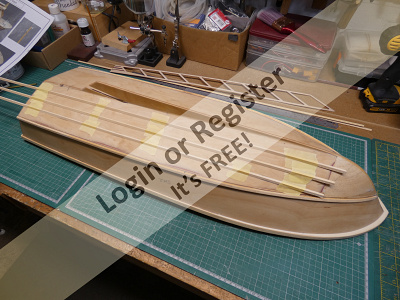
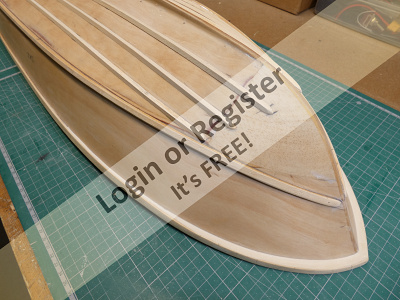
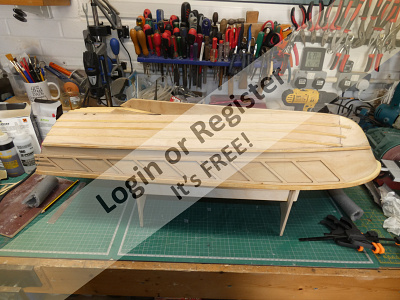
The chine strakes are also Obeche hardwood strips that needed some razor saw cuts at the bow and they were both fixed with epoxy resin glue and holding pins. The instructions are a bit vague on where they should finish on the bow keel so I had to judge this by eye with reference to the ‘photos in the instructions. I didn’t shape these strakes before fitting because it would be easier to put a small chamfer on the upper edge and shape the bow and stern ends after they were fitted.

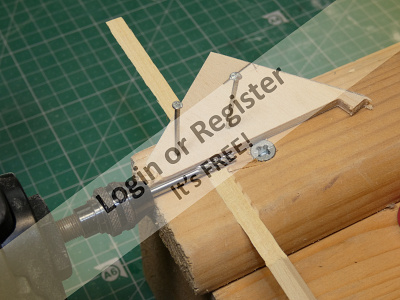
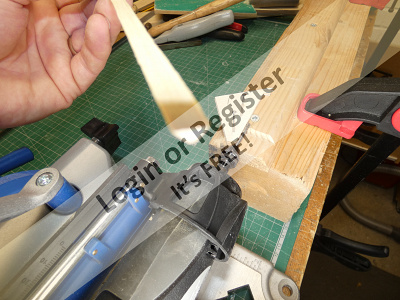
The strakes on the underside of the hull act as lifting strakes to help the hull rise when planning at speed, the instructions say that the supplied 5mm square Obeche strips should be sanded to a half round profile before fitting but I decided to make them to the true shape of a lift strake by machining them to a triangular profile. This proved more difficult to achieve than I thought, my first attempt being to try to mill them using a jig and my Dremel with a milling bit. This was not too successful and I found it far easier to just lay the Obeche strip in the long groove of an off-cut of decking timber and planning it down along its length.

I was clearly over-thinking something that was not really a problem, and the simple solution was the best.🤓

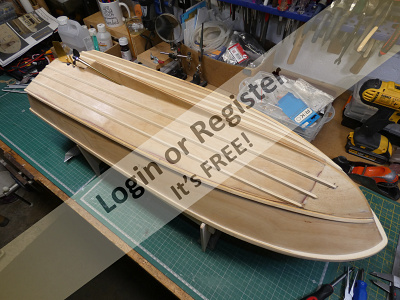
When all the strips were prepared I laid them on the hull bottom at the required spacing and pencil marked the hull with some guide lines. A small amount of bending and some relief cuts were required on each before they were all glued in place with epoxy and when set the ends were trimmed and shaped.

The side rubbing strake 'lattice' pieces will need to be added before the hull gets its final coat(s) of epoxy finishing resin. 😁
Liked by Jay and Colin H and
3 comments
  1. Martin555
    Fleet Admiral
    Nice work Robbob.
    You have done a great job and made a tricky job look easy.
    Well done.

    Martin555.
    Liked by Missouri

Sign in to comment on this update.

robbob
Update · 6 years ago

Finishing the Hull.

The SLEC kit comes with two 1.5mm ply ‘lattice’ parts that simulate the rubber bumper strakes on the hull sides and I will be augmenting these with some real rubber bumpers for added realism.
They both needed a bit of light trimming to conform to the top rubbing strake and before fixing them to the hull I gave them both a couple of coats of Z-Poxy finishing resin on the exposed faces with a rub down in between.
Using them as a template, the outline of these pieces was drawn on the hull sides because I decided to fix them to the hull using dots of superglue applied progressively to the marked areas of the hull from stern to bow rather than using epoxy glue which would tend to ooze out and need cleaning off to restore the sharp outlines of the parts. This process worked really well and the lattices went on perfectly flat with no gaps.

There are some additional small pieces that are applied to the stern and these were fixed with a light smear of epoxy resin after carefully measuring and marking their positions, the epoxy allowed for some minor adjustment of these small parts so that they all spaced and lined up correctly and when set the surplus overlap was trimmed off.

The whole hull was then given a good rub down with a fine abrasive and then thoroughly cleaned with panel wipe to remove all dust and residue before the another coat of finishing resin was applied. This was done in five successive stages so that each ‘face’ could be kept as horizontal as possible to ensure that the resin didn’t produce any runs, the quick curing time of the resin allowed this to be done in one day.

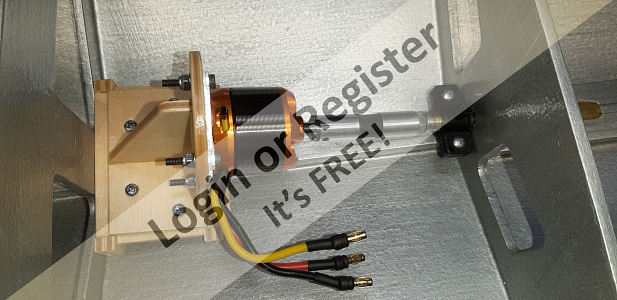
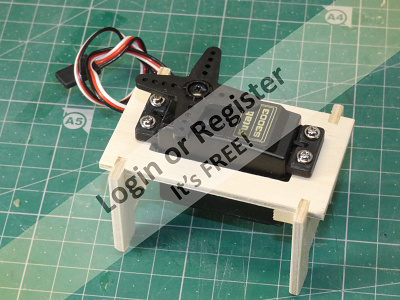
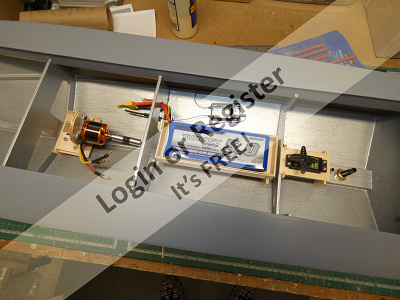
Now that I have the brushless motor I can assemble the motor mount that is supplied with the kit, the parts for this all slot together nicely and make quite a sturdy mount that has some adjustability for motor height and axial position. Using the alignment tool that I bought from ModelBoatBits along with the heavy duty flexible coupling I was able to fix the motor mount to the inner keel and bulkhead and line up the motor shaft and propshaft perfectly.
Before epoxying the propshaft tube in place the tube was drilled for the propshaft oiler which is a simple plastic ‘clamp’ type. The adjustment provided by the motor mount makes the final alignment of the shaft really quick and simple and this was left in place until the epoxy glue had set. The alignment piece will later be removed and replaced with the heavy duty flexible coupling which is dimensionally identical. The propshaft oiler will have a neoprene tube connected to it for easy access.

The hull was then given its final coat of finishing resin and then given a very thorough rub down with a 400 grit wet & dry paper used wet to polish the epoxy to a very fine finish ready for the primer coat.
Liked by Jay and Scratchbuilder and
12 comments

Sign in to comment on this update.

robbob
Update · 6 years ago

Water Cooling and Rudder.

The hull is in pretty good shape now and almost ready for painting but before I start that I need to fit a water cooling pickup and outlet and the rudder tube.

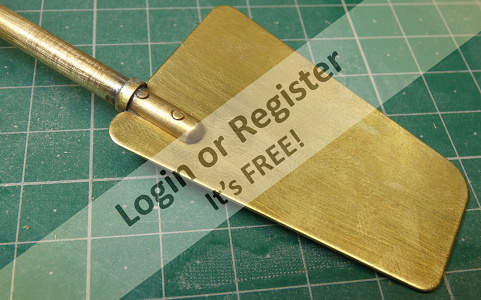
I did buy a cheap two piece plastic set that I’ve used before but I chose again to call upon the expertise of my brother and his lathe to turn a brass base for a water pickup tube similar to one that he made for me when I did my Crash Tender model;
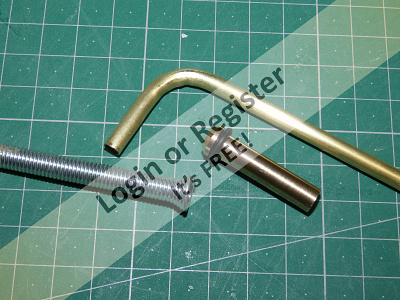
https://model-boats.com/blogs/23951

The one for this model needed to be scaled down very slightly so I provided him with a new drawing and within a few days he returned the finished part to me.
What an excellent service 👍😀

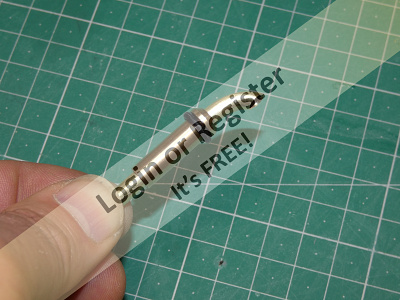
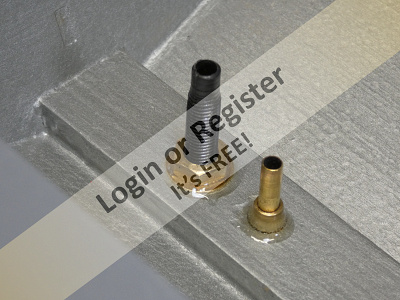
The pickup tube was then made from some 5mm thin walled brass tubing which was annealed and then bent to the required curvature using an external bending spring and then trimmed and shaped. The tube was then soft soldered into the base and trimmed to sufficient length for the neoprene tube to be pushed on securely.

The water outlet was made from some 5mm brass tube but with an additional piece of 7mm brass tube to go on the outside of the transom to form an angled collar. Previously I have used a suitably sized brass port hole as a flange but because of the angle of the transom I had to make a custom piece. These were also soft soldered together and trimmed to length.
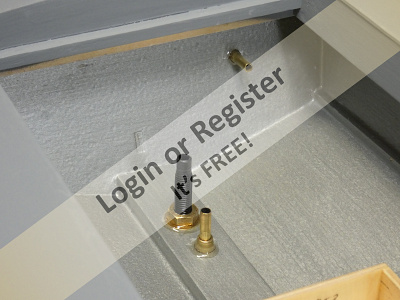
I drilled the transom at the position I had previously marked because there’s an internal wood block support between the skins for the tube to pass through, the hole was drilled horizontally, hence the need for the angled external collar.
The pickup and outlet pieces were then epoxied in place into the hull.

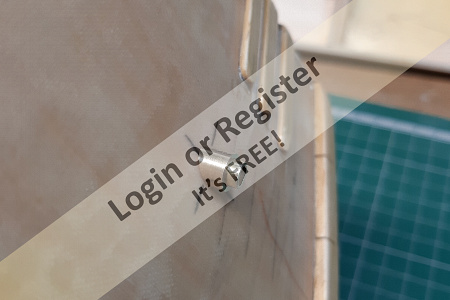
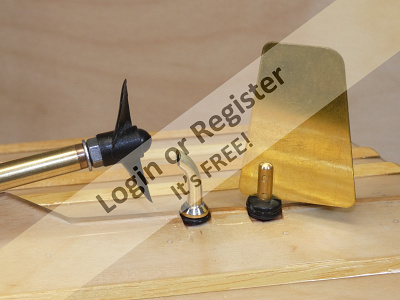
The rudder is just a basic plastic and brass type that I’ve used before and the rudder tube was simply epoxied into the keel and secured with the supplied washer and nut.

I took a tip from Skydive130 and soldered an additional brass spacer tube on the rudder shaft to make sure there was enough clearance between the keel and the rudder blade.

Good tip Sy 👍
Liked by Jay and Joe727 and
7 comments
  1. Skydive130
    Rear Admiral
    Very nice cooling pipe work Rob, your Brother could make a little extra cash if he was to sell his superb services. Oh, and many thanks for mentioning my tip on the rudder, very decent of you 👍👍👍
    Liked by alan50 and Missouri and
  2. robbobSilver
    Fleet Admiral
    Hi Sy.
    All good tips deserve mention!
    BTW.
    The new cabin is just about finished now so I'll be blogging it soon. 😁
    Rob.
    Liked by Jay and Missouri and

Sign in to comment on this update.

robbob
Update · 6 years ago

Priming the Hull and assembling the battery tray & servo mount.

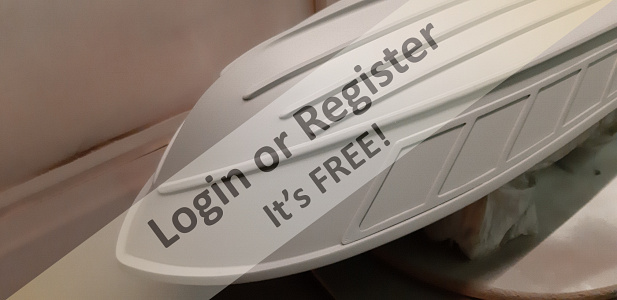
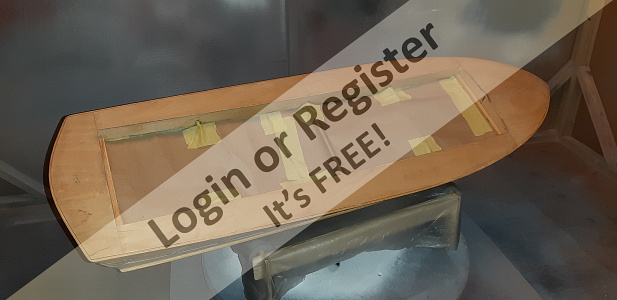
The hull is now ready for its primer coats so I masked off the deck opening, plugged the prop tube and water connections and then gave the whole thing a last rub down with some very fine abrasive paper and then really good clean with some panel wipe and a tack cloth.
It’s surprising how much residual dust a tack cloth will pick up!! 😮
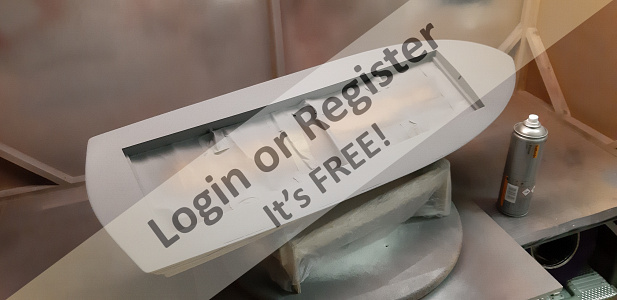
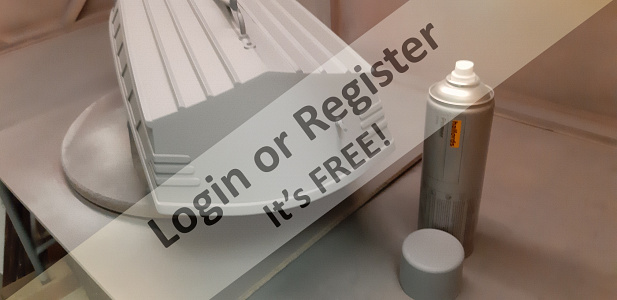
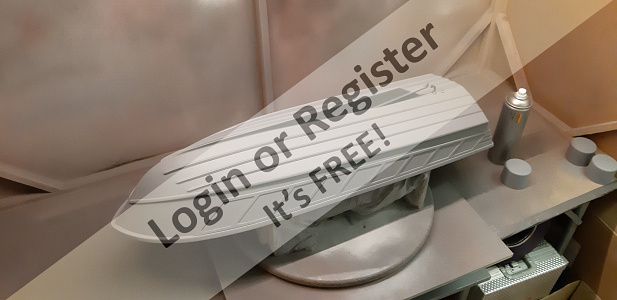
Starting with the deck I sprayed a first coat of Halfords grey primer and when that had flashed off I inverted the hull and sprayed the rest, this is where the turntable in the spray booth proves its worth!😁
After about 30 minutes the hull got a second coat of primer and when that had flashed off the deck got a second coat too.

Pretty soon I’ll need to determine the waterline so that I can paint the red oxide ‘ anti fouling’ and the rest of the hull black but I don’t really want to do that yet until I have all of the heavy stuff like the batteries and all running gear on board, and most importantly, the new cabin which will be a little bit heavier than the standard kit version .
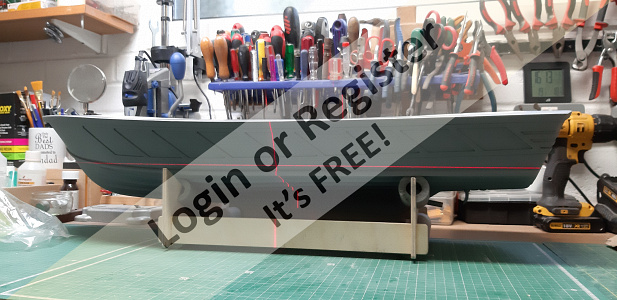
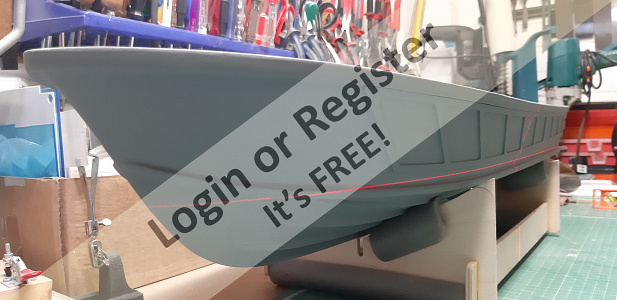
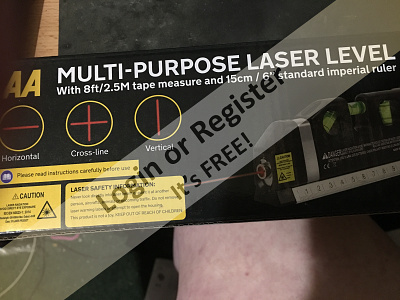
But just for now I decided to get out my self-levelling laser to get a rough idea where the waterline might cross the chines.
When I am able to do so I’ll do a float test in the bath and mark the hull at the waterline and decide if I need to allow for some ballast. I might cheat the waterline by ballasting so that it crosses the chine where I want it to for the shortest 'crossover' 😜

Meanwhile I can crack on and put together the battery tray and servo mount.
These two items are supplied in the kit and like the motor mount simply slot together with a bit of aliphatic glue to hold it all together.

A couple of coats of sanding sealer finishes them off nicely and I think I might leave them unpainted.

Now on to the new cabin.....👍😀
Liked by Jay and ChrisB and
13 comments

Sign in to comment on this update.

robbob
Update · 6 years ago

The New Cabin- Part 1

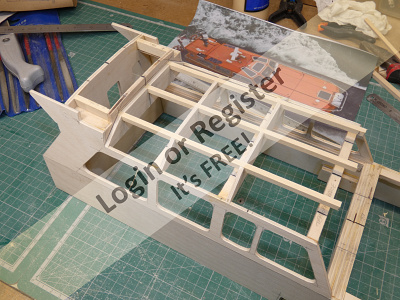
I had actually completed constructing the original cabin some weeks ago, it’s not a particularly attractive item but it is true to the original Veron design even though it is lacking in any real detail. It was only when Skydive130 announced that for his Harbour Pilots Boat he was going to re-model the cabin along the lines of a range of Pilot Boats that operate on Southampton Water in the UK that I looked at the already finished ‘kit’ version and considered a similar approach.

These pilot boats, made by a division of Vosper Thornycroft, have a much more modern appearance and because they have been widely photographed there is a greater opportunity to use them as a reference to add scale detail to the re-designed cabin. Of the four very similar boats that operate in Southampton I chose ‘Hamstead’ as my point of reference mostly because it has a distinctive green deck which makes it different to the other three which are all photographed with black decks.
You can see what this particular boat is doing at this very moment by looking at the VesselTracker website.

Skydive130 had already started constructing his version, and on seeing his excellent progress and the viability of the re-design I made the decision, after some deliberation, to abandon finishing the ‘Veron’ cabin on my boat and effectively start again. And so following my request he very kindly sent me some rough dimensions of his version for me to use as a starting point for my own.

By using his sketch and examining many of the photographs of the ‘Hamstead’ Pilot boat in great detail from all angles I drew up a side and rear view of the new cabin using ‘Mk 1 eyeball’ and a great deal of guesswork to get the angles and proportions looking about right. The new cabin has to be the same width and length as the old one and have the same bottom curvature to fit correctly onto the existing inner deck part but other than that the design can be whatever you choose to make.

When I was confident of the practicality of the new design I ordered some new ply and Obeche strip from SLEC which was delivered just two days later, excellent service in view of the current (Covid 19) situation 👍

The first thing to do was remove the old cabin structure from the inner deck piece that could still be utilised on the new design, and happily I was able to separate the two quite cleanly without much damage and only requiring a little filler to make good in a couple of places.
And so I started by transferring the drawing to the new 3mm ply sheet for the cabin sides using the time honoured method of making pin holes through the drawing into the wood and then joining up all the dots.

Fortunately 3mm birch ply is easily cut with a ‘Stanley Knife’ (always with a new blade!) and very quickly both cabin sides and the rear cabin wall pieces were cut and trimmed to be identical, including all of the window cut-outs.

From here on the construction is very much a case of ‘making it up as you go along’ but the most crucial aspect was to get the cabin sides angled correctly. There are actually two angles on the cabin sides, one to just below the window line which then changes to a different angle to the roof above that.

This change in angle of the cabin sides was achieved by scoring the inner face of the cabin sides through two of the three wood plies and then carefully making a bend along that line without snapping the remaining ply.
This worked very well and so I was then able to assemble the two cabin sides to the rear cabin wall and add some bracing pieces to form the basic structure, making sure that everything was ‘square’. The angled bend in the ply will be reinforced later in the build.

I made some cut-outs on the side pieces where the side bollards are recessed and glued some overlapping ply over them, these will be later filed and bevelled and an extra back piece glued over the opening to form the deep recess for the bollards.

The last photograph is the standard 'kit' cabin just as a reference for later comparison with the new cabin.

On with the build in the next part. 😁
Liked by Jay and Julio and
24 comments
  1. marky
    Commodore
    Looks like one of my old technical classes😉
    A wee story ,when I taught metalwork at the college of art I had a student that no matter what we did she always set something on fire mostly herself ,arc welding ,gas welding /cutting ,forge work something would go up in flames the Health and safety officer used to have a heart attack every time he knew she would be in the workshop🤣
    Cheers Marky 👍
    Liked by robbob and Martin555
  2. Nerys
    Fleet Admiral
    Being a normal mortal I can only look on open mouthed at the work and devotion to detail that you have lavished on this model. All praise!.

    Cheers, Nerys

Sign in to comment on this update.

robbob
Update · 6 years ago

The New Cabin – Part 2

I continued building the new cabin by adding bracing pieces between the cabin sides until it was a strong rigid structure. Reinforcement strips were glued to the insides of the cabin walls to strengthen the area where the sides have been bent for the secondary angle of the sides. These strips of 4mm ply are also quite wide because they will be where the brass cabin handrail stanchions will be supported so I need them to be quite strong and thick at that point.

A new bulkhead was added below the front window area which was also lightened with some large holes that will also allow me to run wiring to the forward deck floodlights. More on the lighting later.

As all of the new cabin is very angular in appearance, including all of the roofs, I was careful to preserve this distinctive feature. The rear roof initially appears to be curved but this too is angled over its width. Several roof bracing pieces were fitted between the cabin sides and then three angled roof supports made to fix to them. These pieces, which set the height of this part of the roof, were cut and slotted to receive three ‘stringers’ that will add strength and support the roof skins.

The rear roof section which also houses the navigation lights in was built up using an angled cross piece that sets the roof height and the navigation light areas made using off-cuts.
The bollard cut-outs on the sides were cut down with a razor saw and then carefully bevelled with a file. The inner back pieces were then glued in place to form the deep recess where the bollards will be fitted.

The front and roof windows are going to be quite tricky to build, particularly because I don’t want to use any roof braces which would be seen through the roof windows and because I want to make all of the roof dividing pillars as slim as possible to replicate what I see in the ‘photos of the real boat.
Liked by Jay and Missouri and
9 comments
  1. robbobSilver
    Fleet Admiral
    Hi Doug.
    I'm pleased to hear that you favourite German suppliers are operating normally, most in the UK are too but with some postal delays.

    I ordered my ESC from HobbyKing on 31st May from the HK warehouse and it has only just been delivered to me this morning, so about 22 days in all. Previous orders from HK have only taken about a week !

    Rob.
    Liked by Jay and Missouri and

Sign in to comment on this update.

robbob
Update · 6 years ago

The New Cabin – Part 3

Before I could build the front windows I needed to fit the front cabin roof and like the others it is angled so I made some angled fillets to go across the roof bearers and then cut and shaped the roof panel. I used the scoring and bending technique described earlier to ensure that the roof angles were well defined.

There are some 6mm ply support pieces on the cabin sides into which the railing will be fixed, these also add rigidity to the cabin sides.
When the roof panel was glued in place I could then make a temporary support framework around which I could build the separate window facets that form the cabin windscreens. The large centre section of the roof was to a separate element that would be fixed in place once the windows were built around it.

This process was a bit of a ‘make it up as you go along’ effort made more difficult by the need to keep the separating pillars between all the windows as narrow as possible so I couldn’t really make a structural frame for the panels to fix to. Instead they are joined internally along their edges and then reinforced with a fillet behind each join. I decided that I would cut out the window apertures later on after the rest of the cabin was built just to retain the strength of the windows while building the rest of the roof structures.

This process worked quite well and the result is reasonably geometrically accurate, but moreover looks quite faithful to the real boats front windows.

After the centre section of the roof was fixed in place I was able to cut and fit the rear roof panel, again angled, and then a triangular fillet to replicate the angled step in the roof at that point. I also fitted some 4mm ply reinforcing pieces under the roofs in various places to make strong fixing points for the searchlights, radar unit and the rear mast assembly.

The front engine room roof has a centre panel and this was cut from 1.5mm ply and fitted in place and there are also two slightly raised areas either side of that which were made from some .5mm ply.
The last ‘photo shows a comparison of the new cabin against the old design.

In the next part I’ll finish the front of the engine room roof and the rear of the cabin, cut out the boat hook recesses and make provision for the eight low level LED flood lights that I’ve decided to fit.
Liked by Jay and Missouri and
14 comments
  1. robbobSilver
    Fleet Admiral
    Hi Sy.
    I used brass fishing weights as a test for my railings, and the results were actually very good but also very difficult to bore out from 1.5 to 2mm and grind a flat on one side to silver solder the rod to, so I decided to use 2mm brass rod and 2mm internal brass tube as they are quicker and easier to produce in the quantity I'll need.
    I'd be interested in finding out more about your 'brass eyes' though.
    Rob.
    Liked by Jay and Missouri

Sign in to comment on this update.

robbob
Update · 6 years ago

The New Cabin – Part 4

The front of the new cabin was tackled next and it incorporates a recess for the life raft canister so the construction is not as straightforward as a flat plane would be.

Much like the cabin front windows it was a case of piecing it together without a framework because at this stage the cabin is not fixed down to the inner deck structure, however it came together quite well and with all of the panels in place it looks quite good.

The rear of the cabin has windows and a door and the cut-outs for these were made at an earlier stage, the frames for both will be made from Plasticard as will the door. On the real boat this rear recess is framed at roof level and on both sides and I was careful to follow the angular roof line with the top piece, which extends above the roof line, using three separate pieces of Obeche strip.
The side pieces which are flush the cabin sides but overlap the inside were made with in several sections too follow the angular profile of the back of the boat.

There are two, presumably storage lockers, on either side of the rear door and these were made from an Obeche strip framework and 1.5mm ply panels.
At this point I made some holes through the rear panel into the ‘storage lockers’ to allow for some wiring to go through for the low level deck floodlights that I’ll be fitting, and in addition to this I fitted a 6mm block of ply in all of the places that these floodlights will be. These are not only for fixing the lights into but also to allow me to recess and angle the lights slightly as I have noted that they do on the real boats.
There will be three floodlights on each side of the cabin and two in the steeply angled front of the engine compartment. A further floodlight will be fitted above the door on the back too.

Another detail that is fairly easy to incorporate at this stage are the recesses on the cabin sides in which some boat hooks are stored.
I presume that on the real boat they are recessed in a similar manner to the side bollards to prevent the crew from getting snagged on them as they move about the deck.

I marked out the recess positions as accurately as possible with reference to the ‘photos, cut through the 3mm ply sides with a Stanley knife and shaped them with files to incorporate the sloping points where the boat hook fixings are located. The recesses were then closed off from inside the cabin with some ply strips.

The last two ‘photos illustrate the differences between the old and new cabin.

In the next part I’ll describe the LED Flood Lights that I have made using high intensity SMD led’s and fixing the new cabin to the inner deck.

All of this additional detailing is quite time consuming, but I feel worthwhile, and as a relatively slow builder at this rate it will take quite a while to finish to my satisfaction. 🐌😁
Liked by Jay and Missouri and
5 comments
  1. robbobSilver
    Fleet Admiral
    Hi Sy.
    I'm pleased that I followed your lead and opted to build a new cabin 👍😀
    The 'kit' cabin was never particularly attractive and I originally intended to build it but to paint it in the orange and green scheme of one of the Southampton boats but this new cabin design has far more opportunities to detail authentically. Much more time consuming though ☹️
    I started my boat a month or more before you started yours and you've nearly finished yours while mine is still a good few weeks off completion !!
    Cheers.
    Rob.
    Liked by Jay and Missouri and
  2. Ygagnon
    Master Seaman
    I like all the detailed that you provide in the detailed construction. i can't wait to see the LED installation.
    Liked by Martin555

Sign in to comment on this update.

robbob
Update · 6 years ago

The New Cabin – Part 5

Before finally attaching the new cabin structure to the inner deck assembly I need to make the cut-outs for the ‘LED floodlight’ fittings that I’m making.
First I bored a hole through the cabin side and then enlarged this using files to the size and shape that I have previously marked out. These rectangular holes are 12mm x 8mm and they are angled down so that the LED’s cast their light onto the deck which made opening them out much more difficult as I needed them to be a consistent ‘bore’ through the timber for the light fittings to be set into them correctly.
To aid this I made up a Plasticard box section as a guide for the correct hole sizing and angles, this was particularly important for the two forward facing holes through the front of the cabin.

With all of the floodlight holes completed the next thing on my list was to mark out the final size a shapes of all of the cabin front and roof windows and then cut them all out of the 1.5mm ply with a small craft knife and needle files (with extreme care!) 😰 as I won’t be able to do this very easily when the cabin is fixed down to the inner deck. To my relief I managed all of the cuts-outs without damage to the cabin or myself ☺️

The inside of the cabin was then given several coats of sanding sealer and when dry all the windows were masked off from the outside and given two coats of matt black spray paint. The radar motor assembly that I’m fitting has a black 3D printed reduction gearbox which will be fixed to the reinforcement blocks that I put in the roof and that will be invisible against the black. There will be no detailing inside the cabin and I hope to be able to use clear acrylic for the windows with a darkening film that is often applied to car windows (if my experiments applying the film works OK).

Finally I could fix the new cabin down to the ‘old’ inner deck using epoxy, I’d previously fitted some guide blocks to the deck to properly locate the cabin while clamped down as the epoxy sets. Any gaps along the join line were filled and rubbed down and then I gave the entire cabin and deck multiple coats of Eze-Kote, flatted down between all coats, until the finish was super smooth and ready for priming.

I will describe the making of the LED floodlight fittings in a separate part 😎
Liked by Jay and hmsnostalgia and
10 comments
  1. robbobSilver
    Fleet Admiral
    Hi Mike.
    Agreed that detailing can become an obsession 😮.
    I'm just experimenting with the tinted film on the roof and cabin windows and some custom waterslide decals for all the graphics on the boat. Very encouraging results with both so they'll be another feature on my boat.
    Rob.
    Liked by Jay and Martin555

Sign in to comment on this update.

robbob
Update · 6 years ago

The LED Floodlights.

The LED’s I have used for the floodlights are SMD type (Surface Mount Device) and are incredibly small and difficult to work with but one of the advantages is that they can be easily built into small light fittings such as this 🤓

The chosen type are high intensity (1000mcd) 😎 with a daylight white colour and cost less than £1 for ten. They aren’t designed to have wires soldered to them which is another challenge but I have some .25mm (30AWG) solid core prototyping wire that is suitable and with a fine tipped iron can be soldered successfully, I did need to use my jeweller loupe to identify the anode (+ve) side though, and I made up ten wired LED assemblies with about 500mm of twisted wire each.

The floodlight casing was made from 1.5mm Plasticard strips to form an open box section 12mm x 8mm and about 200mm long which will be more than enough for the 10 lights I need (actually nine and a spare).

The box section bar was bevelled at one end by about 15 degrees and then cut off the bar to a length of 12mm. I then used some .7mm black Plasticard to line the inside of the box and then flatted both ends to make the black card flush at both ends. A 15mm length of 3mm square Plasticard tube was glued inside the back of the piece on all four internal faces and then some 1mm card used to close off the back of the box that is formed.

The LED wires were then passed through from the front so that the LED sits firmly and deep within the box and then the part set in a holding jig while some clear epoxy resin is fed into the front of the box until it’s full and producing a raised bump. I did de-gas the resin mix with a quick blast from my heat gun to remove as many small bubbles as possible that might cause problems when the epoxy is ground flat.

The epoxy is just the 30 minute Z-Poxy stuff that I generally use, although I could use a special ‘water clear’ casting resin but the Z-Poxy is more than adequate.

After allowing the resin to cure over night I could then flat down the epoxy to be flush with the angled front of the box. Although I could polish the epoxy to be mirror smooth and completely clear I actually want a slightly rough surface that will obscure the LED and also diffuse the light to an even spread.

The finished light fittings now have a white outer frame with an inner black frame and frosted lens and look very similar to the ones on the actual boat. I might try to simulate the six fixing around the light somehow.

All eight of these deck lights along with a roof level floodlight above the rear cabin door will be wired to a circuit board with a dropper resistor for each and connected to one of the two R/C controlled switches that I’m using for this deck lighting with a second one for the mast lighting circuit and all of this lighting will be supplied from a separate battery supply.
Liked by Jay and ads90 and
10 comments
  1. Colin H
    Fleet Admiral
    Brilliant idea, I think my hands aren't steady enough to do it, but I might have to get the wife to try for me.
    Cheers Colin.
    Liked by robbob and Martin555

Sign in to comment on this update.

robbob
Update · 6 years ago

The New Cabin – Part 6

Thinking ahead about a practical storage solution for this boat I found some very large plastic storage boxes with lids in which this Pilot Boat can be safely stored.
They are a perfect fit for length and beam but if I install a fixed mast on the boat it will either have to made smaller than scale to fit within the internal height of the box or alternatively I could make it foldable which might be difficult with the navigation light wiring….hmmm 🤔.

Perhaps very slim supporting foam blocks in the bottom of the box instead of the supplied stand?......a problem for solving later 😀!

I made the engine compartment air intake grilles from some 1.5mm ply with thin strips on the back so that I could rebate a fine stainless steel mesh with a black Plasticard backing piece. When painted silver and assembled they look quite good, I may try to replicate the fixing screws/bolts around the perimeter somehow. These will not be fixed onto the cabin until the final stages.

The colour scheme I’ve chosen is ‘Lifeboat’ Orange for the cabin, textured green for all the deck area and a red and black hull. Fortunately these colours are all available ‘off the shelf’ from Halfords.

I masked up the cabin and gave it two light coats of Halfords white primer, left it to dry overnight and then flatted ready for the first coat of the VW Brilliant Orange gloss. As always I wiped over the entire part with panel wipe to remove any residual dust and skin oils. The first orange coat was sprayed and left to thoroughly dry off and even at this stage the surface finish looks very smooth so all of the thorough paint prep is already proving its worth.

In the meantime I made the small vents? that can be seen on either side of the cabin with the fourth one on the engine compartment roof. These are just small pieces of shaped Obeche sealed, primed and sprayed orange. One of them is a double piece and to make placing them easier I cyano glued them to some .5mm Plasticard as a pair. The other single pieces were also backed with Plasticard.

I made up the engine room roof dummy window from ply and Plasticard and temporarily placed it on the cabin roof to gauge the position of the little roof vent.

The other large protrusions on the cabin sides are some other kind of intake/vent/outlet? not quite sure what, but they were made up from laminated ply with all of the sides bevelled as in the real part. These were also backed with .5mm Plasticard trimmed to a narrow border then sealed, primed and painted orange before being cyano glued to the cabin sides.

The cabin was then flatted with 1200 grit used wet to give a key, cleaned off with panel wipe and then given a second coat of orange gloss.
Later it will get a third coat and then a gloss lacquer over that to seal the graphics that I’m producing and to provide the final high gloss finish I want 😎.

The hull is primed and ready for paint so I’ll be doing that next.😁
Liked by Jay and hmsnostalgia and
11 comments
  1. robbobSilver
    Fleet Admiral
    Hi Peter.
    Thanks for checking and letting me know.
    I'm going to be spraying the deck with the Halfords textured green paint tomorrow and I'll see if it matches my expectations...if not I might get a tin of Emerald Green (RAL6001) from somewhere and go over it with that.
    Cheers.
    Rob.
    Liked by Jay and hmsnostalgia and

Sign in to comment on this update.

robbob
Update · 6 years ago

Painting the Hull.

The complete hull has had a coat of grey primer which revealed some minor imperfections and these were fixed before a second coat was sprayed and then flatted. After roughly masking off the hull sides the first of two coats of Halfords red oxide primer was sprayed and after removing the masking this was also flatted down with a 1000 grit W&D paper used wet.

The next process was to establish the position of the waterline in the ‘test tank’ (bath) and to get as true an indication of its position. After plugging the prop tube and water connections I thought it best to load up the hull with all the hardware and fittings that will go into and onto the boat, this included all the electrics and running gear and also all of the rubber that will be used for the fenders.
Once in the water it settled just about where I expected it to and with some difficulty I managed to put some pencil marks on the bow and stern. After I’d finished all that I remembered that I perhaps could have tried the old ‘talcum powder on the water’ trick to mark the line…does it actually work?
Anyway I don’t think we have any talc!

Back in the workshop I put the boat on the bench and set about converting the pencil marks into a waterline using my self-levelling laser and even at this stage I can sense that it will be difficult to apply a waterline where it crosses the lower chine whether I use vinyl tape or by masking and painting.
I do so hate that aspect of boat modelling as I’ve always had trouble with it….and I believe I’m not alone in that!!😠

Despite my reservations I continued by masking off the red oxide coat up to the waterline as accurately as possible using a low tack tape and masking paper. The first coat of Halfords black gloss went on well and didn’t require much flatting after it dried properly but when I sprayed the second coat I think there was too much humidity after a rainy night so despite warming the workshop and hull the second black coat dried with a pronounced ‘blush’ on the surface☹️
Disappointing but not a disaster because I’d always intended to spray a third and final coat anyway and even that will be lacquered over after the hull graphics are applied.
So out with the 2500 grit paper and ‘elbow grease’ and very quickly the surface was prepared for the third coat which was sprayed on a very warm and dry day and resulted in a perfect finish.

Meanwhile I have ordered some 4mm and 5mm vinyl pin-striping tape from my usual source and I’ll decide which looks the best ‘scale’ when it arrives.😁
Liked by Jay and hmsnostalgia and
21 comments
  1. robbobSilver
    Fleet Admiral
    Hi Doug.
    Well my little experiment seems to prove otherwise and that was two thick coats left to fully dry and a fresh Swan Morton blade ! The substrate by the way was the matt side of some Plasticard sheet.
    Perhaps it does work with the Revell equivalent ?
    Rob.
    Liked by Jay and hmsnostalgia and
  2. RNinMunichBronze
    Fleet Admiral
    "the Maskol just gets picked up on the blade and 'rolls up' leaving a jagged edge"
    Hmm! Yep Maskol does look significantly different Rob.
    More jelly like, translucent and very flexible.
    Color Stop is an opaque beige colour and dries to a relatively stiff film which you can remove in strips / sheets without rolling up.
    Also I used a curved blade rather than a sharp pointed one so it cuts rather than dragging, and occasionally took the precaution of using a straight edge to guide it, e.g. end of a 6" steel ruler.
    Only snag with it is that if you don't use it for a few months it starts to go off in the bottle🤔
    So far I've only used it on plastic kits, what it was designed for. But see no reason why it shouldn't work on any prepared sealed surface.
    Cheers, Doug 😎
    PS wondered where the pic (your pic #1)came from that snuck into my post! Might have guessed🙄 I quickly booted it back out again.
    Liked by Rookysailor and Martin555

Sign in to comment on this update.

robbob
Update · 6 years ago

The hull graphics, and tackling the dreaded waterline!

Firstly on with a bit more painting with the deck finish. The textured paint is a Halfords product and conveniently is quite a close match to the colour that I think it should be RAL6001 Emerald Green in a satin finish. I’ve looked into getting a can of Emerald Green custom mixed and at £16 excluding delivery it’s quite an expensive option just to get the colour I’d prefer…….but I’m tempted.🤔

After carefully masking the hull the deck was cleaned off with panel wipe and two coats were sprayed about 15 minutes apart. I’m quite pleased with the level of texture bearing in mind that after over coating with a satin lacquer will lessen the texture a bit. The forward and rear deck areas of the cabin structure will also need to be painted with this textured green paint but I won’t do that until the cabin graphics are applied and lacquered.

My model is based on the ‘Hamstead Southampton’ Pilot boat and so I had a 6mm high white vinyl name graphics made for a few pounds and applied them centrally on the stern. On the real boat the name and home port are actually at the same level but either side of a rear ladder structure which I won’t be detailing on my boat so I think the central position looks better than splitting it with a big gap in between.

There are two areas within the rubber side buffers which are painted in a very conspicuous yellow, presumably for some identification or visibility reason. Rather than try to paint them I thought I’d try using some self-adhesive film that sign makers use. Sourced from eBay as a ‘sample size’ they proved very inexpensive and after making card templates for sizing they were also ‘hinged’ into place using masking tape after peeling off the backing paper. They went on surprisingly easy and are a much better fit and finish than I could achieve with paint. Also masking off for paint would be a nightmare too!

Now that the white self-adhesive vinyl tape has arrived I can’t really put off doing the dreaded waterline any longer. 😰

I have decided to use the 5mm wide tape as it looks to be the correct proportion. Because I’ve always had problems with the waterlines on my models I try lots of things to mitigate against the tape lifting and that includes removing any raised edge where the red and black paints meet by masking either side and flatting the join with some very fine abrasive and making sure that the area is perfectly flat and clean.

Starting from the stern the tape was applied over the paint join, and where it crosses the chine I chose to make a cut at an inconspicuous place under the chine and continue with a second piece to the bow. This worked well and was repeated on the other side and then the stern was tackled last. The tape was thoroughly rubbed down onto the hull with a soft cloth and seemed to have stuck quite well.
I left it overnight and returned to find it was quite OK over the long flat areas but had very slightly lifted at the edges where it crosses the chine, to be honest, much as I expected! 😠 The solution I have found in the past is to gently lift the tape edges and apply ‘micro dots’ of cyano applied with a pin (sharp end) and pressing the tape back with firm pressure with a smooth rounded tool. Done correctly the cyano doesn’t ooze out and affect the paint outside of the tape edge. I also use a dot of cyano to secure the tape ends where they join and overlap at the chine and at the joins at the bow tip and the stern corners. I left it for a few days….. and to my relief there were no more signs of lifting so I’m happy that it’s finally done. 😊

The last hull graphic are the ‘3’ numerals at the bow, and again these are white vinyl and 20mm in height. Applying them symmetrically involved making a template, which is common to both sides of the bow, with a square cut-out at the required position. The numerals were applied by ‘hinging’ the self-adhesive number into place.

The black area of the hull will later be sprayed with a gloss lacquer to seal the waterline and the bow numbers and stern graphics in place but in the meantime I’m making the ‘waterslide’ graphics for the cabin detailing. 😁
Liked by Jay and hmsnostalgia and
8 comments

Sign in to comment on this update.

robbob
Update · 6 years ago

Waterslide graphics for the cabin, and the value of paint tests !

The Southampton Pilot Boats have some distinctive logos and graphics on their cabins and I thought I’d have a go at making my own rather than getting them made in vinyl by a graphics studio.

I have used waterslide ‘decals’ many times in my youth as an avid Airfix and Revell model kit maker so I know how they work and how to use them but I’ve never tried making my own. Fortunately there are quite a few helpful videos on YouTube that illustrate the process and all that is required is a bit of work with a graphics package, I use Adobe Photoshop and Illustrator, a good inkjet printer and the required clear and white backed transfer paper.
The latter can be bought readily from eBay and while being quite expensive as a single A4 sheet they are available as mixed multipacks at reasonable cost. Inkjet paper is most common but you can also get a Laser Jet version of the paper too.

The process starts with identifying the logos and obtaining a good quality .png of .jpg file of the required logos but our friend Google makes this very easy and once in the graphics software they can be re-sized, re-coloured and manipulated with ease.
The most difficult aspect is gauging the correct proportions of the logos and text by studying the ‘photos of the real boats, which is quite difficult without having something to reliably scale to. The large black ‘PILOTS Southampton’ text is just Arial bold so that’s very easy to generate.

I made a test sheet of the graphics in my Canon ink-jet printer on Best Photo settings, left them to dry and then used some ‘Rust-Oleum’ clear lacquer (in a rattle can that I wanted to finish up) to overspray the decals to ‘fix’ them and protect the ink from dissolving away when placed in water as is recommended in the instructions that come with the paper.
A selection of these graphics were then applied to my ‘test piece’ which is painted in the colours I’m using.
I also used some ‘Micro Sol’ and ‘Micro Set’ fluid to aid application and ensure correct bonding of the decals.

The final part of the testing involved spraying the decals with lacquer as a protective coating….and that’s where the benefits of doing a test piece first comes to the fore.
To my horror the decals had a very bad reaction to the Halfords clear lacquer that I used and started wrinkling up before my eyes, I quickly grabbed my ‘phone and videoed this happening 😲

You can see the wrinkling happening in the video clip.

(EDIT: The clip was uploaded as a .mp4 file but mysteriously gets changed to a .mpg4 file by the site when you download it, rename it a .mp4 if it doesn't play after it's downloaded.)

I believe that the two different brands of lacquer, both supposedly acrylic, reacted with each other and hence the wrinkling. I can’t imagine how furious I would have been if I’d not done this test and applied the decals to the cabin right away and then used the Halfords lacquer over them. The work involved in rectifying that disaster would be extensive 😡

Did I dodge a bullet or what!!! 🤕

I threw away the remnants of the offending ‘Rust-Oleum’ lacquer immediately.

Having learned a valuable lesson I went on to make a fresh set of decals on a new clear sheet and also a second set on a ‘white’ sheet because part of the testing proved that the blue of the ABP and Babcock logos doesn’t resolve very well over the orange paint but worked much better when produced using the ‘white’ background paper which has greater opacity.
The red and white ‘flag’ marking also had to be made using the same paper.
These new sheets were lacquered with a couple of coats the Halfords stuff and left overnight to thoroughly cure.

Applying these home-made decals is no different from the ‘Airfix’ method but I did use some Micro Sol & Micro Set as before and all the decals were applied without any problems. Although I did have to cut out and apply the ABP letters individually.

I also made some ‘bolt head’ decals to put on the engine vent panels that go on the cabin sides as I thought that they might look better than adding protruding bolt heads. The panels look quite effective with the black backing and stainless steel mesh in place. These will be fixed in place in the final detailing.

The complete cabin was then put in the spray booth (no masking required for a change) and given three coats of Halfords clear gloss lacquer without any ill effects (much to my relief) and I only have one very small run in the lacquer to polish out.

Thankfully that’s the only remedial work I need to do.😀

Next up, the life raft container.
Liked by Jay and Ianh and
8 comments
  1. robbobSilver
    Fleet Admiral
    Thanks Rick.
    I'm quite enjoying the detailing of the boat, a lot of scratchbuilding which I don't usually do but the results are very pleasing (so far). The last major job is the handrail and safety rails and 'cos that involves drilling holes all over the freshly painted and lacquered cabin I'm a bit nervous 😰
    Robbob.
    Liked by Jay and hmsnostalgia and

Sign in to comment on this update.

robbob
Update · 6 years ago

The Life Raft Container.

I abandoned my first attempt at the life raft container after realising that the plastic waste pipe that I had used was far too large in diameter to be realistically ‘scale’ so I went about looking for some other tube of a more appropriate size.
Fortunately the answer was almost staring me in the face in the form of one of the cardboard tubes I use to store some of my styrene extrusions and brass collection.😀
This 30mm cardboard tube is perfect for my needs so I carved off a bit from my improvised storage tubes and ‘wrapped’ it with a thin veneer of .25mm Plasticard sheet to give it a better surface for further detailing and a good base for painting.

The tube was then cut to length and some balsa end pieces laminated together and glued into the ends which were then shaped with files and abrasive paper to a domed profile before being given several coats of epoxy finishing resin to smooth and seal the grain.
I added strips of half-round and flat Plasticard to simulate the opening edges of the container and the banding around the circumference and after a smoothing off with fine abrasive this piece was primed ready for painting.

The container is retained on a support structure and this was made from some 3mm Plasticard by drilling a 30mm diameter hole through a single sheet with a step cutter and then cutting that into two equal parts. These were then temporarily ‘pegged’ together with a bit of Plasticard rod so that I could work on the shaping of them knowing that they would both be identical.
These two supports were then fixed to some feet and bracing pieces fitted between both to add strength and rigidity and to provide a means of fixing the part to the cabin structure.
This was also primed and then sprayed, along with the container piece, with some Halfords ‘Appliance White’ gloss.

The ‘checkerplate’ front panel was made separately in two parts, the first is a backing piece 1.5mm thick cut to the correct size and shape onto which I laminated a piece of .5mm embossed ‘checkerplate’ styrene sheet.
This stuff is made by ‘Slaters’ and is usually used for architectural modelling and by locomotive model builders but is ideal for my purposes too.

This part was then sprayed silver and when all the painting was dry and hardened the checkerplate panel was fixed to the supports. The contained drops neatly into the support and is almost a perfect friction fit but I will join the two pieces with a couple of spots of CA glue.

A single screw will hold this Life Raft Container assembly to the cabin through the underside of the deck and will be fixed in place at final assembly.
Liked by Jay and Colin H and
20 comments
  1. mturpin013Bronze
    Admiral
    So many comments Rob, simple solutions are always the best and usually right in front of you. I often get asked by my wife when out and about "what are you looking at" and its usually something to do with modelling. - Keep your eyes peeled at all times. Nice job
    Liked by hmsnostalgia and Martin555 and

Sign in to comment on this update.

robbob
Update · 6 years ago

The Mast

The mast presents a particular challenge in that I can’t actually make it to the correct scale height. This is because I don’t want it to be a de-mountable item as it will have a LED navigation light at the top with the associated wires, some rigging with stays and flags but mostly because the large plastic storage box that I have bought for it doesn’t quite have sufficient internal height for a ‘scale height’ mast. 😠

After careful measurement of the boat in the box, supported by the minimum amount of foam supports underneath (and after reducing the length of the rudder slightly too), it is apparent that the mast must not exceed 95mm above the roof of the cabin.
Having reminded myself that this model is not to true scale anyway and only a representation of the actual craft I can justify using ‘modellers licence’, or ‘creative liberties’ as I’ve seen it described elsewhere, and the only person I have to justify it to is myself.
It also appears that the four pilot boats that operate in Southampton Water all have slightly differing mast and antenna configurations and the ‘Hamstead’ boat has a simplistic one which will be a bit easier for me to model.

So with this in mind I began by cutting some 6mm diameter brass tube to the required height plus enough to go through the roof and the ply reinforcing pieces that I installed earlier in the construction of the cabin.

At the very top of the mast is an antenna which would add another 60mm or so to the mast height so I decided to make it easily de-mountable by virtue of some tiny 2mm x 4mm neodymium rod magnets. Minute little things but incredibly powerful for their size!

The antenna base is formed from some brass sheet drilled out to 6mm for the mast and 4mm for the short brass tube that holds one of the magnets, these were silver soldered together for strength.
A cross piece was also fitted into holes drilled through the mast, this was also silver soldered and then bent to shape and trimmed and some fine brass wire loops soft soldered to the ends to which some rigging ropes will attach for the flags and pennants. Some Plasticard reinforcing fillets were shaped and glued to this cross piece too.

Also at the top of the mast is a white ‘dustbin’ thing (technical term 😆) I’ve no idea what it’s for but I made that from some white plastic rod with some thin strips of banding around it
The white ‘thing’ ,and all of the mast lights, are held in place with some 1mm brass rod bent to shape to form support brackets and all are soft soldered into holes drilled through the mast tube.

The 360 degree white navigation light at the top was made from a 3mm white LED inside a commercially made clear navigation light lens fitting, conveniently also 6mm in diameter to match the mast. Some miniature wires were soldered to the LED and sleeved with heat shrink tube.
At the base of the mast the 6mm brass tube goes into a short piece of 7mm tube and then through an 8mm brass porthole that acts as a mounting flange to seat the mast onto the cabin roof.
When all of the brass-work was completed I gave it a light coat of etch primer and then a couple of coats of matt black. I made the false navigation lights from some styrene rod and these are just painted to simulate the colours of the lights.
I did consider making these ‘active’ with some micro LED’s but there is actually a limit to my dexterity and patience!! 🤓

After testing the LED the wires of the top navigation light were passed down the inside of the mast and the lens unit glued in place with some canopy glue, which will hold it firmly but could be easily removed if required. The top of this light was given a ‘dot’ of black paint just to complete the effect.

The antenna is just made up from some 2mm styrene rod and tube and the magnets are a good fit inside the 3mm dia tube but glued anyway. The small magnetic base magnet was glued into the brass tube at the top of the mast and the antenna very neatly ‘snaps’ into place as the magnets meet as you can see in the video clip.

I’ll fit the mast in the final stages of completing the cabin.

Now…onto the Radar unit !😎
Liked by Jay and Colin H and
11 comments
  1. robbobSilver
    Fleet Admiral
    Hi Kevin.
    Thanks for identifying 'the white thing' 👍 it all makes sense now. 😀
    Presumably it's a passive device then?
    Rob.
    Liked by Jay and hmsnostalgia and

Sign in to comment on this update.

robbob
Update · 6 years ago

The Radar Unit.

The radar unit is something that deserves to be made as a ‘dynamic’ feature rather than a static fixture and Simon (Skydive130) showed the way forward on this and set the bar quite high too!.
Determined to at least match his efforts I set about making my own. The first consideration was whether to build it around a micro servo modified for continuous rotation, or concoct my own motor and gearbox solution or buy something ready-made. I opted for the latter as it was readily available and quite well engineered (but not inexpensive!)
https://www.mr-rcworld.co.uk/shop/radar-motor-gearbox/

It consists of a small DC motor coupled to a gearbox and controlled by a small circuit board that enables it to be connected to and be powered from the receiver, which means it can be switched on and off using an auxiliary radio channel.
The small PCB also has a variable pot to allow adjustment of the rotational speed.

Fortunately the ‘Furuno’ radar units fitted to the pilot boats are quite common and some very useful specifications and dimensional drawings can be found on the manufacturer’s website which makes life a little bit easier.

The radar unit ‘scanner’ bar was made first by laminating some square styrene bar and some half-round profiles to form the basic shape which was then worked with files and abrasives to the right shape and then some end caps were fitted to this after cutting the bar to length.
I found a useful little splined brass collar on RB Models website which is perfect for the attachment of the scanner bar to the drive shaft with a grub screw fixing. This collar was set into the underside of the scanner on a rectangular fixing plate with a styrene collar to conceal it. Some styrene hex bar was used to simulate the fixing bolt heads.

The main supporting pillar ‘bearing’ was made up from a combination of brass tube, styrene tubes and brass rod with a brass porthole at the base to simulate the roof mounting flange. The 2mm brass rod at the centre of this piece was threaded at the bottom end to mate with a short piece of 3mm brass tube onto which I silver soldered a 2mm brass nut which I reduced down to the diameter of the tube.
This short tube fits over the motor/gearbox output drive shaft and it will allow me to separate the drive shaft from the motor and so very much simplify the final fitting and adjustment. This brass adaptor tube was epoxied over the drive shaft and after a quick test this shaft proved to be a very smooth and free running within the support pillar bearing.

The unit at the top of the pillar is the motor unit on the real thing, and this was made from some obeche square section wood laminated together and the drilled centrally to accept the supporting pillar.

This obeche wood was then formed to approximately the right shape by carving and filing and adding some very thin Plasticard overlays to finish it off.

When I was happy with the shape of this motor housing I sealed and primed the wood and finished it with a coat of white gloss, the scanner bar was also sealed and painted in the same way. This pillar and the motor unit were glued together and I then added a square mounting flange made from some Plasticard sheet and finished with some more simulated bolts. After a final overall coating of gloss white I painted the pillar below the square flange with some silver paint.
I had previously made some waterslide transfers of the Furuno logo and this was applied to the face of the scanner bar and really makes the part look authentic.

I assembled all of these bits together to test and found that a .25mm PTFE ‘shim’ between the top of the drive shaft and scanner bar greatly improved the rotational smoothness. The next thing to do was drill the cabin roof to take the pillar, the lower part of which extends below the mounting flange and passes through the roof to be flush with the underside of the roof panel.
The motor and gearbox unit was slightly modified with a brass tube spacer between the mounting flanges to add strength for the screw fixing and some neoprene ‘pads’ applied to form a resilient interface between the gearbox and the cabin roof so that the unit has a bit of ‘give’ rather than be rigidly fixed.
The 2mm brass central drive shaft was then fitted by screwing this down through the bearing into the threaded gearbox adaptor and the scanner bar fixed to the top of the shaft with the grub screw (not forgetting to add the shim in between). Fortunately I got all of the measurement right so I didn’t need to adjust the length of the drive shaft.

The whole assembly was then given a final bench test using a 1.5v battery to run the motor and it works really well and is also fairly quiet in operation too. Satisfied that all was well the mounting pillar was temporarily set into the hole in the roof and the motor/gear box and output drive shaft centralised in the pillar bearing so that the fixing holes in the gearbox could be marked and drilled. With this in place the scanner bar was fitted and secured with the grub screw and the whole unit tested again to check that there was no additional friction that would affect the rotation.
Happily all was well, and satisfied that it worked as intended and also looked fairly authentic I then removed it all and set it aside ready to be fitted in the final assembly of the cabin.
Liked by Jay and hmsnostalgia and
19 comments
  1. hmsnostalgia
    Petty Officer 1st Class
    I've never done this sort of model building and having seen Robbobs & others results the phrase 'I'm not worthy' springs to mind, however it is also inspirational and you can start your modelling journey with more modest goals and still achieve something very satisfactory , hats off to Robbob & others in their never-ending quest in raising that bar !!.👍
    Liked by Martin555 and robbob

Sign in to comment on this update.

robbob
Update · 6 years ago

Painting the deck ...twice!

The main deck area has already had two coats of Halfords textured green paint and the colour is very nearly the shade I was looking to reproduce. After a lot of fruitless research on the actual colour used on the real boat decks and some useful suggestions here I decided that ‘Emerald Green’ was the closest match to the colour I want.
After a lot of consideration and a small cash injection to my budget I ordered a can of custom mixed spray paint in RAL6001, Emerald Green, from a company I’d used several times previously.
The plan was to overspray the Halfords texture with a light finishing coat in the new colour, and the satin finish option was chosen so that I might not need to overcoat that with a lacquer.
The paint arrived a few days later and so I did a spray test on a piece of scrap and noted that the colour was quite a few shades lighter that I was expecting. Thinking that I just needed to mix it a bit more thoroughly in the rattle can I carried on a masked up just the fore deck and rear section of the inner deck which was just in grey primer coat and sprayed two coats of the Halfords paint to apply the texture and then after a few hours of drying time I sprayed a light coat of the ‘Emerald Green’ satin finish.

What a major disappointment 😡
The RAL 6001 is still not giving me the colour I was expecting so I decided that on balance I was better off just going with the Halfords green and lacquering that with a satin finish. Unfortunately there was insufficient Halfords green to re-spray the areas so I had to venture out and buy a new can of the Halfords green and a can of satin lacquer. ☹️

This new can was used to go over the fore and aft inner deck areas and to my dismay it turned out a completely different shade to the main deck area which was sprayed with the first can of Halfords green.
Time for another think and a new spray test.

The test piece can be seen in the picture with the paints identified by text.

I concluded that the Halfords paint was a completely different batch mix so It meant that I had to re-spray the main deck again from the new can. 😠

So…mask everything up all over again, hull and inner deck..…into the spray booth…two coats over everything….leave to dry…..two light coats of satin lacquer…. and cross my fingers.🤞
Amazingly the new Halfords colour with an overspray of satin lacquer rendered pretty much the exact shade of green I was after all along so my disappointment was tempered somewhat by this happy conclusion. The colour is very satisfactory and texture has been preserved by the light coats of lacquer 😀

The question remains whether the custom mixed RAL6001 ‘Emerald Green’ had been badly concocted in the pigment mixing or my colour perception is way off, and should I take the matter up with the supplier? 🤔

I’ll most likely put it down to experience but it has set me back by quite a few days and at the cost of quite a few beers.

Still,….. onwards and upwards!! 😁
The next bit is electrics which I feel much more at home with than painting. 😎
Liked by Jay and hmsnostalgia and
11 comments
  1. hmsnostalgia
    Petty Officer 1st Class
    I would guess that all modelers are at the mercy of paint suppliers and you just hope that different batches are only slightly off, or go over the top & equipe yourself with an appropriate number of colours & finishes to mix yourself!!, not something the vast majority of modelers would contemplete, but the frustrated hair pulling & extra work is seen as part & parcel of their hobby !!, is there a middle ground ?.😲
    Liked by Martin555 and robbob
  2. robbobSilver
    Fleet Admiral
    Hi hmsnostalgia.
    Unfortunately 'rattle can' paints have to be factory mixed so you are reliant on the diligence of the person mixing the pigments in the correct ratios.
    On a small scale you can mix your own colours if you own an airbrush but even that may not give repeatable results.
    It was annoying and expensive to have to re-do the painting 😡.
    Robbob.
    Liked by Jay and Missouri and

Sign in to comment on this update.

robbob
Update · 6 years ago

The Motor and Electrics.

I wasn’t going to paint the battery box, motor mount and servo mount but after remembering a previous comment (thanks Martin555 👍) I decided to spray them silver to match the hull interior so I can now install all of the electrics and running gear into the boat.

First I needed to make a switch and fuse panel as the foundation for the wiring harness but rather than using ply I thought I’d make it out of some 3mm Plasticard.
After making a rough sketch of the layout for sizing I began scoring and snapping the styrene to size and shape and very quickly produced a strong mounting bracket.

I think it would have taken considerably longer to make this out of ply so I’m quickly gaining an appreciation for the use of styrene as it’s so easy to cut, drill and form, the aperture for the fuse-holder was made by chain drilling and filing and took only minutes to form 👍😁

After a coat of primer and two of silver spray the bracket was ready to take the fittings.
I found a power switch of suitable rating with a built-in red LED on the toggle that looked useful but requires a –ve return to the battery to operate.
Now I wouldn’t ordinarily mix +ve and –ve on the same pole of a switch for safety reasons, if the internal switching contacts were to fail and short over, but it should be fine…and that’s what the fuse, an ordinary automotive type, is in circuit for anyway.

The wiring is the usual 14AWG silicone insulated type with either spade connectors or direct soldering to the components with heat shrink covering all the connections and forming the loom. The battery connectors are my preferred XT60 type and the ESC to motor connections are MT60 types.

I installed the motor and prop-shaft, initially with a rigid coupler, and when I was happy with the alignment I replaced it with a heavy duty rubber coupled type. The shaft lubrication is by a plastic clamp ‘oiler’ adaptor clamped to the shaft and drilled through. A short silicone tube extends from the oiler clamp up through the switch and fuse panel with a plastic rod ‘stopper’ in the end of the tube.

The ESC is fixed into the hull on a couple of large cable tie bases with some rigid foam between the tie bases and ESC to cushion it slightly and two cable ties hold it firmly in place. The silicone tubing for the ESC cooling circuit was ‘plumbed-in’ and the tubes supported and retained by some more cable ties and all the connections secured with some spring retaining clips.
The 500mAH 3S battery fits comfortably in the battery tray between two foam packing pieces and I’ll have a battery monitoring alarm connected to the balance connector while in use. I’ll select the correct fuse rating after some initial test runs with a watt-meter in circuit but for now I’ve fitted a 30A fuse.
The 6 channel receiver was then fixed in the hull with some double-sided foam tape and the dipole antennas set at 90 degrees to each other and held in some styrene tube, one on the hull side and one on a bulkhead.

I installed the rudder servo, a standard Futaba type, and made a short linkage with ball joints at each end and set it to give approximately 30 degrees throw either side.

That completes the main electrics for the boat but there will be some additional wiring and switching for the lighting circuits and the radar unit that I’ll describe in another update 😎
Liked by Jay and mturpin013 and
15 comments
  1. hmsnostalgia
    Petty Officer 1st Class
    Robbob I think you missed your vocation, with your prototyping skills you should've working for an aviation or automotive (skunk works) division ! 😜
    Liked by robbob and Martin555

Sign in to comment on this update.

robbob
Update · 6 years ago

The Rubber Fenders.

These pilot boats have to very fast and also need a strong hull to cope with heavy seas and in that respect are no different to a Lifeboat however they are also required to be able to ‘bump’ the sides of all vessels large and small and stay in physical contact while the pilots board and disembark on rope boarding ladders and the like.

Without some serious protection to the hull a pilot boat would not be to be able to withstand the heavy impacts and forces involved and thus are a conspicuous feature of pilot boats.

The rubber fenders on the Southampton pilot boats protect the hull all around at deck level and also on the hull sides and on the SLEC model they are represented by a 1.5mm plywood lattice that is just glued to the hull sides, however this can be considerably improved to look more realistic by the use of some readily available ‘D’ shaped neoprene rubber extrusions.

When I was adding the gunwale strakes around the hull much earlier in the construction I opted to use a much wider Obeche strip than the ones supplied so that I could use some 10mm wide neoprene extrusions as fenders. The supplied plywood lattice strips were all just over 6mm wide and thus suitable for use with a 6mm wide neoprene extrusion.

Bought as a model making accessory these extrusions are quite expensive however the very same extrusions are available from manufacturers who produce them for the automotive trade. Mine came from a company called ‘Seals Direct’ who produce these extrusions in a great variety of sizes and profiles and I ordered several metres of 10mm and 6mm ‘D’ profile for considerably less than the ‘model shop’ equivalent.

They also have an eBay shop but the prices there are much more than their own website prices, so I won’t post a link to that!😇

The next thing I had to consider was how to permanently fix them to the hull and for that I found some very thin double sided tape with very strong adhesive properties. 😁This was conveniently available in 6mm and 9mm widths from an eBay seller so I bought two 5 metre rolls of each, more than sufficient for some experimentation before actual use.

After conducting some tests I found that the double sided tape worked very well with the neoprene and importantly allowed a degree of adjustment by unsticking and reapplication to get the positioning absolutely right. The rubber can also be glued together with regular cyano and bonds really well so the joints between vertical and horizontal strips on the sides will be very strong.

I began by applying the tape to the side lattice pieces and sticking the 6mm wide rubber on the horizontal lengths and then filling in with the vertical pieces. Where the strips meet I cut the ends of the vertical pieces at an angle to follow the contour of the horizontal strip to form a gapless join and then used a light smear of cyano to fix the parts together. The cyano was also used to seal the open cut ends of the rubber after I had rounded them to form a neat end.

The 6mm rubber was also extended from the hull sides to the stern and I used cyano to fix these pieces as the 90 degree bend could potentially prove too much for double sided tape over time.
The 10mm rubber fender was fixed around the deck but I had to abrade the surface first to remove a small ridge left after the masking and spraying of the deck finishes and this left a nice flat surface for the double sided tape. This fender goes around the deck in a single piece and is joined together with cyano at the stern.
I fixed some extra 10mm rubber to the sides at the front over the yellow painted areas as can be seen on the real boats. I think these extra fenders are there as that part of the hull is probably the first point of contact between the pilot boat and a big ship like a super-tanker and so needs to be ‘beefed-up‘ a bit.

Finally I fitted some extra bits of wide rubber to the stern just to fill in an awkward looking gap just below the gunwale rubber.

That’s the hull completed, it just remains to finish off the cabin and engine room with all of the fixtures and fittings, including the windows and handrails which I’ve put off to almost last.
Liked by Jay and RNinMunich and
8 comments
  1. RookysailorSilver
    Rear Admiral
    When I used to sell the tape in my shop, it was mainly used for card and scrapbook making, so it didn't matter about being waterproof, but I have used it myself several times, to stick down things onto my boats, and as yet had no problems, so good luck with yours😊
    Liked by Ianh and hmsnostalgia and

Sign in to comment on this update.

robbob
Update · 6 years ago

The Lighting Circuits.

Had I not decided to abandon building the superstructure supplied with the SLEC kit and build my own version I would have probably only fitted just the regular port and starboard navigation lights with LED’s or perhaps not even bothered at all and made them as painted dummy lights.

However the new superstructure, modelled on the Southampton Pilots Boats fleet, is an ideal candidate for a far more adventurous lighting arrangement. One feature of which is the deck level floodlights which I described the ‘making of’ in an earlier blog update.
Then there are the mast lights and the roof nav lights and two roof mounted searchlights. A good feature is to have all of these lights remotely switched and that means using some R/C controlled switches and a distribution board to accommodate the switching circuits and the current limiting resistors.
I did this previously on my RAF Crash Rescue Tender project and the circuit design is very simple and was ‘hand drawn’ but for this Pilot Boat I decided to use some freely available CAD software specifically developed for prototyping circuits using industry standard ‘Veroboard’.

VeeCad is one of those programmes that are very intuitive to use and after installing it on my PC I was able to draw up the circuits required complete with component designations and values. I was also able to test and verify the circuit design within the software too.

When I was happy with the design I printed out the Veroboard layout and working from the drawing very quickly built the circuit board with all the wire links, track breaks, resistors and connectors.
The switch panel was made from 3mm Plasticard in the same fashion as the main power and fuse panel and incorporates a fuse holder, power switch and a multi-pin ‘D’ connector for the 10 way ribbon cable connection to the distribution board. The fuse will only need to be no more than 250mA at most and is incorporated more as a convenient connection for the +ve supply to the three RC switches.

The Turnigy switches for the three lighting circuits are located in the hull of the model and are connected to the receiver and only the switched +ve outputs of the switches connect through the ribbon cable to the distribution board so only 6 connections through the ribbon are actually needed although the three lighting circuits use some doubled up unused cores in the ribbon just to improve the current capability.
There is a 7th connection which joins the lighting circuit –ve battery supply to the receiver –ve battery supply for the electronic switches to work properly.
At the time of writing I’m still trying to obtain the third RC switch but I have included the wiring for this in the loom.

The ribbon cable also carries the supply from the radar controller PCB to the radar motor in the cabin roof and this breaks out from the distribution board on a separate connector.

The cable is anchored to the circuit board using a brass link on a redundant circuit strip and so doesn’t rely on the soldered connections of the ribbon for security and it's long enough for the cabin to be detached from the hull and laid alongside without needing to be unplugged.

All of the lighting circuits are supplied from a separate 6V NiMh battery pack with XT60 connectors although in the photos I’m using some regular dry cells for testing while I await the required battery pack to arrive on the slow boat from China!☹️

I also need to replace the 6ch Turnigy i6 receiver with a Turnigy 10 channel one so that I am able to assign the four transmitter switches to aux channels for the three lighting circuits and the radar circuit too.

The distribution board was fixed into the roof of the cabin using cable tie bases as mounting points and the board secured in place with long cable ties. The board was positioned to allow easy access to the edge connectors to which all the wiring to the LED’s are connected.

The installation of the lighting will be completed in the final assembly of the cabin.
Liked by Jay and MouldBuilder and
14 comments
  1. robbobSilver
    Fleet Admiral
    Hi JB.
    Thanks for your kind words.
    Electrics and simple electronics I can do with reasonable confidence....painting is my bête noire ☹️
    Rob.
    Liked by Jay and hmsnostalgia and
  2. hmsnostalgia
    Petty Officer 1st Class
    Well Robbob, I think everyone can agree that your painting results are still extremely good despite the challenge it gives, you rise to it and CRUSH it !! 👍
    Liked by Martin555 and robbob

Sign in to comment on this update.

robbob
Update · 6 years ago

The Roof Antennas and Navigation Lights.

Along with the radar unit the cabin roof is adorned with a number of other antennas which are presumably for communications, global positioning or other such purposes.

I chose to make the three vertical antennas removable in the same way as the antenna on top of the mast by the use of some very small magnets.

The antennas are made from some styrene rod and short pieces of tube at the base that has the 2mm neodymium magnet inside. The matching antenna base is made from various sizes of styrene tube to produce a socket with a mounting flange which houses the other magnet.

All three antennas have the magnets in the same polarisation so can be fitted into any socket while the antenna on top of the mast, which is a different length, has an opposite polarisation so it can’t be fitted to the roof. These antennas were primed and painted with white gloss with the bases all in silver.

There are a pair of very short antennas on the back of the roof which, I think, are for GPS functions and these were also made from various pieces of styrene rod and tube with the ends ‘turned’ in my makeshift drill chuck ‘lathe’. These are also painted white and silver.

The cabin roof navigation lights are simply some 7mm styrene tubing capped at one end and ‘turned’ in a drill chuck to apply a bevel and a slot filed into it for a 5mm LED that has had the top filed flat and the body ‘frosted’ with abrasive paper. The light fitting was painted matt black before the LED was epoxied inside and the wires soldered and insulated. The recesses in the cabin roof were drilled to accept the wires and then painted satin black so that the lights can be simply epoxied in place during final assembly of the cabin. 😁
Liked by Jay and Colin H and
8 comments
  1. CB90
    Captain
    Hi robbob
    Good idea for making working Navigation lights and other items.
    Thanks for sharing
    Roy

Sign in to comment on this update.

robbob
Update · 6 years ago

The Searchlights.

The two roof mounted searchlights form part of the lighting system and I although I had considered buying some ready-made ones the effort involved in converting them to LED operation I didn’t think was worthwhile.

After some success scratch-building some other detailing in styrene I chose to make my own 😊.

The basic construction is some 10mm diameter styrene tube capped with some 3mm sheet which I ‘turned’ in a drill chuck to produce the domed end of the searchlight.
I had to temporarily fit a short piece of 8mm styrene rod to the inside first to act as a mandrel. I also put a short styrene strip on the top of the light and blended this into the domed rear.

The support for the searchlight was made from various diameters of styrene tube and had to incorporate a bevelled base so that the light could be fitted into the sloping roof to be vertical.
I mounted a 3mm ‘flat top’ white LED onto an 8mm disc, snipped the leads as short as possible and soldered the wires to them. The back of this disc was then painted black along with the back portion of the light fitting interior. After testing the LED I fed the wires through the mounting tube and glued the LED disc into the fitting.
I masked off the LED with a short length of styrene tube and then sprayed the searchlight with a couple of coats of silver paint and one gloss lacquer to try to simulate a chrome finish.
Just for a little more realism and optical efficiency I found some silver metallised polyester film from some packaging material and made an 8mm diameter ‘reflector’ and used a hole punch to make a 3mm hole to fit around the LED and glued it in place with some canopy glue.

The front lens of the searchlight is actually an 8mm acrylic ‘window’ from a brass porthole fitting that I had left over from another project and these were glued into the front with canopy glue too.

The sloping cabin roof was carefully drilled with a vertical hole and the lights tried for fit and I have arranged the bevelled bases so that the two searchlights are aimed slightly to port and starboard rather than both dead ahead. The wires will routed down from the roof interior along with all the others and terminate on the lighting distribution board that I described earlier.

The finished searchlights don’t produce a narrow focussed beam but they are very bright 😎 and they do look quite like searchlights. Along with all the other fittings this will be added to the cabin in a final assembly stage.😁
Liked by Jay and Colin H and
10 comments
  1. robbobSilver
    Fleet Admiral
    Hi JB.
    The ready made searchlights are not particularly expensive but they do have a 'chromed' finish which is about the only real advantage but I'd still have to take them apart to replace the filament lamps with LED's
    I've yet to try some of the 'chrome effect' paint that I think Tamiya make but the silver I use looks fine.
    Rob.
    Liked by Jay and Missouri and

Sign in to comment on this update.

robbob
Update · 6 years ago

The Hand Rails Part 1

I've been putting off making handrails for some time but ....time to get MOTIVATED 😀.

I started experimenting with making the hand rails some time ago when considering what detailing was practical to add to the new version of the cabin.
The handrails and the safety line attachment rail are an essential and prominent safety feature on these Pilot Boats and although it concerned me that they could be a bit tricky to make for a novice metal worker like me they are definitely worth the effort of detailing properly.

Now I’ve not made railings before but surely all it needs is some brass rod and a bit of soldering so how hard can it be? 🤔

After examining the reference ‘photos I’ve collected it became clear that the handrails will need to be carefully positioned and fixed to the cabin correctly to get the correct ‘run’ and alignment so a means of adjusting the height and angles of all of the uprights would be necessary, so clearly not so straightforward as I had first thought.☹️

My early experiments involved making some brass tube ‘Tee’ pieces so that I could join the handrails to the uprights and thus allow me to make all of the required pieces and assemble them on the cabin ‘dry’ so to speak.

This I decided would be the best way to make the railings as I would be able to make adjustments, and correct mistakes, very easily. I also made some plain uprights using 2mm rod and 3mm tube.

The technique for making the ‘tee pieces’ involved filing the end of a tube with a 3mm round needle file to create a concave end that could be set down on another piece of 3mm tube at 90 degrees and silver soldering the two together. The piece was then cut from the end of the tube and the process repeated until I had sufficient for all the tee joints to be made. All of these pieces were dunked in a ‘pickling’ solution to remove the flux residue and then they were all filed down to be equal in height and width.

The plain uprights were made in a similar way by drilling a hole into one wall of the 3mm tube then a 2mm rod was slightly chamfered on a grinder so that it sat neatly on the hole in the tube and then silver soldered.

I chose to silver solder all of these bits so that when assembling the rails I could soft solder all the other joints together without worrying that the tee pieces would be affected by the heat.

After very carefully measuring and marking the fixing points for the handrails I used a 2mm bit in a pin vice to drill horizontal holes in the cabin sides and then I made the supporting uprights for the rails from short pieces of brass rod, annealed and bent to approximately the correct angle. With the uprights in place I was then able to put the tee pieces on the uprights and adjust the height of each by filing so that the handrail could be passed through them and made to follow the correct line and angles. Just to complicate matters the handrails rise in a curvature and slightly inwards towards the bow.😠

The engine room roof was then drilled using the handrail position to get the correct angle for the holes. After dry fitting all the pieces and checking all the parts were properly aligned, the handrail, tee pieces and uprights were soft soldered together.

After setting the correct height and angles of the engine room roof uprights I used some 3mm diameter brass washers to make the base of all of the uprights but I had to solder all of them ‘in-place’ to ensure that they all sat flush with the roof.
The danger here was that the heat of the soldering would damage the paint and lacquer finish so after a quick experiment on a test piece I found that some aluminium foil folded to 18 layers was sufficient to protect the paint from the short but instant heat from the 100w iron to solder the washers.
The washers for the cabin side supports were done on a jig as the position and angles were all the same.
I also tapped a 2mm thread on the end of all the upright pieces so that they can be secured to the cabin and superstructure with brass nuts should I ever need to remove any to make repairs or modifications.

The handrails are one continuous length down from the rear cabin roof, along the length of the whole cabin to the front which I don’t think I could have achieved without jointing the brass rod as I have and overall I'm quite pleased with the way they have turned out (so far) !!

Next I will need to make and fit the safety line rails, paint everything with a chrome finish and then fit the rope binding 'hand-grip' along the length of the handrails. The binding can be seen on the real boats in the last ‘photo.

The forward ‘pulpit’ also needs to be made up as well as some stern guard rails.
Liked by Jay and hmsnostalgia and
19 comments
  1. robbobSilver
    Fleet Admiral
    I've now established the the 'pickling solution' I'm using is a 10% solution of sulphuric acid, the blue tinge I'm told is copper sulphate from my clubmates previous use of the solution with copper.
    I keep the glass jar of solution inside a separate plastic container, seen in the 'photo, as a safety precaution 😇.
    Rob.
    Liked by Jay and hmsnostalgia and
  2. Ianh
    Commander
    Hi Robbob
    Dead right Copper Sulphate When I disposed of my 40 Gallon Drum I had done 4 Boilers the
    mound of sludge at the bottom was a blue green colour and has a similar colour as the copper ore as mined!
    A mine I worked on in the DRC has a blue green mountain of raw copper. The stuff is 90% copper and is base refined on the mine and sent to South Africa for final refining.
    Liked by robbob

Sign in to comment on this update.

robbob
Update · 6 years ago

The Forward Deck Pulpit.

With the cabin handrails in place I can now make the ‘Pulpit’ which is an area at the bow of the boat enclosed by a handrail and safety rail.
I’m not certain of the actual use of this but I assume it’s a safe haven for observation or forward deck activity by a crew member and the height of the ‘pulpit’ is dictated by the continuation of a line from the cabin handrail and safety rail.

I started by sketching out the size and shape of the pulpit on some graph paper and then transferring the dimensions to a piece of scrap of ply with 2mm holes drilled for all of the uprights to form a jig. Some round styrene rod was used as formers for the bending of the corners.

Some 2mm brass rod was annealed and formed into one half of the top handrail and a rear upright and then a mirror image piece made as the other half making sure that I inserted some of my ‘Tee’ pieces in the correct places as the bending progressed.
The remaining uprights were cut to length and placed on the jig to join to the handrail tee pieces.
All the uprights were made 'over length' so that I could trim them once the correct height of the pulpit was set. The rod ends were not threaded as I have no access to the underside to retain them with nuts so they'll eventually be epoxied in place.

There are two bracing uprights that meet the frame at an angle and I made some joining pieces from some 3mm tube cut and joined at an acute angle and silver soldered together.

The safety rail is a piece if 3mm x 1.5mm brass bar annealed and bent around some slightly larger corner formers and temporarily fixed to the framework with some tinned copper wire through 1mm holes drilled through the safety rail.

This complete framework was then soft soldered together with the exception of the safety rail which will be soft soldered in place after the rope handgrip has been wound around the handrail.
The forward deck of the boat was then drilled using the assembly jig holes as a template and the pulpit framework temporarily pushed in place with a 2mm brass washer at the base of each of all the uprights.
The height of the pulpit was then adjusted to follow the visual line from the cabin handrails and the brass washers soldered in place using my foil barrier method to prevent to prevent the heat from the soldering iron affecting the deck paint finish.
Soldering these 'in situ' ensures that all the washers sit flush with the deck and conform to the deck curvature.

The etch primer and chrome paint I ordered has arrived today and if the ‘paint test’ proves successful I’ll be able to paint the pulpit 🤞😀
Liked by Jay and hmsnostalgia and
20 comments
  1. MouldBuilder
    Admiral
    Nice job Rob. That bending jig is s great idea. The finished item looks perfect. Another good reference source for the future.😀👍
    Peter.
    Liked by Martin555

Sign in to comment on this update.

robbob
Update · 6 years ago

The Chrome Paint Test.

I would like the handrails on the boat to have a nice shiny chrome finish and having seen jbkiwi’s ladders for his Hartley Flareline with a chrome paint finish I thought I’d give some a try.
I couldn’t find any of the Duplicolor paint that he used and had to choose one of a number of alternatives that are available. I also ordered some etch primer which I’d used successfully before.

The paint test was to be certain that the primer and chrome finish didn’t react with each other and to see if the resulting chrome finish could be enhanced or at least protected by a gloss lacquer.
I used a piece of brass tube with a silver soldered brass piece on the end as my test piece and after cleaning it with emery paper and panel wipe I sprayed a base coat of etch primer and left that to dry overnight.
Then I sprayed the first coat of chrome and was relieved to see no reaction. A second coat was sprayed half an hour later and also left to dry and the resulting chrome finish looked excellent. It was left to harden over night.

I tried a coat of Halfords acrylic gloss lacquer and although there was no adverse reaction the lacquer actually dulled the bright chrome making it just look like silver paint. As an experiment I sprayed over the lacquer with another coat of chrome and the bright finish was restored with no adverse effects.

My conclusions are that this chrome paint works as well as I had hoped and I can now proceed to spray the handrails with some confidence.

I’m not certain how long the chrome finish will remain bright and shiny, only time will tell.
Liked by Jay and Ianh and
31 comments
  1. Ianh
    Commander
    If it is a two pack like Rustoleum produce it has a very limited shelf life if in a rattle can.

Sign in to comment on this update.

robbob
Update · 6 years ago

The Pulpit Pt 2

Before I could solder the safety rail to the pulpit I had to wind the rope handgrip around the handrail as doing it after the rail is in place would be very tedious and be a bit like a ‘needle and thread’ process.
I had previously done some tests with some rigging cord left over from a previous build and it looked very good indeed 😊.

While applying the ‘rope’ so I found that the chrome paint was very easily dulled and smudged even after leaving it for a couple of days to harden so I have abandoned the idea of a chrome finish on the exposed sections of the handrail and now I’ll just use some good silver paint that I know I can lacquer over to provide the required shine and give it some protection too.

After tacking one end with cyano I had to wind the ‘rope’ around the 2mm brass rod as tight as possible and then tack the end where it met the next joint. The process was repeated until all the handrail was covered and the effect is very realistic and all that I hoped for.

The rope was given three coats of matt acrylic lacquer applied by brush to fix and consolidate it. I did consider dyeing the rope to a darker colour but it doesn't really need it as in most of the reference photo's Im using it does appear quite light in colour.

The brass safety rail was then fixed in place with tinned copper wire loop through the pairs of 1mm holes that I had pre-drilled and the loops tightened to hold them in place. The rail was adjusted in height using the cabin handrail and safety rail as a guide.

Some flux was applied to the joints and soldered. The fast heat from the 100w iron had little or no effect on the paint or the rope binding.
The twist of wire was cut back as close to the safety rail as possible and the remaining ‘stump’ filed flush to the rail. Any remaining flux was then cleaned off and the joint tidied up where required.
I will finish off by masking off the rope and handrail and spraying a coat of etch primer, silver gloss and gloss lacquer. The Pulpit joints will be brush painted and lacquered.

This will be the method I’ll use when finishing the handrails on the main cabin.
It’s disappointing that the chrome finish proved to be unsuitable ☹️ but I’d rather use conventional paints for the sake of durability.
Liked by Jay and Inkoust and
29 comments
  1. Martin555
    Fleet Admiral
    Hi Missouri,

    How about doing a "How-To" on Nickel plating ?

    I am sure it would interest other members.

    Martin555.
    Liked by robbob

Sign in to comment on this update.

robbob
Update · 6 years ago

The Cabin Roof Windows.

While the paint is drying on the pulpit handrail and safety rail it’s a good opportunity to continue making up the glazing and frames for the roof windows.
I started making these a while ago and as the cabin now nears completion they will need to be fitted soon.

The roof windows on the real harbour pilot boats are heavily tinted so that the crew, and the helmsman in particular, are able to look skywards when alongside a vessel that the pilots are about to board without being blinded by strong sunlight. I’m sure that this is not the case during a night time boarding but perhaps that’s where the two small searchlights come into play?

I did search around for some dark tinted Perspex or similar for these windows and although it is available in Perspex in thicknesses of over 6mm it’s not generally available it seems.
Tinting spays for car windows and lighting clusters would be an alternative but better than that is the tinting film that can be applied to car windows.
This stuff is readily available in a range of translucency from just 5% light transmission to about 85% translucency.
Normally it is bought by the linear metre but I found an eBay seller that could sell ‘sample sizes’ and very little cost and as I’m only covering a tiny area this was a very economical way to do it.

I started by making a template of all three roof window apertures and transferred these to my chosen window plastic which is 1.5mm clear Lexan. Each window was initially roughly cut from the sheet with a craft knife and then shaped very carefully by cutting and filing. I kept the protective film on both sides of the Lexan while doing this to preserve the faces of the plastic.
All three windows were made to be a friction fit in the apertures and will be eventually glued in place with canopy glue. All of the edges were bevelled very slightly so that the window film, when applied, would not be lifted by a ragged edge.

The tinting film I bought for these roof windows is described as ‘Limo’ grade with a 5% light transmission so they will in effect look black from the outside 😎.
A piece of this was roughly cut to size for the centre square window and the protective film peeled away from the outside face of the plastic. Following the supplied instructions for applying the film, which I won’t go into detail here, I was able to get the film on without any ripples or bubbles.

I repeated this for the two smaller roof windows and set them aside for the film to fully bond and cure before trimming away the surplus with a very sharp knife.
I decided to make the window frames for these roof windows from strips of 1mm Plasticard sheet rather than cut them out of a sheet in one piece which is quite wasteful and one slip of the knife could easily ruin the piece.

Another template was made of the window apertures and these were re-drawn with a 1.5mm internal and external overlap to give an overall 3mm wide frame and I cut some 1mm Plasticard into 3mm wide strips and tacked these down on the drawing paper to form the basic frames. The internal corner gussets were cut and glued in place on the paper too. Styrene cement was used to bond all of the frame pieces together and when fully set the three window frames were released from their paper backing.
It was then a case of laboriously cutting, trimming and filing the internal and external corners to make the final frame shapes 😮
The corner joints needed very little filling to conceal any blemishes and the frames were gently flatted on some mild abrasive paper.

A light coat of primer followed by two coats of silver spray paint and finished with clear gloss lacquer saw the frames nicely finished and ready for fitting.

These, like the roof window panels will be fixed in place with canopy glue.

The cabin front and side windows will be made in a similar way but with a much milder tint which I’ll describe in a separate blog update.
Liked by Jay and Inkoust and
20 comments
  1. Ianh
    Commander
    I tried using Tamiya Smoke Spray once and I made a dreadful job, I couldn't get a consistency in tint as it tends to collect in patches
    Liked by Martin555 and robbob

Sign in to comment on this update.

robbob
Update · 6 years ago

The Hand Rails Part 2.

Now that the ‘Pulpit’ is done and dusted I need to crack on with the main cabin handrails and safety rails.

The safety rail runs around the cabin just below the rope covered handrail, its purpose being for the crew to be able to attach a safety harness to a moving part that slides along the rail which is in effect a ‘track’. See Pictures 1 & 2.

I wanted to make this in brass to be strong enough to resist accidental knocks and also to act as a reinforcement for the handrail assembly which could still be vulnerable.

I found some 3mm x 1.5mm brass bar from a supplier but it was only available in 300mm lengths so the first thing I had to do was silver solder three pieces end-to-end to form the continuous lengths I need.
It was a bit tricky aligning and butting the ends together but having done so the bar could then be annealed in the areas where I needed to make some bends.

With the handrail in place on the cabin I temporarily attached the brass bar to the rail uprights and marked on the rail where I would need to make the bends and with the bar removed and placed in a vice I very carefully made the bends in gradual degrees until the two bends were at the correct angles.
The piece was then temporarily reattached to the handrail and the centres of the uprights were marked on the rail for the attachment wires.

With the rail back on the bench I used a punch to mark the drilling positions for the fixing wires either side of the centre marks with a 2m space between the marks and then used a pin drill with a 1mm bit to drill each pair of the holes.
As a final check I attached the safety rail to the handrail assembly using tinned copper wire twists to check the alignment.

There is a small gap between two of the uprights on the engine room roof because of the varying angles and curvature of the rails I had to make some very small brass bar ‘spacers’ to fill the gap.
I thought it best not to soft solder these to the rail as it could be problematic when soft soldering the rails to the uprights and the soldering process melting the spacer joints.
To get around this I decided to silver solder the spacers to the rail, and to hold the spacers in place during the silver soldering I drilled down the length of the bar with a pin drill so that I could pass a piece of brass wire down through the bar and into a hole through the safety rail.

The drilling was a bit of a pain 🤕 but was successful, and I could silver solder the parts together without them moving out of place.
The joints were then cleaned up and both the spacers filed down to the correct length and angles for the safety rail to seat properly on the uprights and the two fixing holes either side of the spacers were re-drilled.

This process was repeated to make the safety rail for the rail on the other side and the two rails were cleaned thoroughly ready for a coat of etch primer with the areas of the rail that will be soft soldered to the uprights masked off.
Similarly the handrail parts were masked where necessary and they were etch primed too.

In the next part I’ll describe the painting sequence, winding on the rope handgrip, final painting and assembly.

Sorry if ‘The Handrails’ is turning into a bit of a saga….🤓
Liked by Jay and Ronald and
16 comments
  1. robbobSilver
    Fleet Admiral
    Hi hmsnostalgia.
    Glowing praise indeed....thank you 😁👍
    And the 'Saga' is not yet over as the handrails are still not yet complete. The final part will see the rope handgrip applied, the safety rails attached and final painting.
    I've yet to start on the rear safety rails too !
    Rob.
    Liked by Jay and Missouri and

Sign in to comment on this update.

robbob
Update · 6 years ago

The Hand Rails Part 3.

Before I can fix the safety rails to the handrail uprights I need to wind the ‘rope’ around the handrail because it would be next to impossible to do it afterwards.

Without the safety rail in the way I was able to wind the rope around the rail with one hand using a twisting motion on the rail and guiding the rope onto it just with fingers and thumb with the other.
The ends of the rope were tacked with a dot of cyano glue and trimmed with a sharp blade.

The process proved to be very quick and easy, the only tricky bits being where the rail had sharp bends where I had to firmly compress the rope on each winding so that there were no gaps.
With both rails completed I gave the rope bindings two coats of satin acrylic lacquer to protect them.

The safety rails were then temporarily fitted to the cabin so that I could attach the rail with tinned copper wire twists and adjust the rail to the correct height on all of the posts.
The forward ends of the safety rails were trimmed to meet neatly as a butt joint and a single through hole drilled through each to take a short brass wire link that will be soft soldered together in final assembly.

With the rails all in their correct positions the wires were given a last twist to tighten them fully and cut back to leave a short stub. The joints were given a light smear of flux and soldered in place using a 100w iron and fine cored solder. The instant local heat made a perfectly flowed joint without affecting the paint.

The rails were then removed from the cabin, the solder joints cleaned with a small brass wire brush and a solvent to remove all traces of flux and the handrails and handrail joints very carefully masked off so that I could spray a coat of etch primer over the exposed rails, followed by two coats of bright silver spray paint a two coats of gloss lacquer.

After leaving the paint to dry and harden for a day all the masking was removed to reveal the finished rails.

When finally fitted to the cabin the rails will be held in place by 2mm nuts and washers on all of the uprights so that if required the rails could be removed for repair.
The join in the handrail is just a short piece of 3mm tube soft soldered to one piece into which the other side will be soldered before the rail is finally covered with some ‘rope’ and clear lacquered.

The join in the safety rail will also be made after fitting, and the joint filed flush on the front face and then brush painted and lacquered.

The two safety rails for the rear deck remain to be made but these are a much simpler affair and don’t have a safety rail attached but will have a life ring on each as seen in the last picture on another of the Southampton fleet of pilot boats.
Liked by Jay and Ronald and
12 comments
  1. robbobSilver
    Fleet Admiral
    Hi JB.
    The 'knitting' actually took very little time to do, just minutes, because the lower safety rail was not in the way.
    I was just winding the rope onto the handrail.
    Had I done it any other way it could have been hours of 'sewing' instead 😂.
    Rob.
    Liked by Jay and Missouri and

Sign in to comment on this update.

robbob
Update · 6 years ago

The Stern Handrails Part 1.

Firstly, my apologies for the long break between blog updates, sadly a lot of things have conspired to divert me from my model making activities, including a shortage of time and materials (bad planning !) and a family bereavement further resulting in a temporary loss of 'mojo'.

But...onwards and upwards 😁

The stern handrails on the Southampton Pilot Boats don’t incorporate a safety line attachment rail so that makes them slightly easier to make but the construction is the same as the cabin handrails.

The stern on the real Pilot boats is not as curved as the hull of the SLEC model that mine is built from so a bit of modelling licence is required to simulate these rear handrails. Neither will it have the rear ladder seen in the first ‘photo which I have no intention to replicate as that would have required a major construction change in the early stages of making the hull.

I started by making a paper template of the stern area and marking the positions of the three supporting uprights making sure that the line of the cabin handrails will be visually extended to the stern handrails and they will also follow the curvature of the stern rather than be square as on the real boat.

When I was happy with the layout I taped the template onto a piece of scrap ply and drilled the three hole positions of each upright and fitted some short pieces of styrene rod to act as bending radius formers, allowing for the thickness of the brass rod in the process.

A 300mm length of 2mm brass rod was then annealed along its whole length and then placed in the bending jig to form the top handrail. Before the second bend was made I inserted a tubular brass ‘tee piece’ that I had made previously when making up the cabin handrails as it would not be possible to do that after the bending process.
The remaining bends in this piece had to be done very cautiously after measuring multiple times to form the correct angles and geometry of the two outer legs. Fortunately the calculations and bending all worked out OK and the basic frame was made. The centre upright is just a single piece of 2mm rod that locates into the ‘tee piece’ and this was soft soldered in place.

With the framework temporarily removed from the ply jig two additional tee pieces were loosely fitted to each of the outer legs.
The two horizontal bars of the framework were bent to shape on the jig and the ends ground flat and to the correct length to fit neatly onto the tee pieces when the framework was placed back into the jig with the centre of the rail neatly resting on the centre leg.

Further measuring and adjustment was needed to set the correct overall height of the rail assembly to follow the height of the cabin handrails and the two lower rails adjusted to the desired height and spacing and then the parts were temporarily held in place with some tinned copper wire twists.

All the joints were then soft soldered together, the joints of the tee pieces being unaffected because they were previously silver soldered together. All traces of flux were then removed and the whole piece cleaned up with files and emery cloth.

As the first piece came out so well repeating the process to make the other rail proved very straightforward and very soon both assemblies were made and ready for finishing. I was quite relieved as my supply of 2mm brass rod was all used up so re-making any parts would have been a further delay 😠

In the next update I’ll drill the rear deck to take the rail assemblies, solder the base washers to the uprights and apply the paint and wind on the rope handgrips.
Liked by Jay and grampian31 and
25 comments
  1. RNinMunichBronze
    Fleet Admiral
    "Mine has pasted its use by date "
    Well at least it still worked for that Martin😁
    😂
    Salutem😎
    Sorry about the (Paenitet de) Threadjack Rob😔🤔
    Liked by robbob and Martin555
  2. robbobSilver
    Fleet Admiral
    Hi Doug.

    "Sorry about the (Paenitet de) Threadjack Rob 😔🤔"

    I'll let Frankie Howerd have the last word on this thread 😉🤣
    Salutem 😎.
    Rob.
    Liked by Jay and Inkoust and

Sign in to comment on this update.

robbob
Update · 6 years ago

Finishing the Stern Handrails

The remaining parts to go onto the handrails are the washers that form the mounting flanges at the base of each upright and these can only be soldered in place with the handrails on the deck to ensure that they are at the correct angles to sit properly on the curvature of the rear deck.

I marked the three mounting holes for each assembly using my paper template and drilled a 2mm hole through the deck for each and then fitted the railings to check for fit and set the correct height for each ensuring that the top of the handrail was properly lined up with the cabin handrails.

The height of each leg was marked relative to the deck and then removed so that I could put the washers on the legs and also a thin ply spacer that will act as a sacrificial heat shield during the soldering process. The handrails were then put back into their mounting holes and the height of each adjusted to the correct alignment but with an additional allowance for the thickness of the ply spacer and then the washers were soldered in place.

After shaping the handrail bases with files and emery paper the handrails were thoroughly cleaned and de-greased, given a spray coat of etch primer and then two coats of silver spray and finally a coat of clear gloss lacquer.

When the paint and lacquer was full dried I wound the cotton cord ‘rope’ handgrip onto the top rails, this took a bit longer than the cabin handrails because the cord had to passed through the rails for each turn but it was a fairly quick process for the short lengths of rail to be covered.
The ends of the rope were tacked with some cyano glue to fix them at each end and then the rope handgrips were given two coats of satin acrylic lacquer to consolidate and protect the windings.

Because the deck into which the railing will be fitted is only a skin of 1.5mm ply I will have to fit some supporting pieces underneath the deck into which the uprights can be securely glued, fortunately there is some limited access to the underside of four of the six uprights and this should be sufficient for a firm fixings of each assembly.

These railings along with all the other fitting that I’ve made will be fixed to deck in the final assembly.
Liked by Jay and grampian31 and
12 comments
  1. robbobSilver
    Fleet Admiral
    Hi Seafarer
    Thanks for your kind words.
    The recent 'photos are from my Samsung 'phone camera for convenience and the pictures are are surprisingly good but it doesn't always autofocus on the point I want it to and also it 'strobes' in the LED lighting that I have over my bench if the scene is too bright.
    I keep having to remind myself it's just a 'phone and won't ever match my DSLR for quality 🤓.
    Robbob.
    Liked by Jay and Missouri and

Sign in to comment on this update.

robbob
Update · 6 years ago

The Life Rings

There are a couple of life rings attached to the stern of the Pilot Boats which will be a nice finishing detail for the handrails.

These life belts had previously been modelled extremely well by Sy (Skydive130) on his Pilot Boat and using his build blog as a guide I decided to try to make some for my boat.

I looked for some wooden rings of the right size from various sources including eBay without success and so I asked Sy where he got his and he very generously said that he would send me a selection of sizes from his own ‘stock’.
They arrived a couple of days later and I selected 45mm diameter rings which was the perfect size and scale.

The wooden rings were given a rub down with some abrasive paper and then given several coats of sanding sealer to get a nice smooth finish and then sprayed with two coats of VW Brilliant Orange.

Initially I put the white bands on the rings using the same white vinyl coach-lining tape that I used for the water line, but after my success with making my own waterslide transfers I decided to add some graphics to the rings and the vinyl tape I had used was not really suitable for the graphics to lay over because of the thickness of the tape.

The new graphics were generated in Adobe Illustrator and printed out at ‘photo resolution onto some clear waterslide decal paper and over-sprayed with some Halfords clear gloss lacquer to seal the black ink onto the clear film.
The old vinyl tape was removed from the rings and any adhesive residue removed with some panel wipe and then I painted on the new rings with some white Humbrol acrylic paint, which needed a keen eye and a very steady hand 🤓

After carefully cutting out the graphics from the sheet with a scalpel I applied the decals using some Micro Sol and Micro Fix solution, the latter is formulated to soften decals to make it ‘set’ down onto the surface and conform to any irregularities and curvatures.

After the solutions had done their jobs and fully set and dried I filled and painted the ‘pin holes’ that I used for handling the rings before spraying the rings with some satin lacquer to seal the graphics onto the rings.

The finished rings were fixed onto the stern railings with some thin .7mm brass wire ‘staples’ with a dab of epoxy resin to secure and strengthen the fixing.

Finally a big Thank You to Sy for his generosity in supplying me with the wooden rings, it’s very comforting to know that on this forum we can not only share tips, techniques and ideas but on occasions materials too 😁
Liked by Jay and Colin H and
17 comments
  1. MouldBuilder
    Admiral
    Super job Rob. They look perfect. I had no idea you can make your own transfers. I will give this a go.
    Can I ask where you get your white tape from. I would like to use quality tape for my Dusseldorf.
    Thanks, Peter.
    Liked by Martin555

Sign in to comment on this update.

robbob
Update · 6 years ago

The Rear Cabin Door & Windows

The cabin rear door is very simply made from 1.5mm styrene sheet, a larger piece forming the base and frame and a slightly smaller piece forming the door and a further piece as a window frame.
All of the corners are radiused as per the real door and frame and before fixing the door to the frame I simulated the fixing bolts around the frame by using thin slivers of hexagonal styrene rod around the perimeter ‘frame’.
These were all reduced to a uniform height by flatting them on my fine sanding plate.
The two parts were then glued together using poly cement and then the aperture for the window was cut through both pieces.

The window frame was made from a small piece of 1mm Styrene in one piece which involved a bit of cutting, filing and scraping, it’s made slightly oversized so that the window glazing can be fitted into the window aperture with the frame acting as a rebate.
This was glued to the door front ensuring an even overlap all round.

Two 2mm holes were drilled through the door, one for a door handle and a second to simulate a lock boss and some short pieces of 2mm styrene rod used to simulate the door hinges.

The door handle was made from a piece of 2mm brass rod, bent and flattened slightly to form a handle, a couple of short pieces of styrene tube were formed into a handle base and glued to the door over the frame and a piece of 2mm rod glued into the ‘lock’ hole and trimmed to be just proud of the door surface.

The brass door handle was etch primed, sprayed silver and then clear lacquered.
The whole piece was cleaned and de-greased with panel wipe and then painted with two coats of white gloss.

The frames for the two rear windows were made from styrene strips with a fillet in each corner that was rounded with a file and the outer corners rounded as well, some Humbrol filler was used to fill the joints and after drying the frames were flatted on both sides on a fine sanding plate. The frames were also painted with two coats of gloss white.

The ‘glazing’ for the door and windows was cut and shaped from 1.5mm clear Lexan to fit into their respective apertures and all three were covered with a 20% tinting film, the film allows only a 20% light transmission and thus is 80% opaque. Applied to the outer surface of the windows they look very effective and reflective 😎

The door glazing was glued in place using canopy glue applied with a fine brush to avoid any glue getting onto the surface of the ‘glass’ and left to set.

The door was finally positioned on the rear wall of the cabin and a 2mm hole drilled through for the door handle and the door assembly then glued to the cabin using dots of epoxy to ensure that no excess squeezed out when the door was pressed into place and the door handle fixed through the handle boss with a dab of epoxy.

The two window glazing pieces either side of the door were also glued in place with canopy glue to be completely flush with the outer surface of the walls and when fully set they were cleaned before the two window frames were fixed over them with canopy glue as well.
Liked by Jay and Colin H and
15 comments
  1. robbobSilver
    Fleet Admiral
    Thanks JB 😊.
    Right now I'm glueing in all the windows and trying not to get canopy glue all over the window panes, blog on windows and frames coming soon.
    Rob.
    Liked by Jay and hmsnostalgia and
  2. hmsnostalgia
    Petty Officer 1st Class
    Dolls houses !!, 😮 look out ROBBOB, there's the smell of mutiny in the ranks !! 😂🤣😆, but he's right, that 'TRADEMARK' attention to detail is raising the bar AGAIN !!!!!! 👌👍

Sign in to comment on this update.

robbob
Update · 5 years ago

The Roof Windows & Window Frames.

There’s a lot of windows on the cabin of this boat, 16 in all if you include the one at the forward end of the engine room roof, all of which require a frame too and as I don’t intend to detail the interior I have decided to apply a ‘tint’ to all the windows to obscure the interior.

I started with the three roof windows by making a template of the window apertures which I could then transfer to some 1.5mm clear Lexan sheet and cutting and trimming all of them to be a friction fit in the roof apertures.
The Lexan is thin enough to be easily shaped by scoring a snapping and the edges scraped and filed to remove any burrs or rough edges.

The roof windows on the real Pilot Boats have a heavy tint to make looking skyward up to a tall vessel alongside a lot easier in bright daylight and I simulated this by applying some window tinting film that is normally used on car windows.
This film was bought as a ‘sample size’ from an eBay seller and is described as ‘Limo’ which means it only allows a 5% light transmission.
The film has to be applied to the outer surface of the ‘window’ using a combination of soapy water, lint free cloths and rubber squeegees and to be honest is not at all easy to apply 😠 without getting trapped air or specks of dust or other contaminants that cause microscopic bubbles and bumps in the process, but after persisting I managed to get some passable results 😊.

The film was left to bond to the Lexan overnight before it was trimmed back with a sharp scalpel blade.

The roof window frames need to be made as narrow as possible so these were made from 1mm styrene sheet cut into 3mm strips which were glued together to form the frames with fillets fitted to the inside corners while overlaid on a paper template.
When the glue had set the frames were removed from the paper backing and the internal and external corners rounded with files and the framed flatted on both sides to smooth them and provide a good surface for painting.

The paint finish is two coats of metallic silver and a couple of coats of clear lacquer.

Fitting them into the roof was very straightforward, the friction fit was helpful to hold them in place while canopy glue was used to fix them, the thin glue was applied with a fine brush around the edges of the windows and capillary action drew the glue into any gaps between the Lexan window and the ply roof panel.

The frames were also fixed down with canopy glue applied as a series of dots around the underside of the frame and held in place with masking tape until set. Any excess glue is easily wiped away with a damp cloth and it dries completely forming a very strong bond.

When all the glue had set the windows were polished with a soft cloth and I think that the overall look of the roof windows is very good 😎.
Liked by Jay and marky and
18 comments
  1. RNinMunichBronze
    Fleet Admiral
    Blow! Moi Rob?
    I couldn't blow the cream off the 'top o the milk', let alone the skin off a rice pudding!
    Credit where credit's due Rob👍
    All the best, stay as safe as possible in these troubled times🤞
    Cheers, Doug 😎
    PS Apropos staying safe; I've hermetically sealed my workshop and arranged a filtered air supply. With O2 cylinders in reserve! An' if you believe that then you must also believe DJTrump🙄
    Nevertheless, I'd like to be able to take such precautions, we are now in Lockdown 3.0 including Curfew after 21:00 and no fireworks on New Years Eve. What a wonderful world! Happy Christmas all😐
    Liked by Ianh
  2. Ianh
    Commander
    Tamiya Smoke coms in a Rattle Can at a price.
    I have tried it but won't use as it Bu*****d up the windows on a Tamiya truck I couldn't get a constant coverage due to pooling so the density varied greatly.

Sign in to comment on this update.

robbob
Update · 5 years ago

The Engine Room Air Intakes.

I’m slowly adding a lot of previously made detailing items to the cabin structure and these are some engine room air intake/ventilation grilles that I made at quite an early stage of the new cabin construction and rather than cutting holes for these in the cabin sides I chose to simulate them with some false panels.

I started by making some card mock-ups to determine the right size and position using some ‘photos of the real boat as a reference and the dimensions transferred to some 1.5mm ply and cut to shape with a sharp knife.

The centre portion of the panels were cut out and then a framework of 1.5mm ply strips fixed to the rear of the panels to form a framework around the edges to add rigidity and also to form a recess into which I could fit a .7mm black Plasticard backing piece and a piece of fine stainless steel mesh to simulate the intake grille.

The two ply panels were flatted down, the edges and corners lightly rounded and then given several coats of sanding sealer followed by two coats of metallic silver. The fixings around the perimeter of the vents were simulated by making some waterslide decals to simulate the bolt heads.

The graphics were generated in Adobe Illustrator, printed out onto some ‘clear’ decal paper and then coated with some clear gloss lacquer to fix the black ink to the clear decal film.
The graphics were applied to the panels in one piece and fixed with some Micro Sol and Micro Set solution to bond them to the paint surface and when almost set the centres of the decals were cut out using a scalpel blade to leave just the outer portions.
An earlier experiment applying the decals with the centres already cut out was not too successful as the decals were very difficult to position without causing tears and ripples in the film. When successfully applied and fully set the decals were over-sprayed with some clear gloss lacquer to protect them.

When the paint and lacquer had fully hardened the black Plasticard and stainless steel mesh were glued into the recesses on the rear of the panels using some canopy glue and placed under some weights to keep the panels flat as the glue set.

The positions of the panels were marked out on the cabin sides using some masking tape strips as guides and the completed panels were glued to the sides of the cabin using some dabs of epoxy resin and the panels were weighted to hold them flat as the epoxy set.

I think the finished panels are quite a good representation of the intake panels with the combination of the matt black backing and the steel mesh giving them the illusion of some internal ‘depth’.
Liked by Jay and Colin H and
12 comments
  1. Ianh
    Commander
    Hi Robbob
    Look at my Avatar maybe I need to add the bolt to the collection! And yes you do get hex bolts with slots.
    Liked by Martin555 and robbob
  2. hmsnostalgia
    Petty Officer 1st Class
    Good grief Robbob, worried about hex bolts or screw heads with slots !!!, the devil is certainly in the detail 🤣😅😂
    Liked by hermank and Martin555

Sign in to comment on this update.

robbob
Update · 5 years ago

The Cabin Windows & Window Frames

Last blog update before Xmas........

The cabin windows are made in much the same way as the roof windows were made using paper templates of the window apertures transferred to the Lexan plastic for cutting and shaping.
The cabin side windows are made from 3mm Lexan to match the thickness of the ply used in the construction and the front windows from 1.5mm for the thinner ply in that place.
All were made to be a tight fit in the apertures with the front face of the Lexan completely flush with the outer face of the cabin. The protective film on both faces of the Lexan was peeled off after the shaping was done and then washed to remove all traces of contaminants before the tinting film was applied.

The front and side windows were finished with some ‘dark’ 20% film on all of the outer faces and left to bond to the Lexan overnight. After trimming the surplus film around the windows they were glued in place using thin canopy glue which from my previous experience with the roof windows is drawn into the minute gaps between wood and plastic by capillary action.

The window frames were made from strips of Plasticard in the same way as previously described for the roof windows.
At this point I ran out of plastic filler for smoothing the corner fillets and on the advice of some fellow forum members I used a concoction of styrene shavings and poly cement to make a paste which worked sufficiently well until I could source a new supply of Humbrol filler.
The forward cabin window on each side has some additional pieces of framework to simulate a sliding section of the window.
All of the frames were flatted on a fine grade sanding plate and painted with metallic silver spray, no priming required as the Plasticard doesn’t really need it after it has been abraded thoroughly.
A final coat of clear gloss lacquer on all the frames was sprayed as a protective finish.
I took particular care to get the alignment and spacing of all the windows correct and found that using straight edges on the side windows and applying masking tape ‘guides’ for the front windows helped greatly .
All were secured with a tab of tape or weighted down to ensure that the frames bonded completely flat on the cabin, once again using dots of canopy glue on the frames.

The forward engine room roof window is just a plywood square with a Plasticard frame, the ply painted matt black and a piece of Lexan over the ply with the 20% film applied to form a ‘dummy’ window.

Not too much to do now before this model is finally finished....... but for now I'd like to say a big THANK YOU to all that have been following my blog and giving me so much advice and encouragement 👍😀👍.

A Very Merry Christmas to All 😍.
Robbob.
Liked by Jay and GaryLC and
27 comments
  1. Nerys
    Fleet Admiral
    Actually Rob, I meant the A40 Pininfarina. It's the first picture that made me think the profile was very similar, but I really don't want to upset you, it's just how it looked to me at a first glance.

    Nerys
    Liked by Martin555
  2. robbobSilver
    Fleet Admiral
    Hi Nerys.
    Not upset at all m'dear 😊
    Now I've looked at an A40 Pininfarina that you describe I can see where you're coming from 😁
    I'm not going to mock that one up in Photoshop though 😎.
    Rob.
    Liked by Jay and hmsnostalgia

Sign in to comment on this update.

robbob
Update · 5 years ago

Final Fitting of the Handrails.

A quick update on the cabin detailing as I near completion of the Pilots Boat.

Fixing the windows and frames in place would have been very difficult with the cabin handrails in the way so it’s time to do the final fitting of the handrail components.
They were made in two sections for ease of construction and handling with a jointing component at the front in the form of a 3mm tubular socket for the handrail and a wire reinforced butt joint for the safety rail.

All of the supporting uprights were threaded during construction for fixing through the cabin sides and engine room roof and it was just a case of getting all of the threaded sections through all of the fixing holes without scratching the paint as a certain amount of distortion of the rails is required to get them to line up with all of the fixing holes one at a time.

Thankfully both pieces went in place without incident and I could then fit the 2mm nuts and washers and tighten them all with a small box spanner.

The jointing of the rails at the front just involved cleaning the mating faces of the joints, passing a jointing wire through the safety rail jointing holes and twisting to draw the faces together.
A dab of flux and a touch with a 100w soldering iron was all that was required to soft solder the joint and the wire twist snipped back and filed smooth with the safety rail on its front face to leave an almost invisible joint.

A quick clean up to remove any remaining flux and a spot of brush painted etch primer and metallic silver saw the joint completed.
The ‘rope’ grip was then put on the handrail, this took a while as it needed to be ‘sewn’ around the rail through the gap between the safety rail one turn at a time and completed in two sections either side of the soldered tubular joint.

In the last picture the life raft container and engine roof window have been placed but not fixed yet just to see how the rails look at the cabin front at this stage.
Liked by hmsnostalgia and Colin H and
12 comments

Sign in to comment on this update.

robbob
Update · 5 years ago

The Windscreen Wipers.

Unlike the windscreen wipers on cars which sweep in an arc the wipers on the Southampton Pilot Boats sweep in a linear motion.

Close examination of some of the ‘photos show the wiper arms extending from the mechanism boxes and the rails that they run on and the pivot point of the arms.

The three wipers boxes are fixed to the front of the cabin just below the windows and to make these boxes I laminated some styrene bar to make up the thickness required and then trimmed them to the right dimensions.

The fixings for the boxes are two styrene rods with a short tubular spacer and matching holes were drilled through the boxes and then used as a template to drill the corresponding holes in the cabin front panel.

The spacer is required to ensure that the wiper arms are distanced correctly so that the arms and blades meet the front surface of the windows correctly.

The arm pivots were made from some short round styrene bar glued to the top surface which was then drilled through and into the box and a piece of 2mm brass tube was inserted to form a socket into which the wiper arm will be fitted.

The wiper blades were made from some styrene bar shaped and rounded to simulate a wiper blade and rubber. A short piece of styrene box section form the ‘socket’ into which the wiper arm will be fitted.

The wiper arm is a short piece of 1mm brass rod bent at each end to the correct angles so that with the boxes in position on the cabin fronts the wiper blades sit centrally and completely flat on the window surface.

The arms were removed from the boxes which were then sprayed with some gloss white with three small black dots to simulate some fixing screws.

Some further research enabled me to identify the manufacturer and I produced some graphics in Adobe Illustrator to simulate the type and serial number plate in black and a ‘Wynne’ logo in blue and these were printed in various sizes onto some clear decal paper.

I chose the most appropriate scale of decals to look correct on the boxes and applied them after which I sprayed the boxes with some clear gloss lacquer to seal and protect them.

The brass wiper arms were then fixed into the arm pivots with some glue and with the boxes temporarily placed on the cabins they were adjusted to sit flush on the window surfaces.
After the glue had set the wiper assemblies were removed and the pivots arms and blades painted with metallic silver and matt black. Some satin acrylic lacquer was later brushed over these to protect the silver and black finish. The boxes remain gloss white with clear gloss lacquer.

The three linear windscreen wiper assemblies were finally glued in place on the cabin fronts using a small dab of canopy glue which will fix them in place sufficiently but allow them to be removed if required at a later stage. 😊
Liked by Jay and hmsnostalgia and
12 comments
  1. robbobSilver
    Fleet Admiral
    Hi Missouri.

    "I also thought that - given the level of detail here - the track line could be added"

    Working on it right now 😁
    Rob.
    Liked by Jay and hmsnostalgia and
  2. robbobSilver
    Fleet Admiral
    Hi Sy.
    You did indeed add a track line, I should have looked more closely at your model 👍😁.

    What news of your current project?

    Kind Regards.
    Rob.
    Liked by Jay and hmsnostalgia and

Sign in to comment on this update.

robbob
Update · 5 years ago

The Windscreen Wipers...update.

Following up on Martin’s suggestion I have added a simulated track slot to the wiper boxes.
I didn’t have any black Trimline tape as used by Skydive130 on his model but I did have some silver self-adhesive vinyl that I trimmed a 1mm strip from and applied to all three of the wiper boxes.
The effect is very much the same if not better and is a great finishing detail to the wiper assemblies 😎
Liked by Jay and Ianh and
2 comments

Sign in to comment on this update.

robbob
Update · 5 years ago

The Boat Hooks

A brief update on a small feature....

The boat hooks on the Pilot Boats are recessed into the cabin sides so that there are no protrusions for the crew to get caught on while walking on the decks and so when designing and constructing the new cabin for this Pilot Boat I included these recesses.

The hooks I have used are a ready-made item that I’ve used before on both my RAF Crash Tender and Thames River Police Boat, they come in set of three and are available in different lengths.
I chose the nearest size to suit, trimmed them to length and added some of the cotton cord that I used for the handrail to form a hand-grip. The white metal hooks required very little ‘fettling’ with files and abrasives and the poles were given two coats of some acrylic teak stain to finish them off.

They are fixed into the cabin recesses with a short length of tinned copper wire pre-formed into a kind of ‘staple’ which were also given a couple of coats of teak stain.
I drilled some 1.2mm holes through the back of the recesses and with the boat hooks in place I passed the 'staples' through the holes and secured them by twisting the wires on the inside of the cabin.

Quite a nice little detail I think 😀
Liked by Jay and Colin H and
8 comments
  1. robbobSilver
    Fleet Admiral
    Hi Mike.
    No I haven't borrowed them from my other boats, at seven quid for a set they're not worth scratching or scrounging 😀.
    Rob.
    Liked by Jay and Missouri and

Sign in to comment on this update.

robbob
Update · 5 years ago

Fitting the Radar Assembly

The radar assembly needs to be fitted into the cabin roof before I can do the final fit of all the lighting features as I’ll need to incorporate the wiring to the drive motor into the loom of wiring that will be formed with all of the lighting wiring.

I made and tested the radar unit some time ago and it’s designed to fit through the roof panel and couple with the drive motor and gearbox on the underside.
I used some rubber spacers to add a small degree of resilience and adjustment and fixed the motor in place with two fine machine screws directly into the ply reinforcing block that I fitted during construction.
The wiring from the motor was terminated on a two pin plug which mates with a corresponding socket glued to the roof panel to extend it through the loom to the lighting circuit board.

With the motor in place I fitted the column into the roof, fitted the drive shaft and fixed the radar bar to the shaft with the grub screw.
After temporarily connecting a 1.5v battery to run the motor the gearbox fixings were loosened off and adjusted for perfect centring and minimum friction with the motor running before being tightened again.

Once I was happy with the alignment I removed the radar column and bar so that I could continue with the other roof detailing without the danger of breaking it 😨

It will be eventually fixed in place with canopy glue in the very final assembly of the cabin.
And now I can get all of the lighting and wiring installed 😁
Liked by Jay and Colin H and
10 comments

Sign in to comment on this update.

robbob
Update · 5 years ago

The Foghorn & Loudhailer

Either side of the radar unit are a Foghorn and a Loudhailer which are nice small details to add to the roof of the cabin 🔈 📢 😀

Cheating slightly…I used a couple of ready-made units from RB Model (based in Poland) as a starting point as they are just about the right scale and made from turned aluminium and brass to a high standard.

The foghorn needed very little modification other than a supporting leg at the ‘loud’ end and a few coats of Halfords ‘Appliance White’ gloss paint.

The Loudhailer on the other hand needed a great deal more modifying to convert it from a foghorn.

I started by cutting off the flared tube halfway down its length and flatting the flared end to increase its surface area so that I could superglue a 3mm thick piece of styrene to it which, when set firmly, I could roughly shape using a Stanley knife to extend the flare of the aluminium horn onto the styrene and also trim it to a circular shape.
Prior to gluing this piece on I had drilled a 5mm hole through it which I will later open up to create the internal flare.
I put this piece into the chuck of my crude Black & Decker horizontal drill holder ‘lathe’ and shaped the styrene end with files and abrasives to blend the metal and plastic together to form an enlarged horn.

The internal flare was created by using a tapered grinding stone in the drill chuck while rotating the work piece by hand to create the correct profile, a very delicate operation because I was worried that the interface between metal and plastic was now very much smaller and they could very easily separate if too much force was used.
Happily this didn’t happen and the new enlarged horn was successfully formed.

I then reduced the length of the aluminium tube by using a saw blade as a parting tool and cleaned it up with a file. The base of the horn was formed from the foghorn base by filing down the remaining ‘stump’ into a taper and reducing its diameter until it fitted neatly into the new horn and then the two pieces superglued together to complete the assembly.

After cleaning, the new loudhailer was given a few coats of white gloss to match the already completed foghorn.

I carefully gauged the correct positioning of these horns on the cabin roof either side of the radar unit using some photos of the real boat and made a paper drilling template.
After drilling the mounting holes they were fixed into the roof using the 2.5mm threaded stubs and a corresponding nut on the inside of the roof which had to be recessed into the wood so that they would not foul with the radar motor.

There is a third unit between these horns on the real boats, a square black object.
Perhaps an infra-red floodlight for use with night viewing equipment?

I just can’t identify what it is from the ‘photos that I’m working from so any ideas or suggestions would be very welcome

Whatever it is, if I decide to add it, it won’t be as tricky to make as the loudhailer 🙄
Rob.
Liked by Colin H and Jay and
19 comments
  1. robbobSilver
    Fleet Admiral
    I've just had to re-upload all the 'photos of this 'Foghorn & Loudhailer' update 'cos they had mysteriously disappeared.......very odd 🤔.
    Liked by Jay

Sign in to comment on this update.

robbob
Update · 5 years ago

Bollards & Fairleads

Although I could buy some ready-made bollards I couldn’t find of any of the right style and scale to resemble the bollards on the Southampton Pilot Boats so I decided to make some from styrene now that I am feeling more confident working with plastics.
Fortunately I had the right sizes of styrene rod in my materials collection for the job and so to start I made the rectangular bases first from some 2mm styrene sheet.
Some 4mm styrene rod was bored out with a 3.2mm drill bit in a pin vice and some 3.2mm rod inserted through two pieces and glued in place with the correct spacing to form the cross pieces.
I chose to trim all of the upright posts to length after this process as drilling them accurately at the correct heights was proving to be very difficult, it was far easier to get the basic piece together with the correct horizontal spacing of the posts first and trim to height later.

The trimmed pieces were then glued to the bases and when set the horizontal bars were trimmed and filed to length. To finish the pieces off I cut some very short sections of 4mm tube and 5mm rod to cap all of the ends and sanded them down to the desired thickness.
I used the tube as I didn’t have any of the right size rod for the horizontal caps but after glueing they were filled with some Humbrol filler.
After cleaning up all of the bollards they were given a couple of coats of Halfords metallic silver and gloss lacquer.

I don’t want to rely on just glue to fix the bollards to the deck so I pin drilled up through the bases and into all of the uprights so that I could insert a piece of 1.5mm brass rod to form fixing pins that will go through the deck skins and into the ply panels beneath them for a good mechanical fixing in addition to the glue.

To ensure accurate positioning of the fittings I made up some paper drilling templates and then drilled the deck to take the 1.5mm pins. The front and rear bollards were all glued in place with canopy glue for ease of clean-up with water if any oozed out onto the textured deck surface.
The side bollards were glued into the cabin recesses with canopy glue but for those I used some epoxy to secure the pins on the underside of the cabin deck. I was then finally able to glue the front pulpit and rear railings into the deck, again using canopy glue.

For the fairleads I thought I would definitely cheat and use some really good ready-made ones cast in white met that I have previously used on my RAF Crash Tender.
These fairleads were very generously supplied to me by Mike Cummings at Vintage Model Works and they are a perfect style and size for my needs and only required a bit of fettling to remove casting marks.

Thanks Mike...much appreciated 👍😀👍

They were etch primed and then brush painted with some Tamiya acrylic ‘Gun Metal’ paint and when dry, drilled pinned into the deck in the same way as the bollards.
That very much completes the deck fitting with the exception of an anchor which can be seen in ‘photos of the real boats.
It’s a ‘Plough’ type anchor and should be fairly easy to fabricate.......I hope 🤞😀
Liked by Colin H and stevedownunder and
10 comments
  1. robbobSilver
    Fleet Admiral
    Hi Missouri.
    "Very nice bit of fiddly fabrication"
    Very fiddly indeed and I have to say that I do find making multiple identical items very tedious indeed. ☹️
    I've just finished making the roof ventilators and they were a real test of dexterity and patience 😮
    Rob.
    Liked by Jay and Missouri and
  2. jbkiwi
    Fleet Admiral
    Hi Rob, true, a lot of people forget that you're only sticking to paint. It's like I used to say to people building planes, when you join the wings, unless you use f/glass tape a few inches either side of center, it's only the thickness of the balsa sheeting on the wing and the strength of the 2 center ribs (usually balsa) stopping the wing from clapping hands in a quick pull-up.

    I usually pin my handrails, bollards etc, especially if they might get used at some stage. In the early days, Graupner used to mould their plastic handrails, fairleads etc with small pins for the same reason. The handrails on my Optimist for eg, had pins which you had to drill holes through the ABS cabin roof for, to secure them. Doubt whether you'd see that much thought going into a kit today, (perhaps only the very expensive ones).

    JB
    Liked by stevedownunder and robbob and

Sign in to comment on this update.

robbob
Update · 5 years ago

Installing the Lighting.

Getting very close to completing my Southampton Pilot Boat and time to do the final installation of the lighting system.

I designed, built and tested the lighting circuit board some time ago along with the navigation lights, searchlights and deck floodlights so now it’s time to fit it all into the cabin.

I started by sticking down four cable tie bases to the inside of the cabin and securing the circuit board to them with some cable ties. The first lights to be fitted were the port and starboard navigation lights and these are simply glued in place with some canopy glue with the wires passing through the cabin roof.

I’m using small dabs of canopy glue in preference to epoxy because any surplus glue can be easy cleaned off with a damp tissue, dries clear and doesn’t form an aggressive bond as it could be necessary to remove a light fitting at some later date…a good decision as I’ll explain later.

The mast was next, I made this a friction fit for now as I will need to remove it at a later stage to add some additional roof details.
The eight deck level floodlights were given a final bit of detailing and a coat of clear lacquer before being fixed in place with a light dab of canopy glue and by now I had quite a bundle of loose wires inside the cabin!

The two roof mounted searchlights were next, once again fixed with canopy glue and both angled outward by virtue of the angled bases I had built in.

The final light was a rear deck high level floodlight made in much the same way as the other floods but with a much shallower profile and with a fixing flange on the underside. Running the wires from this fitting was not particularly easy in order to conceal them but I managed it with the aid of some epoxy glue and paint.

There were quite a few wires to be tidied up and formed into ‘looms’ so they were labelled to identify them and tacked with dabs of hot glue and also fed through some cable clips. The cable looms were arranged so that they all arrived on the correct side of the circuit board according to their function and then some heat shrink sleeves used to consolidate them into two separate bundles.

Each of the cable pairs were terminated with a two pin socket and connected to the corresponding circuit board mounted plug according to its function and each light has a separate current limiting resistor. The wires from the radar motor also connect to this circuit board.

All of the lighting circuits are carried through a ribbon cable to a multi-pin plug and socket to make connection with the lighting battery supply, R/C switches and Radar control board.

Testing the system threw up a few problems, the first being a dry joint on the radar circuit that meant that the radar motor operated intermittently and a similar problem with the navigation light circuit too. The common denominator to these problems was the 9 pin connector 😠.

The solder connections of the very fine ribbon cable conductors to the pins of the 9 pin multi-plug were proving to be a little too fragile so I changed the ‘solder bucket’ type of plug to an IDC (Insulation Displacement Connector) which has a much more robust cable clamping system and this cured the problems.

The second issue was that two of the deck level floodlight were not working and after testing it was evident that the SMT LED’s had failed 😡 (despite being tested thoroughly during the making of) and the remedy for this meant removing the faulty lights and replacing them with the two spare units that I had the foresight to make for that very reason, but leaving me with no further spares!
Similarly the use of canopy glue fix the all the lights was a good decision as they were fairly easy to remove without much trauma 😅.

With all the lighting on the boat looks really good in the darkness of my study and the floodlights look to give deck a fairly well spread of light all around the cabin and the rear high-level flood illuminating the stern very nicely too 😊
Liked by RNinMunich and nasraf and
13 comments
  1. RNinMunichBronze
    Fleet Admiral
    Hi Rob,
    Re "I would not really want to wire LED's in series for the sake of the cost of a few resistors ..."
    I believe Geoff was referring to the radar drive not the LEDs.
    I've often wondered, with some bemusement, why some folks waste effort and money on gear motors, and above all voltage reducers and RC switches for radar drives. Not to mention wasting an RC channel for the RC switch🙄
    The radar on my HMS Hotspur destroyer is driven by the motor from an obsolete linear servo.
    Found a pair in a local flea market, with curious round 8 pin connectors like a mini DIN plug.

    So I disconnected the electronics and just ran the motor on a standard 1.5V alkaline C cell.
    As Geoff suggests, a single AA or AAA cell would also do the job nicely.
    Runs and runs and runs for yonks and a day 😀 Servo motors are normally rated for 5V.
    Switching on is by pushing the battery down into it's holder, switch off by pulling it out.
    Couldn't be simpler or cheaper 😁
    Even the battery holder is just a balsa box glued into the keel with two contacts cut from 0.5 mm brass sheet.

    I really can't see the point of an RC switch for radar.
    Any self-respecting skipper will have his radars running long before he casts off.
    And he will want to keep it running until he's once again safely berthed and tied up.
    So that RC switch could be used for some other function which is not permanently needed as radar is.
    That's my 'umble opinion, and I'm stuck with it!😁
    Cheers, Doug 😎
    Liked by Martin555 and robbob
  2. robbobSilver
    Fleet Admiral
    Hi Doug.
    Ah.....I see what Geoff was getting at...sorry, my bad !
    Thinking about it a zener diode will sort of do the job too, albeit very crude and not too stable.
    As for the switched radar motor....my choice, and I'm happy with it 😉
    Rob.
    Liked by Jay and Missouri and

Sign in to comment on this update.

robbob
Update · 5 years ago

The Roof Handrail, Mast & Rigging.

A little more detailing as I get closer to finishing this epic build 😉

There’s a short handrail on the roof above the cabin door, very simply made from a short length of 2mm brass formed at each end and finished with a soldered brass washer. A couple of coats of silver and clear lacquer had the handrail finished in no time and it was glued into a couple of holes drilled in the roof panel.

The mast was finally glued into the cabin roof, this mast has been purposely made shorter than ‘scale’ for practical reasons so that the boat can be stored in a large plastic storage box with the mast and rigging in place but with the mast antenna removed from its magnetic holder as described in an earlier blog update.

For the rigging I obtained some turned brass ‘eyes’ from RB Model (Poland) which are perfect for a number of features on the cabin and engine room roofs, they were painted with an etch primer and then some VW Brilliant Orange.
Two were used on the rear of the roof for a couple of flag lines that run up to the mast, these were extended with a short piece of styrene tube so that the rigging cord does not foul on the edge of the roof and were simply ‘self-tapped’ into a couple of holes either side of the roof handrail.

After very careful measurement and marking using a paper template four more ‘eyes’ were fixed into the roof through some 1.5mm holes pin drilled through the roof panel.

In addition to the flag lines the mast has four lines of rigging ‘stays’ that extend down to the roof and these were made from some .8mm diameter black elasticated cord which was looped through holes in the mast reinforcing gussets and down to the brass eyes in the roof and finished at each end with some 1.4mm black heat shrink tubing.
A piece of paper was used to shield the roof from the heat of the soldering iron tip to protect the paint on the roof during the shrinking….damaging that now would be a disaster ☹️!!

All of the rigging cords were tensioned sufficiently before fixing to remain taught for, hopefully, some reasonable time (years I hope!) although I have plenty of the elasticated nylon cord to replace the rigging a few hundred times over!!

Four more of the brass eyes were used to simulate the lifting eyes of the removable roof section of the forward engine room, again simply self-tapped into holes drilled through the 1.5mm ply panel.

I may do some additional research to identify the correct flags that should go on this boat and get some made up in silk as a nice finishing detail.

All that remains are the roof ventilators, I dreaded making those and left them ‘till almost last 😨, and the anchor.😁
Liked by Jay and Seanympth and
9 comments
  1. robbobSilver
    Fleet Admiral
    Hi Missouri.
    You're quite right, the threads are quite long but the roof has been 'thickened' in areas where these fittings were planned to go so there's actually very little protrusion inside the cabin apart from the engine roof lifting eyes which were trimmed back.
    The brass was actually quite brittle when cut, the work hardening from being machined and the 'rolled-on' thread would account for that.
    Rob.
    Liked by Jay and Martin555 and
  2. robbobSilver
    Fleet Admiral
    Hi Doug.
    "Cos your updates are never boring (What never? Well, hardly ever!"
    Very diplomatic...😉
    Yes, RB Model do a really nice range of small fittings but their stock levels aren't always great, some of their items are available from UK outlets but at about four times the price!
    Delivery from Poland is usually no more than a week and postage charges are very reasonable too.
    As you say....highly recommendable 😀👍
    Rob.
    Liked by Jay and Martin555 and

Sign in to comment on this update.

robbob
Update · 5 years ago

The Roof Vents

Following Skydive130’s tutorial on the making of the roof vents for his Pilot Boat I had several attempts to make the roof ventilators using his method, none of which I was entirely satisfied with and so I decided to adopt a slightly different approach.

I did some research into the actual size, shape and workings of these things and found sufficient information on the web about them 🤓.

Known as ‘Dorade Box Ventilators’ they are designed to admit air flow and funnel it through the device to the cabin interior and at the same time to block the ingress of water by using a clever valve mechanism with the water draining away through slots on the base.
Not that much of that was relevant to making them but identifying the type, and then the manufacturer, and finding drawings was a great deal more help than the grainy low resolution photographs that I was looking at previously.

With a much clearer idea of what they should look like from the info I found I started by laminating some square section styrene for the bases and cutting them into blocks of an approximate length.
There’s a raised circular section at each end of the ventilators and I simulated those with some 8mm and 6mm styrene rod and then trimmed the blocks to a rough tapered shape with a knife using the circular pieces as a guide.
Further shaping was done using a sanding plate, file and abrasive to shape the bases with a taper in length and in height. I also filed some bevels on the underside of these bases to simulate the water drainage slots.

The bases for the two ventilators on the forward engine room roof are circular in shape and were easily made from some 10mm diameter rod that I was able to ‘turn’ to a tapered shape in the chuck of my makeshift Black and Decker ‘lathe’.

A distinctive feature of these ventilators is the air intake funnel that has a particular shape which I wanted to look as realistic as possible and involved multiple experiments to get a repeatable method.
These parts were made from 8mm styrene tube and being a thermoplastic it can be readily heated and formed and to form the distinctive mouth shape of the intakes I made a wooden former suitably carved and shaped that could be pushed into the end of the styrene tube during the heating stage and using finger pressure mould the walls of the styrene tube around the wooden former.
The end of the former has a rounded end that will stretch and distort the plastic so that the tubing can be bent to 90 degrees while maintaining the curved shape.
The styrene cools and hardens very rapidly and so it took many attempts to form the desired shape successfully and I must have used almost a complete 300mm length of 8mm styrene tube perfecting a technique to form the piece in a repeatable way.
Probably a dozen or more such pieces went into the bin until I was happy with a repeatable process 😥.
As I need six of these ventilators I was very careful to perfect this without running out of material 😮.

Each piece needed to be trimmed at each side of the bend and the ‘mouth’ heated and refined on the wooden former. The base end of the piece was re-heated and reformed into a roughly circular shape so that it mounts neatly on the 8mm raised disc at the large end of the tapered base.
This was not a particularly easy process at all and a few ended up in the bin after the repeated heating and forming rendered them irretrievably miss-shaped as can be seen in one of the pictures ☹️.

I probably spent a whole day making eight usable pieces (six to use and two for spares) but I was determined to see it through despite aching and burnt fingers 😢.

After a final trim and clean-up with file and abrasives they were glued to the ventilator bases and left to set.

I used a ‘ScotchBrite’ type abrasive pad to clean the completed parts and to provide a key for the white gloss paint.
One good thing about styrene is that it’s not always necessary to spray a primer coat if the surfaces are well keyed.

The mouths of the vents were painted inside with satin matt black as a finishing touch and a 1.5mm brass rod superglued into the base as a fixing pin.
After careful measurement and positioning the roof was drilled to take the brass fixing pins and a dab of canopy glue used to secure them in place.
The forward vents on the engine room roof are fixed in the same way but I had to add a reinforcing piece of ply on the inside as the roof there is only a 1.5mm ply panel.

I had been putting off making these vents for a while and now that they are made and fitted they do look quite good and I’m very satisfied with the end results 😊.
Liked by Martin555 and Jay and
11 comments
  1. robbobSilver
    Fleet Admiral
    Hi Mike.
    Thanks for the kind words 😁👍.
    I'm very pleased with the final look of the model particularly when I compare it with the 'standard' cabin and features.
    There's only the anchor to add to the blog and it's ready for the final reveal.
    I might get some flags made and definitely make a proper display stand as there's a reasonable chance that I can show it at the club exhibition in September if conditions allow it 🤞.
    Rob.
    Liked by Jay and Martin555 and

Sign in to comment on this update.

robbob
Update · 5 years ago

The Anchor.

The only fitting missing from the deck now is an anchor that is stowed within the front ‘pulpit’.

I’m guessing that as the Southampton Pilot Boats are always moored at their base in Gosport at the mouth of Portsmouth Harbour there’s very little need for an anchor unless they need to hold fast in open water. This also probably accounts for the absence of a permanent rope of chain attached to the anchor and I suppose that it is stored in a locker somewhere on the boat.

The Gosport base can be seen in Google Maps in this link.
https://maps.app.goo.gl/tGEnX6ACb498PZ838

I found some good drawings of the plough anchor on the web and started by sketching out the shape of the plough blade and transferring it to a piece of paper (Post-it-Note), folding it and placing it on the deck to see if the scale was about right by comparison to the ‘photos I had. The shank of the anchor was sketched and sized in the same way.

Once happy with the sizing I transferred the shapes to a piece of 1.5mm styrene sheet and cut them out roughly to shape with a knife and then refined them with files and abrasive paper.
The plough blade needed to be bent along the centre line and I found the best way to do this was to apply heat to a thin metal edge (short ruler) and using that to ‘hot bend’ the blade to the correct angle and then the wings of the blade were then gently heated and given a slight curvature too.

The shank was cut to form the hinge and further laminated with 1.5mm styrene to thicken the section and provide a means of attachment to the blade. The hinge was fitted with a brass pin as a pivot and then the shank refined with files and abrasives.
I made a shackle from a short piece of styrene sheet heated and bent over the ruler edge and then drilled and fitted with a brass hinge pin.

The finished shank was then glued to the blade and left to set firmly after which the whole piece was cleaned up with and abrasive pad and then painted with some Halfords metallic silver.

There’s no rope or chain permanently attached to the anchor and it is held down on the deck by some retaining straps within the confines of the front pulpit and so mine is fixed down with some brass wire ‘staples’ painted gunmetal grey with the anchor sitting on some thin rubber dots cut from a neoprene sealing ring and glued to the deck with some canopy glue.
The hinge of the anchor was also set into a fixed position with a dab of canopy glue just to immobilise the hinge to stop it moving on the deck.

One last small detail…the addition of some black self-adhesive vinyl to the front and side air vents and intakes improves the look and gives them the appearance of internal depth.

As soon as circumstances permit I’ll do some action photo’s and video of the boat on the water but in the meantime I’ll try to do some decent photos as a final reveal.
Liked by Martin555 and Jay and
7 comments
  1. Graham93
    Vice Admiral
    Rob,

    I wouldn't say that. It's exactly what is needed for your model, and you didn't need to make it 'work'😁

    Graham93
    Liked by Martin555 and robbob
  2. robbobSilver
    Fleet Admiral
    Well it works in as much as the shank articulates 😀.
    Happily I didn't have to make any chain, although I did make some ages ago for the fire hose couplings on my Crash Tender using the same method as yours 😁.
    Rob.
    Liked by Jay and Martin555

Sign in to comment on this update.

robbob
Update · 5 years ago

The Final Reveal.

Hi All.
The Southampton Pilots Boat is finally finished and I'm eagerly awaiting the first opportunity to do some 'sea trials'.
Meanwhile here are some photographs of the finished article.

I have added a short video to show the functional features (lighting and radar).

I'm very grateful for your continued interest and I hope you have enjoyed my build blog.
Thank you 😀.
Rob.
Liked by Northernflotsam and shamrok and
24 comments
  1. Martin555
    Fleet Admiral
    Rob,
    Well i have now caught up on this excellent build log.

    What can i say.
    Absolutely fantastic.

    To see the finished model is just like seeing the real thing.
    You must be extremely pleased with all of your hard work.

    To me what i like the most is the fact that you took the time to make all the fitting, you are a very skilful and talented man.
    (And not a 3D Printed piece anywhere in sight.)

    Now to the question that every member is dying to know.

    What is the next project going to be ?

    Martin555.
    Liked by robbob
  2. robbobSilver
    Fleet Admiral
    Thank you for your kind words Martin.
    I'm extremely pleased with the final look of the Pilot Boat and can't wait to see it running sometime soon.
    Next project...?
    Something is in the pipeline but there's been a small blockage caused by Covid ☹️
    Hopefully something very soon 😉
    Rob.
    Liked by Jay and Martin555

Sign in to comment on this update.

Delete this post?

It will be removed from the site.

Discard this draft?

Your draft will be deleted and cannot be recovered.

You have an unfinished draft

What would you like to do with it?