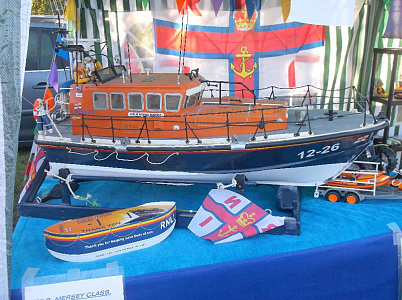
Building this boat from a Models by Design hull and cabin moulds. ALL the rest is totally scratch building ! 😁
[{"id":"1328834077","name":"1328834077.jpg","caption":"","url":"https:\/\/model-boats.com\/media\/1328834077\/l","thumbUrl":"https:\/\/model-boats.com\/media\/1328834077\/s","isImage":true,"ext":"jpg"}]
Mersey Class Lifeboat 1/12th Scale
Building this boat from a Models by Design hull and cabin moulds. ALL the rest is totally scratch building ! 😁
Sign in to comment on this update.
Big box arrived, opened up to find a bare glass fibre hull and cabin, was dissappointed to find the rear end of the cabin was not part of the "deal", so lots of hard work to design and build this, but hey, its a model kit.
took my time to prepare and prime the hull as the paintwork's gotta look as real and as shiny as poss
[{"id":"1328863944","name":"1328863944.jpg","caption":"","url":"https:\/\/model-boats.com\/media\/1328863944\/l","thumbUrl":"https:\/\/model-boats.com\/media\/1328863944\/s","isImage":true,"ext":"jpg"}]
The arrival of the hull kit
Big box arrived, opened up to find a bare glass fibre hull and cabin, was dissappointed to find the rear end of the cabin was not part of the "deal", so lots of hard work to design and build this, but hey, its a model kit.
took my time to prepare and prime the hull as the paintwork's gotta look as real and as shiny as poss
Sign in to comment on this update.
The hull needed a good, but careful fine sanding to remove the mould Imperfections and releasing agents. then it was given a couple of coats of grey primer, purely to show up any pit holes or Imperfections and trying to see all these on a white background is very difficult, so I always prefer to spray grey, get the base right, then give a final coat of white primer last.
[{"id":"1328865845","name":"1328865845.jpg","caption":"","url":"https:\/\/model-boats.com\/media\/1328865845\/l","thumbUrl":"https:\/\/model-boats.com\/media\/1328865845\/s","isImage":true,"ext":"jpg"}]
first steps
The hull needed a good, but careful fine sanding to remove the mould Imperfections and releasing agents. then it was given a couple of coats of grey primer, purely to show up any pit holes or Imperfections and trying to see all these on a white background is very difficult, so I always prefer to spray grey, get the base right, then give a final coat of white primer last.
Sign in to comment on this update.
Whilst the primer is drying on the hull, I made a start on marking out and drilling out the cabin windows. I first measured and marked them out, as the slight indentations left by the master mould were slightly out of line. they were then drilled out using a small drill bit and acordless drill [to prevent excess damage]. making sure to leave a safety margin, so you can then file back to the actual window line later, but DONT file the windows out untill you can check each window aperture with a perspex window panel. THEN file back to the line, checking the window panel in frequently, untill it is a tight fit. Once the window panel fits an aperture, put some masking tape on the window and number both the window panel AND the cabin so you can easily match them up later when you refit the windows fully. if you use a pencil and mark the inside of the cabin, you wont run the risk of loosing the numbers when sanding the outer cabin panels. 😊 .
Incidentally, the black tape you see on the engine cover panel, was to prevent the drill chuck of the cordless drill from marking the glass fibre when drilling out the forward windows. it saves a lot of unwanted filler work later.
[{"id":"1328886693","name":"1328886693.jpg","caption":"","url":"https:\/\/model-boats.com\/media\/1328886693\/l","thumbUrl":"https:\/\/model-boats.com\/media\/1328886693\/s","isImage":true,"ext":"jpg"},{"id":"1328886671","name":"1328886671.jpg","caption":"","url":"https:\/\/model-boats.com\/media\/1328886671\/l","thumbUrl":"https:\/\/model-boats.com\/media\/1328886671\/s","isImage":true,"ext":"jpg"}]
cabin windows
Whilst the primer is drying on the hull, I made a start on marking out and drilling out the cabin windows. I first measured and marked them out, as the slight indentations left by the master mould were slightly out of line. they were then drilled out using a small drill bit and acordless drill [to prevent excess damage]. making sure to leave a safety margin, so you can then file back to the actual window line later, but DONT file the windows out untill you can check each window aperture with a perspex window panel. THEN file back to the line, checking the window panel in frequently, untill it is a tight fit. Once the window panel fits an aperture, put some masking tape on the window and number both the window panel AND the cabin so you can easily match them up later when you refit the windows fully. if you use a pencil and mark the inside of the cabin, you wont run the risk of loosing the numbers when sanding the outer cabin panels. 😊 .
Incidentally, the black tape you see on the engine cover panel, was to prevent the drill chuck of the cordless drill from marking the glass fibre when drilling out the forward windows. it saves a lot of unwanted filler work later.
Sign in to comment on this update.
After leaving the hull in primer for 4 days, sufficient time to allow the thinners in the material to evaporate. time to put the top coats on. I first masked off the upper hull and painted the white lower section using aerosols [halfords appliance white], allowing time between coats for the surface to dry. I've learnt in the past, not to try and put a second [or third] coat on too quickly , or thats when the paint starts to "run", leaving you with another problem to deal with.
The masking was left on for 24 hrs, then removed and the hull left to dry again for 3 days.
I then masked off the lower hull and applied the blue upper colour [ford galaxy blue], applying 5 coats over the next few hours,allowing drying time between coats.
Once the hull has its decals applied, I will then give it a couple of coats of clear laquer to help protect it, but not worth doing yet., just in case it gets scratched, then you have 2 different layers to replace.
[{"id":"1328960515","name":"1328960515.jpg","caption":"","url":"https:\/\/model-boats.com\/media\/1328960515\/l","thumbUrl":"https:\/\/model-boats.com\/media\/1328960515\/s","isImage":true,"ext":"jpg"},{"id":"1328960504","name":"1328960504.jpg","caption":"","url":"https:\/\/model-boats.com\/media\/1328960504\/l","thumbUrl":"https:\/\/model-boats.com\/media\/1328960504\/s","isImage":true,"ext":"jpg"},{"id":"1328960489","name":"1328960489.jpg","caption":"","url":"https:\/\/model-boats.com\/media\/1328960489\/l","thumbUrl":"https:\/\/model-boats.com\/media\/1328960489\/s","isImage":true,"ext":"jpg"},{"id":"1328960479","name":"1328960479.jpg","caption":"","url":"https:\/\/model-boats.com\/media\/1328960479\/l","thumbUrl":"https:\/\/model-boats.com\/media\/1328960479\/s","isImage":true,"ext":"jpg"}]
Painting the hull
After leaving the hull in primer for 4 days, sufficient time to allow the thinners in the material to evaporate. time to put the top coats on. I first masked off the upper hull and painted the white lower section using aerosols [halfords appliance white], allowing time between coats for the surface to dry. I've learnt in the past, not to try and put a second [or third] coat on too quickly , or thats when the paint starts to "run", leaving you with another problem to deal with.
The masking was left on for 24 hrs, then removed and the hull left to dry again for 3 days.
I then masked off the lower hull and applied the blue upper colour [ford galaxy blue], applying 5 coats over the next few hours,allowing drying time between coats.
Once the hull has its decals applied, I will then give it a couple of coats of clear laquer to help protect it, but not worth doing yet., just in case it gets scratched, then you have 2 different layers to replace.
Sign in to comment on this update.
Whilst the hull paint is drying for a while, its time to start building the missing stern cabin section. this needs to be sorted before any other work is done to the upper cabin, purely because the moulding is a little too flexible without the backend in situ.
After purchasing a set of plans from the RNLI, I am able to accurately measure and follow the original lines and layout of the full size boat, remembering to "upscale" all the measurements from 1:24th to 1:12th of course!
the stern cabin area does have a lot of different angles and shapes which need careful planning and attention, or you could end up scrapping a lot of hard work too easily.
A fellow moddler of a mersey kindly sent me a cd rom disc of a Mersey Class boat which is also assisting me greatly as 2 dimensional drawings are not the be all and end all to make a build in to a working scale model. if ist ever possible to get Images and pictures of a similar boat, "DO"! you wont regret it - ever.
To start the base build off, I first bonded on some strips of plasticard to the glass moulding with stabilit express, this means for the remainder of the construction, I only need to use ordinary plastic weld, to bond plastic to plastic and not have to keep reaching for the epoxy resin all the while.
The other reason for using plastic is to keep the weight down to a minimum as even the company I purchased the boat off advised me of this, or the boat will never sail properly if its too heavy. thats why you will find I reach for plastic rod, to make replica bolts and not insert brass bolts or stainless bolts. yes it looses a little in the final finish, not seeing hex heads everywhere, but at least my boat will "move" under its own powerplant.
[{"id":"1328982692","name":"1328982692.jpg","caption":"","url":"https:\/\/model-boats.com\/media\/1328982692\/l","thumbUrl":"https:\/\/model-boats.com\/media\/1328982692\/s","isImage":true,"ext":"jpg"},{"id":"1328982675","name":"1328982675.jpg","caption":"","url":"https:\/\/model-boats.com\/media\/1328982675\/l","thumbUrl":"https:\/\/model-boats.com\/media\/1328982675\/s","isImage":true,"ext":"jpg"},{"id":"1328982668","name":"1328982668.jpg","caption":"","url":"https:\/\/model-boats.com\/media\/1328982668\/l","thumbUrl":"https:\/\/model-boats.com\/media\/1328982668\/s","isImage":true,"ext":"jpg"},{"id":"1328982660","name":"1328982660.jpg","caption":"","url":"https:\/\/model-boats.com\/media\/1328982660\/l","thumbUrl":"https:\/\/model-boats.com\/media\/1328982660\/s","isImage":true,"ext":"jpg"}]
upper cabin
Whilst the hull paint is drying for a while, its time to start building the missing stern cabin section. this needs to be sorted before any other work is done to the upper cabin, purely because the moulding is a little too flexible without the backend in situ.
After purchasing a set of plans from the RNLI, I am able to accurately measure and follow the original lines and layout of the full size boat, remembering to "upscale" all the measurements from 1:24th to 1:12th of course!
the stern cabin area does have a lot of different angles and shapes which need careful planning and attention, or you could end up scrapping a lot of hard work too easily.
A fellow moddler of a mersey kindly sent me a cd rom disc of a Mersey Class boat which is also assisting me greatly as 2 dimensional drawings are not the be all and end all to make a build in to a working scale model. if ist ever possible to get Images and pictures of a similar boat, "DO"! you wont regret it - ever.
To start the base build off, I first bonded on some strips of plasticard to the glass moulding with stabilit express, this means for the remainder of the construction, I only need to use ordinary plastic weld, to bond plastic to plastic and not have to keep reaching for the epoxy resin all the while.
The other reason for using plastic is to keep the weight down to a minimum as even the company I purchased the boat off advised me of this, or the boat will never sail properly if its too heavy. thats why you will find I reach for plastic rod, to make replica bolts and not insert brass bolts or stainless bolts. yes it looses a little in the final finish, not seeing hex heads everywhere, but at least my boat will "move" under its own powerplant.
Sign in to comment on this update.
Whilst building the flying bridge, I also need to make a door too. this I will make to be hinged, so can pose both open and closed. for ease, I decided to make it using "sandwich" construction, this means I have 2 outer skins, "sandwiching" the inner glazing sheet. it saves on trying to cut a window to the exact right size, plus makes the door nearer its correct thickness too. I first marked out the window apertures on oine piece of plasticard, then once the corner drill holes were done, I placed the second piece underneath and drilled through again, marking the second one, so both windows in the exact same place. I applied glue to the outer edges of the outer door panels, so it did not squeeze through and haze the actual window area and left to dry thoroughly.
[{"id":"1329056428","name":"1329056428.jpg","caption":"","url":"https:\/\/model-boats.com\/media\/1329056428\/l","thumbUrl":"https:\/\/model-boats.com\/media\/1329056428\/s","isImage":true,"ext":"jpg"},{"id":"1329056422","name":"1329056422.jpg","caption":"","url":"https:\/\/model-boats.com\/media\/1329056422\/l","thumbUrl":"https:\/\/model-boats.com\/media\/1329056422\/s","isImage":true,"ext":"jpg"},{"id":"1329056416","name":"1329056416.jpg","caption":"","url":"https:\/\/model-boats.com\/media\/1329056416\/l","thumbUrl":"https:\/\/model-boats.com\/media\/1329056416\/s","isImage":true,"ext":"jpg"},{"id":"1329056406","name":"1329056406.jpg","caption":"","url":"https:\/\/model-boats.com\/media\/1329056406\/l","thumbUrl":"https:\/\/model-boats.com\/media\/1329056406\/s","isImage":true,"ext":"jpg"}]
Cabin door.
Whilst building the flying bridge, I also need to make a door too. this I will make to be hinged, so can pose both open and closed. for ease, I decided to make it using "sandwich" construction, this means I have 2 outer skins, "sandwiching" the inner glazing sheet. it saves on trying to cut a window to the exact right size, plus makes the door nearer its correct thickness too. I first marked out the window apertures on oine piece of plasticard, then once the corner drill holes were done, I placed the second piece underneath and drilled through again, marking the second one, so both windows in the exact same place. I applied glue to the outer edges of the outer door panels, so it did not squeeze through and haze the actual window area and left to dry thoroughly.
Sign in to comment on this update.
Now that the base door has fully dried, its time to add the additional window frame. This was formed using the original window profile, before it was cut out of the door frame. it was made 5mm wide from plasticard and once this had been glued on, a series of small drill holes were drilled right through the door and frame, so I could then insert some thin plastic dowel rod, to simulate the retaining bolts. these were cut at a suitable length and glued in place.
Again, once fully dried, the plastic bolts were flat sanded to ensure all at same level height. Once door is fuilly painted, these can be picked out and highlighted in chrome silver to replicate stainless steel bolts.
[{"id":"1329158671","name":"1329158671.jpg","caption":"","url":"https:\/\/model-boats.com\/media\/1329158671\/l","thumbUrl":"https:\/\/model-boats.com\/media\/1329158671\/s","isImage":true,"ext":"jpg"},{"id":"1329158664","name":"1329158664.jpg","caption":"","url":"https:\/\/model-boats.com\/media\/1329158664\/l","thumbUrl":"https:\/\/model-boats.com\/media\/1329158664\/s","isImage":true,"ext":"jpg"},{"id":"1329158658","name":"1329158658.jpg","caption":"","url":"https:\/\/model-boats.com\/media\/1329158658\/l","thumbUrl":"https:\/\/model-boats.com\/media\/1329158658\/s","isImage":true,"ext":"jpg"},{"id":"1329158651","name":"1329158651.jpg","caption":"","url":"https:\/\/model-boats.com\/media\/1329158651\/l","thumbUrl":"https:\/\/model-boats.com\/media\/1329158651\/s","isImage":true,"ext":"jpg"}]
cabin door pt2
Now that the base door has fully dried, its time to add the additional window frame. This was formed using the original window profile, before it was cut out of the door frame. it was made 5mm wide from plasticard and once this had been glued on, a series of small drill holes were drilled right through the door and frame, so I could then insert some thin plastic dowel rod, to simulate the retaining bolts. these were cut at a suitable length and glued in place.
Again, once fully dried, the plastic bolts were flat sanded to ensure all at same level height. Once door is fuilly painted, these can be picked out and highlighted in chrome silver to replicate stainless steel bolts.
Sign in to comment on this update.
Time for a spot of wotk on the forward section. I want to be able to open the hatches for 2 reasons.
1/ to show a stowage locker [kitted out]
2/ need to be able to switch the battery power on/off without having to keep lifting the superstructure on/off all the time.
So first marked out the basic apertures to be cut out. I then marked the rounded corners, using the simplest of tools a "coin"! I then drilled out the corners with a suitably sized drill bit, then "joined the dots" with a saw blade, finishing off with a flat file. BEING CAREFUL OF THE GLASS FIBRE DUST! PLEASE wear a mask, work in a ventilated room and have a hoover to hand to remove the excess asap, so you dont breath in the harmfull dust fibres. Once these beuts get in your lungs, they dont come back out and can do nasty damage, so be careful!
So, after my little Preachiug session" I added the hatch ccoaming, with some plasticard strip, making sure you leave a good 10mm under the deck, so you can then have a decent depth of surface to get the stabilit express to bond to to keep it in place. I did also use some smaller bits on plastic card and plastic welded them to the underside outer edges of this coaming, so it did not let the coaming lift through the deck, plus giving the glue a bigger surface to bond to.
[{"id":"1329342868","name":"1329342868.jpg","caption":"","url":"https:\/\/model-boats.com\/media\/1329342868\/l","thumbUrl":"https:\/\/model-boats.com\/media\/1329342868\/s","isImage":true,"ext":"jpg"},{"id":"1329342842","name":"1329342842.jpg","caption":"","url":"https:\/\/model-boats.com\/media\/1329342842\/l","thumbUrl":"https:\/\/model-boats.com\/media\/1329342842\/s","isImage":true,"ext":"jpg"},{"id":"1329342833","name":"1329342833.jpg","caption":"","url":"https:\/\/model-boats.com\/media\/1329342833\/l","thumbUrl":"https:\/\/model-boats.com\/media\/1329342833\/s","isImage":true,"ext":"jpg"},{"id":"1329342827","name":"1329342827.jpg","caption":"","url":"https:\/\/model-boats.com\/media\/1329342827\/l","thumbUrl":"https:\/\/model-boats.com\/media\/1329342827\/s","isImage":true,"ext":"jpg"}]
Forward deck hatches
Time for a spot of wotk on the forward section. I want to be able to open the hatches for 2 reasons.
1/ to show a stowage locker [kitted out]
2/ need to be able to switch the battery power on/off without having to keep lifting the superstructure on/off all the time.
So first marked out the basic apertures to be cut out. I then marked the rounded corners, using the simplest of tools a "coin"! I then drilled out the corners with a suitably sized drill bit, then "joined the dots" with a saw blade, finishing off with a flat file. BEING CAREFUL OF THE GLASS FIBRE DUST! PLEASE wear a mask, work in a ventilated room and have a hoover to hand to remove the excess asap, so you dont breath in the harmfull dust fibres. Once these beuts get in your lungs, they dont come back out and can do nasty damage, so be careful!
So, after my little Preachiug session" I added the hatch ccoaming, with some plasticard strip, making sure you leave a good 10mm under the deck, so you can then have a decent depth of surface to get the stabilit express to bond to to keep it in place. I did also use some smaller bits on plastic card and plastic welded them to the underside outer edges of this coaming, so it did not let the coaming lift through the deck, plus giving the glue a bigger surface to bond to.
Sign in to comment on this update.
The hatches were made up from plasticard, one of the easiest and cheapest modelling tools we have to hand. Well, if you do make a mistake, its no heartache to throw away, whereas if working in brass, it would take you hours trying to rectify a mistake.
The coaming fitted to the engine deck was used to make a paper template, from which to cut out the top hatch covers, so they are a perfect fit to each individual hatch, purely to make sure the hatches fit snugly and are not about to let too much water through.
the hinge posts were sunk through the upper deck level, so they could be well bonded in, underneath, adding strength to the posts and joints.
[{"id":"1329569590","name":"1329569590.jpg","caption":"","url":"https:\/\/model-boats.com\/media\/1329569590\/l","thumbUrl":"https:\/\/model-boats.com\/media\/1329569590\/s","isImage":true,"ext":"jpg"},{"id":"1329569575","name":"1329569575.jpg","caption":"","url":"https:\/\/model-boats.com\/media\/1329569575\/l","thumbUrl":"https:\/\/model-boats.com\/media\/1329569575\/s","isImage":true,"ext":"jpg"},{"id":"1329569569","name":"1329569569.jpg","caption":"","url":"https:\/\/model-boats.com\/media\/1329569569\/l","thumbUrl":"https:\/\/model-boats.com\/media\/1329569569\/s","isImage":true,"ext":"jpg"},{"id":"1329569518","name":"1329569518.jpg","caption":"","url":"https:\/\/model-boats.com\/media\/1329569518\/l","thumbUrl":"https:\/\/model-boats.com\/media\/1329569518\/s","isImage":true,"ext":"jpg"}]
Hatches.
The hatches were made up from plasticard, one of the easiest and cheapest modelling tools we have to hand. Well, if you do make a mistake, its no heartache to throw away, whereas if working in brass, it would take you hours trying to rectify a mistake.
The coaming fitted to the engine deck was used to make a paper template, from which to cut out the top hatch covers, so they are a perfect fit to each individual hatch, purely to make sure the hatches fit snugly and are not about to let too much water through.
the hinge posts were sunk through the upper deck level, so they could be well bonded in, underneath, adding strength to the posts and joints.
Sign in to comment on this update.